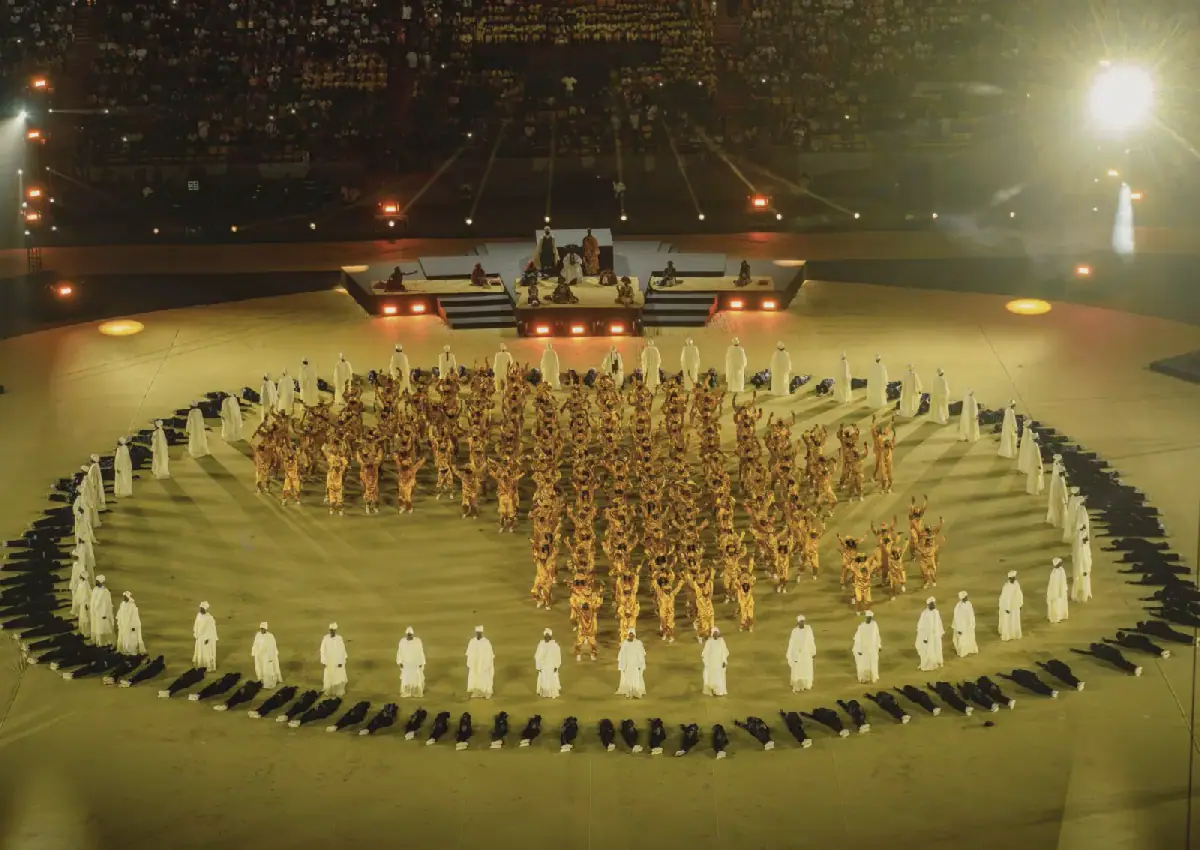
The wait is over for Senegal and the African continent. After 130 years, the Olympic rings have finally made their way to Africa. On October 31, 2026, Senegal welcomed the first Olympic Youth Games to be held on African soil. The event took place in Diamniadio, a venue that played host to a spectacular opening ceremony. The ceremony seamlessly blended mythological figures with modern elements, showcasing the rich cultural heritage of Africa.
At the heart of the ceremony was Alkebulan, a symbolic figure representing Africa, embodying the continent's memory, ancestral values, and legacy. Alkebulan was joined by his son Kèb, who represented youth, curiosity, and the future. The narrative revolved around the transmission of heritage to future generations without confining them to the past. This theme was further explored through the character of Sitoé, who symbolized the connection between generations and the importance of oral tradition.
The ceremony drew inspiration from various aspects of African culture and history. It referenced the ancient Egyptian civilization and the works of Cheikh Anta Diop, a renowned Senegalese historian and physicist. The event also paid tribute to Aline Sitoé Diatta, a legendary figure in Senegalese history. The use of mythological figures and historical references created a unique narrative that celebrated Africa's rich cultural heritage.
The opening ceremony was a visual spectacle that transported the audience through time and space. It featured a mix of traditional and modern elements, including music, dance, and costumes. The event showcased the diversity and creativity of African cultures, highlighting the continent's contributions to the world's cultural landscape. The ceremony's use of symbolism and metaphor added depth and complexity to the narrative.
One of the key highlights of the ceremony was the appearance of a character resembling Cheikh Anta Diop, a prominent figure in African historiography. This nod to the renowned historian underscored the importance of scientific inquiry and knowledge transmission. The ceremony emphasized the need for young generations to engage with their cultural heritage while embracing modernity and innovation.
The event also celebrated the vibrant cultural landscape of Dakar, Senegal's capital city. The ceremony featured a sequence that showcased the city's rich cultural heritage, including its arts, sciences, and traditions. The use of imagery and symbolism created a powerful narrative that highlighted the importance of preserving and promoting cultural heritage.
The Olympic Youth Games in Senegal marked a significant milestone in the history of the Olympic Movement. The event brought together young athletes from around the world, providing a platform for them to compete, learn, and grow. The ceremony's emphasis on cultural exchange, transmission of knowledge, and intergenerational dialogue resonated with the Olympic values of excellence, friendship, and respect.
Key points
- Senegal hosts first Olympic Youth Games in Africa, blending mythology and modernity in opening ceremony
- The event celebrates Africa's rich cultural heritage, highlighting its contributions to the world's cultural landscape
- The ceremony emphasizes the importance of cultural exchange, transmission of knowledge, and intergenerational dialogue