The Senegalese government is seeking to enhance transparency in the management of public funds, particularly special credits, while maintaining confidence in institutions. This move follows the Constitutional Council's decision on August 25, 2026, which deemed a previous proposal on special credit regulations inadmissible. The Council stated that only an organic law could define the legal framework for special credits.
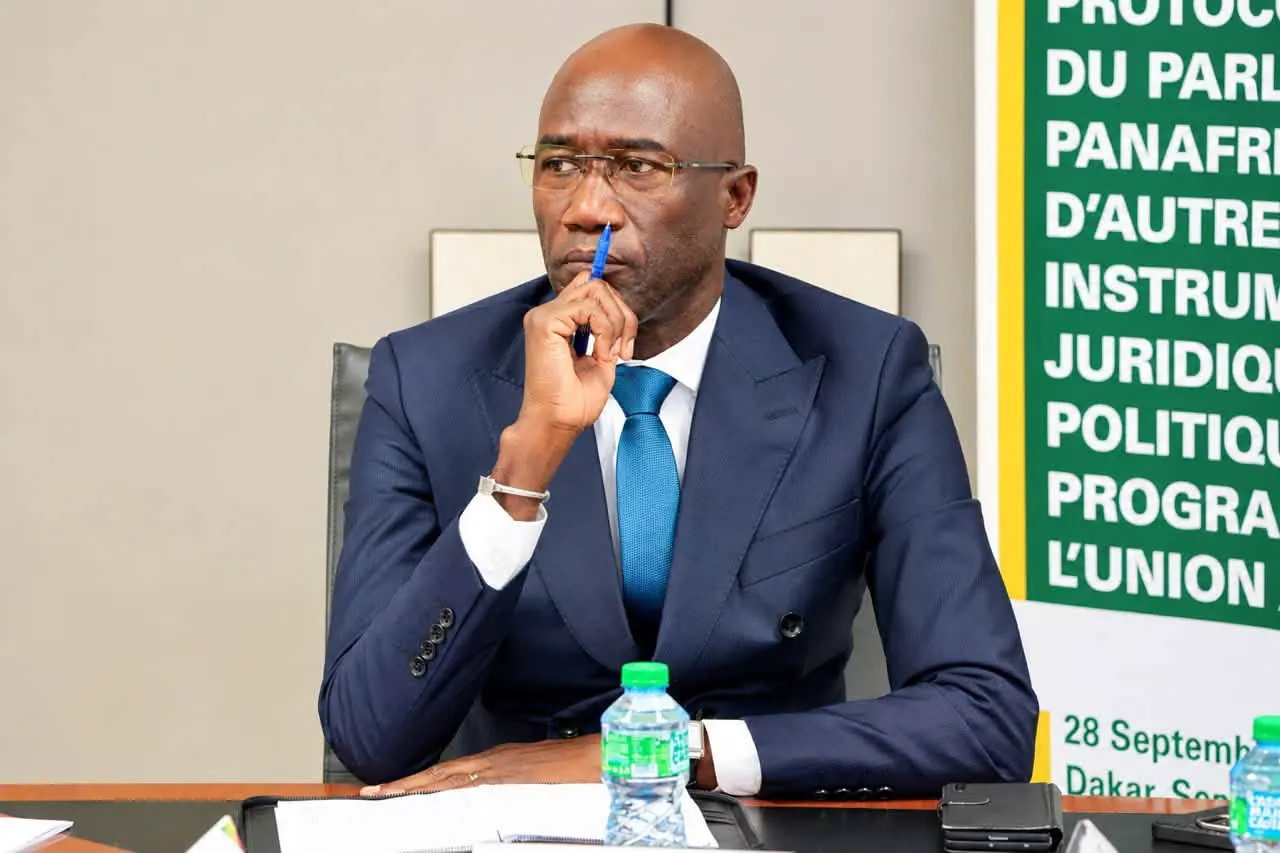
The government has introduced a new proposal, an organic law modifying the 2020 organic law on finance laws (LOLF). This proposal aims to bring the regulations on special credits in line with the Constitution and existing laws. The Minister of Justice, Garde des Sceaux, presented the proposal to the National Assembly, emphasizing the need for transparency and institutional trust.
The Minister identified three main challenges related to special credits. The first concerns the attachment of special credits or funds to the notion of constitutional institutions. The second difficulty relates to the conformity of the device with the UEMOA directive n° 06/2009/CM/UEMOA of June 26, 2009. The third point concerns the ordering of these credits, as the current law does not specify the authority responsible for their ordonnancement.
To address these challenges, the government has proposed two amendments. The first amendment aims to remove the special credits or funds from the bill and attach them to the dotation of constitutional institutions. The second amendment concerns the control of special credits, proposing to transfer the control to the Finance Commission and align it with the internal regulations of the National Assembly.
The government believes that these amendments will ensure transparency and institutional balance. The Minister of Justice emphasized that transparency should not be seen as a constraint but as a means to consolidate the rule of law and strengthen citizen trust in institutions. The government has requested a single vote on the bill, incorporating the proposed amendments.
The proposed organic law aims to bring clarity and coherence to the management of special credits in Senegal. The government is committed to ensuring that the regulations are aligned with the Constitution and international directives. The National Assembly will review and vote on the bill, taking into account the proposed amendments.
The outcome of the parliamentary discussions will determine the future of special credit management in Senegal. The government hopes that the exchanges will result in a balanced text, conforming to the Constitution and the principles of good governance and solidarity that guide its actions.
Key points
- The Senegalese government is introducing an organic law to regulate special credits and enhance transparency in public fund management.
- The proposal aims to bring clarity and coherence to the management of special credits, aligning it with the Constitution and international directives.
- The government has proposed amendments to address challenges related to special credits, ensuring transparency and institutional balance.