The Senegalese government has launched an initiative to address the longstanding issue of delayed commercialization of agricultural products. According to Cheikhou Oumar Ba, Minister of Agriculture, Food Sovereignty, and Livestock, the new system brings together farmers, banks, the private sector, and relevant state services to ensure timely marketing of produce. This move aims to avoid the challenges faced during previous commercialization campaigns.
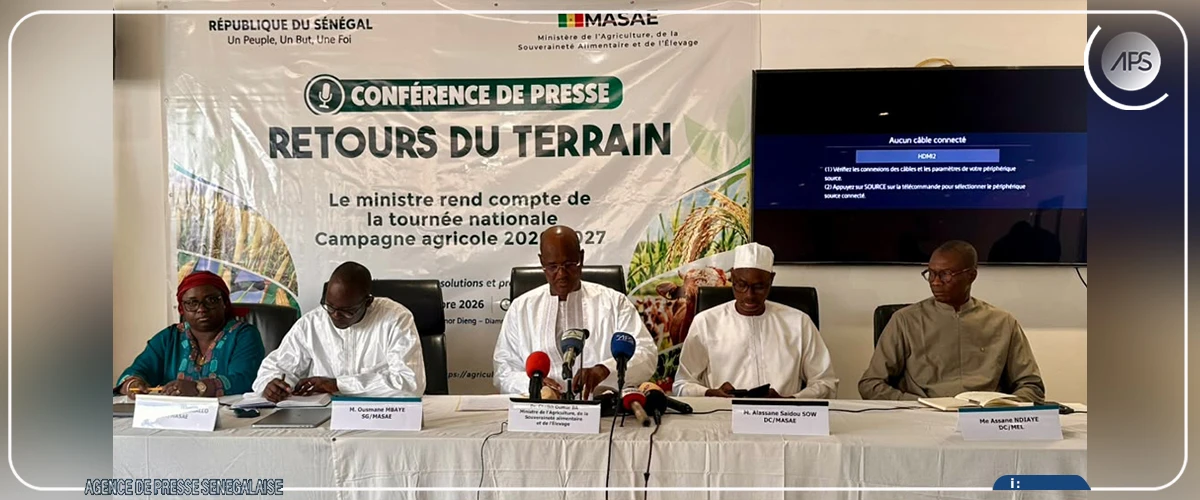
Minister Ba announced the new measure during a press conference in Diamniadio, stating that the government will no longer wait until production is complete before planning commercialization. Instead, the state will work simultaneously on production, storage, processing, and marketing. A meeting on September 25 brought together concerned directors to discuss the new approach. An interministerial meeting, chaired by the Prime Minister, is scheduled for October 22 to mobilize financing for the purchase of agricultural products.
The minister emphasized that farmers want prompt payment for their produce, stressing that they do not want to be concerned about which ministry failed to perform its duties. The government is developing the concept of a "maize granary" to connect maize producers with millers and private operators. This initiative aims to improve the marketing of agricultural products and ensure that farmers receive fair compensation for their produce.
During the last commercialization campaign, the Société nationale de commercialisation des oléagineux du Sénégal (SONACOS) collected nearly 219,000 tons of peanuts, a quantity not reached in over twenty years. In the 2025-2026 campaign, Senegal exported at least 70,000 tons of processed peanuts, generating approximately 34 billion CFA francs in revenue. These achievements demonstrate the potential for growth in Senegal's agricultural sector.
However, challenges persist, with 13,000 tons of rice remaining to be marketed in the Senegal River valley. To address this issue, the government is working to mobilize financing and ensure that farmers receive timely payment for their produce. The minister's announcement has raised hopes among farmers and stakeholders that the new system will improve the commercialization of agricultural products in Senegal.
The new approach has been welcomed by farmers, who have long struggled with delayed payments for their produce. By working together, the government, farmers, and private sector operators aim to create a more efficient and equitable system for marketing agricultural products. This collaboration is expected to boost the agricultural sector, which is a significant contributor to Senegal's economy.
The Senegalese government's efforts to improve agricultural product commercialization are part of a broader strategy to support the sector. Recent initiatives have focused on addressing the impact of drought and providing assistance to farmers affected by climate change. With the new system in place, farmers and stakeholders are optimistic about the prospects for growth and development in Senegal's agricultural sector.
Key points
- The Senegalese government has introduced a new system to prevent delayed commercialization of agricultural products, involving farmers, banks, and state services.
- The government aims to work simultaneously on production, storage, processing, and marketing to avoid challenges faced during previous commercialization campaigns.
- The new approach includes the development of a "maize granary" concept to connect producers with millers and private operators.