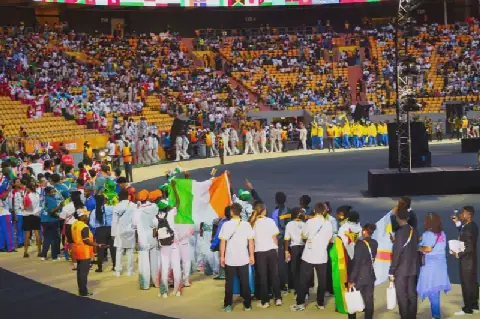
The 2026 Youth Olympic Games in Dakar, Senegal, kicked off with an opening ceremony that was as much a celebration of the country's rich heritage as it was a sporting event. On October 31, 2026, the Senegalese capital played host to a spectacular display of music, dance, and art that told the story of the nation's history, traditions, and cultural identity. The ceremony, themed around "L'Envol de Sitoé," featured three symbolic characters: Alkebulan, representing the past; Keb, representing the present; and Sitoé, embodying the future.
The ceremony paid homage to Senegal's historical kingdoms, including the Cayor, with a performance by singer Kiné Lam. Her song referenced Saaxewar Binta Ma Samba, a figure from the 19th century, and the Damel Ma Isseu Tend Joor, highlighting the significance of oral tradition in preserving the country's history. This segment showcased the importance of preserving and honoring Senegal's pre-colonial past.
The event also celebrated Senegal's vibrant cultural traditions, including the country's famous wrestling sport. The Bakku, a ritual dance performed by wrestlers, and the touss, choreographed demonstrations preceding traditional combat, were integrated into the spectacle. Notable figures from the wrestling world, such as Sa Thiès, Modou Lô, Eumeu Sène, and Franc, participated in this segment, which highlighted the significance of this traditional sport in Senegalese culture.
The ceremony also took inspiration from everyday life in Dakar, showcasing the city's markets, streets, and popular neighborhoods. Tableaux depicted the bustling atmosphere of Sandaga and Colobane markets, the lively Medina, and the vibrant streets of Pikine. These scenes captured the essence of urban Senegalese life, highlighting the country's diverse cultural melting pot.
Music and dance played a pivotal role in the ceremony, with a range of local artists contributing to the spectacle. Kiné Lam, Baaba Maal, Souleymane Faye, and Daara J Family were among the musicians who performed, while Khady Loum's outfit paid tribute to the legendary Yandé Codou Sène. The percussions of the Rosettes, a group founded by Doudou Ndiaye Coumba Rose, added to the celebration, which culminated in a stunning display of 360 dancers forming a giant map of Africa on the stadium's lawn.
The ceremony also showcased Senegal's rich artistic heritage, with nearly 1,500 costumes created locally for the event. Boubou Design's live pictorial creation, unveiled by Khaby Lame, was another highlight of the spectacle. A team of Senegalese professionals, including Khady Niang, Xalil Cissé, Adama Diop, and Iss 814, worked tirelessly behind the scenes to bring the event to life.
The 2026 Youth Olympic Games' opening ceremony was a testament to Senegal's rich cultural diversity and creative spirit. By weaving together historical references, traditional practices, and contemporary artistic expressions, the event presented a nuanced portrait of the country's identity. As the sporting event continues, Senegal's vibrant culture will undoubtedly remain a lasting impression on visitors and spectators alike.
Key points
- The ceremony's focus on showcasing Senegal's cultural heritage and traditions was a deliberate attempt to share the country's history and identity with a global audience.