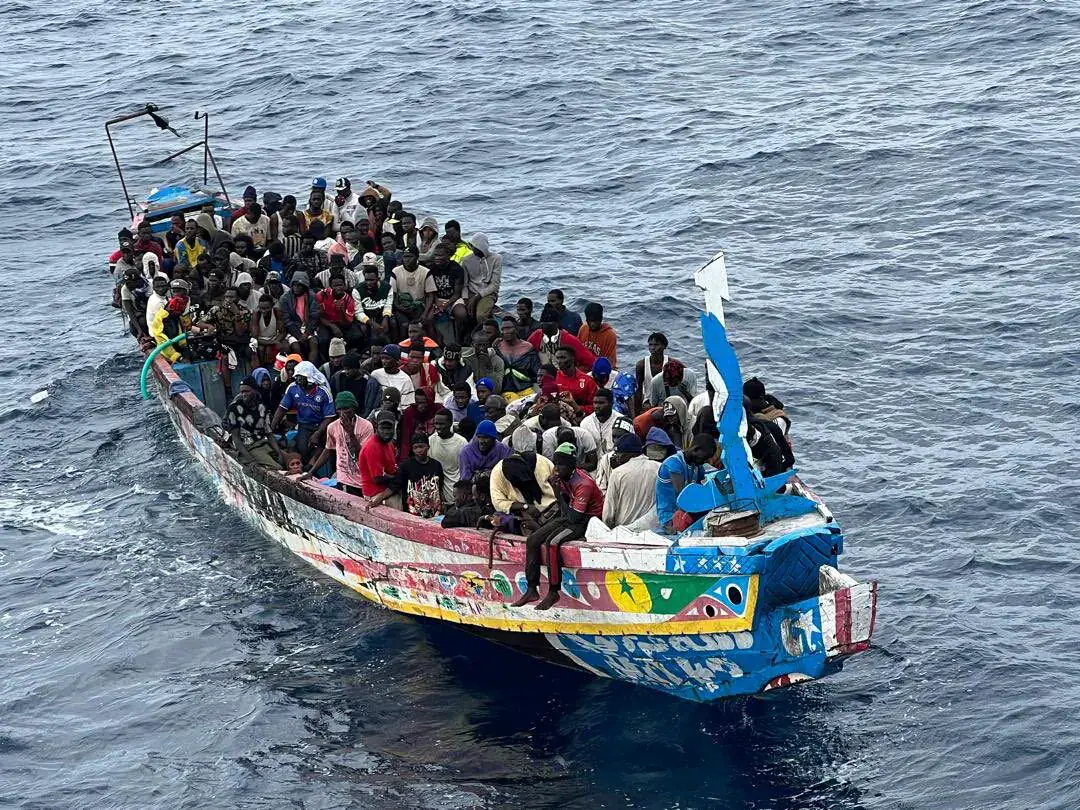
The Senegalese government is strengthening its cooperation with European partners, particularly Spain, to address the surge in irregular migration by sea. Foreign Minister Cheikh Niang, in an interview on RTS's "Sans Filtre," outlined efforts to combat the phenomenon. He advocates for a comprehensive approach combining diplomatic cooperation, maritime surveillance, communication, and prevention. This strategy aims to prevent departures, intervene in distress situations, and develop better information on the risks of Atlantic crossings.
Irregular migration remains a major concern for Senegalese authorities, with repeated departures of boats carrying migrants to Europe. The government seeks a coordinated response beyond diplomatic action, involving multiple ministries, including Foreign Affairs, Interior, Armed Forces, Justice, and Labor. Minister Niang emphasizes the complexity of the issue, which affects security, social, and economic aspects. He highlights the intensity of exchanges with European partners, especially Spain, with regular dialogue between the two countries' leaders and ministers.
The Senegalese minister underscores the crucial role of defense and security forces in surveillance and interception operations at sea. He praises the commitment of the National Marine and other units in preventing clandestine crossings. However, Niang notes that the public often has a partial understanding of the situation, focusing on boats reaching Spanish shores while overlooking the many interceptions made by security forces. He stresses that numerous boats are intercepted and controlled by maritime surveillance systems.
Despite acknowledging a recent surge in departures, Niang reports an earlier calm period, with no new arrivals recorded for about a week. He believes that combating irregular migration cannot be limited to intercepting boats and security actions. A more comprehensive approach is needed, incorporating communication, population awareness, and prevention. This involves acting on multiple fronts: preventing clandestine departures, enhancing intervention capabilities at sea, and providing better information on Atlantic crossing risks.
Minister Niang emphasizes that the migration issue is not solely a security concern but also relates to public policies on employment, professional integration, and economic prospects for youth. A transversal mobilization of various institutional actors is necessary to address the issue effectively. The Senegalese government aims to develop a better understanding of the risks associated with irregular migration and to provide alternatives for young people.
The cooperation between Senegal and Spain aims to develop concerted responses to prevent departures and intervene in distress situations. The two countries maintain close relations, with regular exchanges between their leaders and ministers. This partnership seeks to address the root causes of irregular migration and provide a more effective response to the phenomenon.
The Senegalese government's multidimensional approach to irregular migration involves a combination of diplomatic, security, and preventive measures. By working with international partners and engaging various institutional actors, the government aims to tackle the complex issues surrounding migration and provide a more comprehensive response to the phenomenon.
Key points
- Senegal's Foreign Minister Cheikh Niang calls for a concerted and multidimensional response to irregular migration.
- The Senegalese government is strengthening cooperation with European partners, particularly Spain, to address the surge in irregular migration.
- A comprehensive approach combining diplomatic cooperation, maritime surveillance, communication, and prevention is needed to tackle irregular migration.