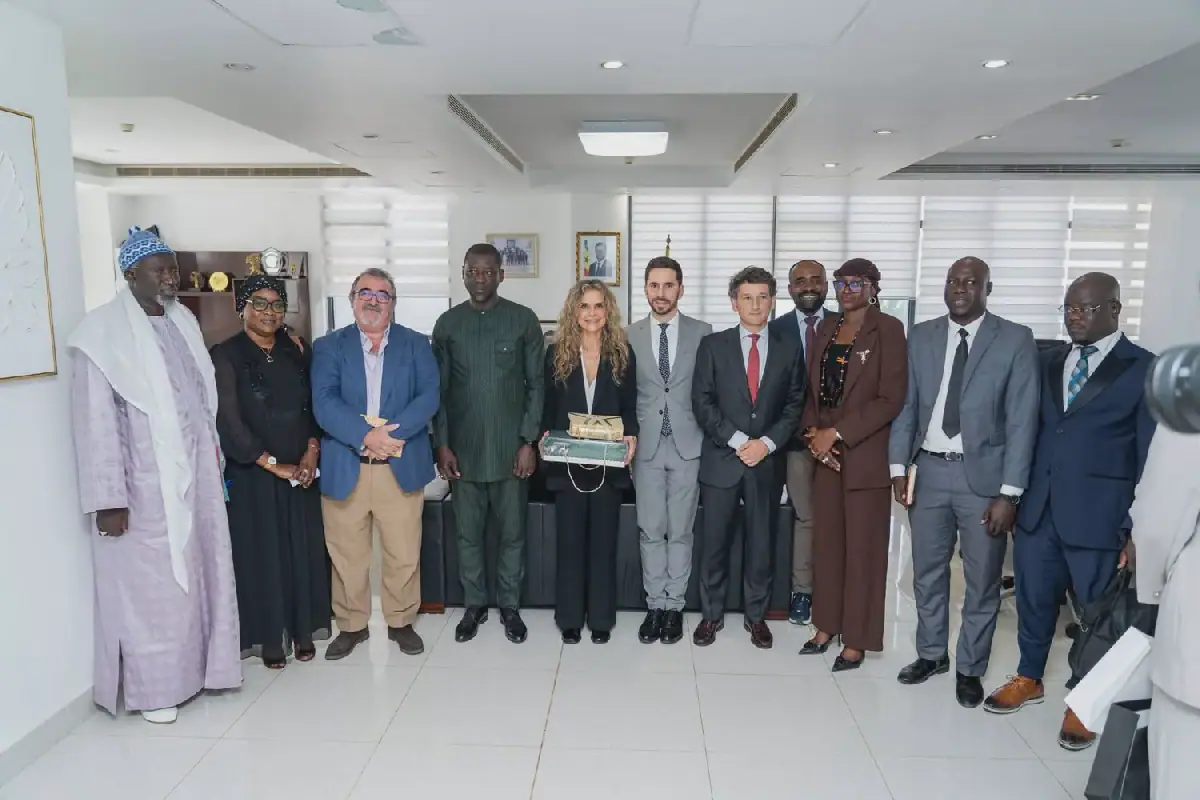
The Senegalese government, led by Minister of Microfinance and Social and Solidarity Economy Dr Alioune Badara Dione, has been in talks with Spanish officials, including Secretary of State for Social Economy Amparo Merino, to solidify a strategic partnership in the social and solidarity economy. The discussions, held on November 12, 2026, in Diamniadio, aimed to explore new avenues for collaboration and consolidate financing mechanisms. This meeting marks a significant step towards strengthening bilateral cooperation between the two nations.
The social and solidarity economy is seen as a key driver of economic transformation, promoting inclusive and sustainable development. Minister Dione emphasised the importance of prioritising human needs in economic policies, stating that "the economy can only be sustainable if it is human, inclusive, and rooted in the territories." This vision aligns with the United Nations' Resolution 77/281 and Senegal's National Strategy for the Development of the Social and Solidarity Economy. The strategy aims to foster job creation, enhance productive capacities, and reduce socio-economic inequalities.
The talks between Senegal and Spain focused on several key areas, including the sharing of experiences and best practices to enhance institutional and operational capacities of social and solidarity economy actors in Senegal. The two countries also discussed financing mechanisms for initiatives in this sector, which is crucial for ensuring the sustainability of enterprises and organisations. Furthermore, they explored opportunities for promoting inclusive entrepreneurship, particularly among women and young people, and improving access to economic opportunities.
The partnership between Senegal and Spain also aims to facilitate access to national and international markets for products from the social and solidarity economy. The transition to an ecological economy was another topic of discussion, with both countries recognising its potential to enhance competitiveness, territorial resilience, and sustainable development. These areas of cooperation are expected to contribute to the growth of the social and solidarity economy in Senegal.
A significant outcome of the meeting was the adoption of a roadmap with a joint monitoring mechanism, paving the way for a Memorandum of Understanding between Senegal and Spain. This memorandum will provide a framework for their cooperation in the social and solidarity economy. Senegal has committed to submitting a request for technical and financial support to implement its National Strategy for the Development of the Social and Solidarity Economy.
Spain has expressed its willingness to consider Senegal's request and evaluate the proposals submitted. The validation of the meeting's minutes is expected to consolidate the operational foundations of this new partnership. This cooperation is part of Senegal's efforts to diversify its international partnerships and leverage foreign expertise to drive its economic and social transformation.
The strengthened partnership between Senegal and Spain in the social and solidarity economy reflects a broader shift towards decentralised diplomacy and economic cooperation. By engaging in decentralised cooperation, both countries aim to bring public policies closer to local realities, promote exchanges between economic and institutional actors, and support local initiatives that add value. This approach is expected to contribute to a more inclusive and sustainable economic model in Senegal.
Key points
- The partnership between Senegal and Spain focuses on decentralised cooperation, financing mechanisms, and inclusive entrepreneurship in the social and solidarity economy.
- The two countries aim to promote inclusive and sustainable development through the social and solidarity economy.
- A roadmap with a joint monitoring mechanism has been adopted to formalise their cooperation in the social and solidarity economy.