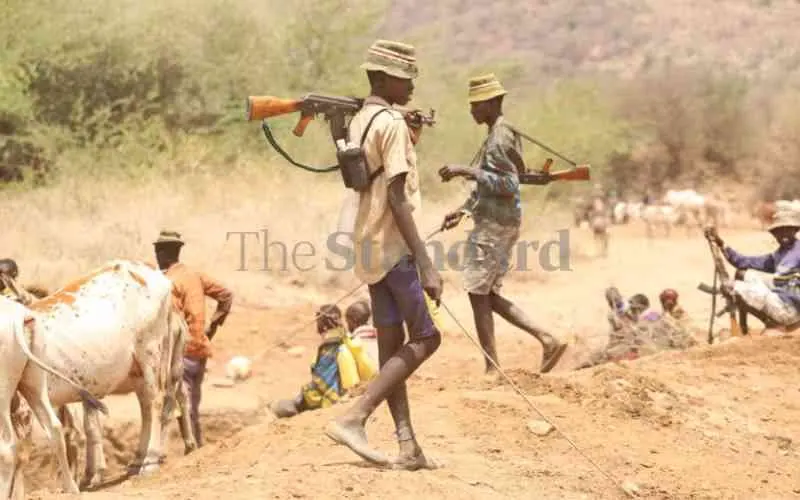
Senators in Kenya have raised concerns over the escalating insecurity in Northern Kenya, a region plagued by cattle rustling, armed banditry, and recurring inter-community conflicts. The insecurity has resulted in loss of life, displacement of families, destruction of property, and severe disruption of pastoralists' livelihoods. The recent killing of five people in Isiolo county, including security officers and civilians, during an operation to recover stolen livestock has underscored the grave security challenges facing the region.
Marsabit Senator Mohammed Chute has called on the Senate National Security, Intelligence and Foreign Relations Committee to address the prevailing security situation in Northern Kenya, particularly in Marsabit, Isiolo, Samburu, and neighboring counties. He cited incidents of cattle rustling, armed attacks, deaths, injuries, displacement of persons, and areas most adversely affected over the last three years. Chute also questioned the adequacy of security deployment, intelligence coordination, livestock recovery efforts, and mechanisms to protect vulnerable communities from retaliatory attacks and cycles of violence.
The Senate committee has been asked to address the adequacy of deployment, operational readiness, and logistical capacity of the Anti-Stock Theft Unit (ASTU), National Police Reservists (NPRs), and other security agencies. This includes the functionality of security installations and response capabilities in areas prone to insecurity. Chute also sought to know the government's long-term security and peace-building framework for northern Kenya, including measures aimed at addressing the drivers of conflict, strengthening local security structures, protecting pastoral livelihoods, supporting affected communities, and securing lasting peace and stability in the region.
Wajir's Sheikh Abbass noted that the Isiolo, Maralal, Marsabit, and Turkana triangle had remained a hotspot for a long time, with many Kenyans losing their animals and lives. He stated that about 63,000 head of cattle and other livestock had been lost over the past three years, with many people also killed. Abbass questioned why the government could compensate young people killed by police during demonstrations but had failed to compensate pastoralists who lost their lives while protecting their livestock.
Abbass also raised concerns about the effectiveness of security structures, noting that the raiders were predominantly from local communities and lived among the affected populations. He questioned whether the laxity of police officers was an internal problem, given the continued loss of lives. Abbass emphasized that it was the government's responsibility to take care of people's lives and properties, and therefore, pastoralists should be given compensation for the loss of lives and livelihoods.
Nominated Senator Hezena Lemaletian said Samburu County was "bleeding" after criminals attacked people in Isiolo, prompting the Ministry of Interior and National Administration to order an operation that she alleged also affected innocent residents. Lemaletian told the House that grenades had been thrown at local residents and a large herd of cattle destroyed, with one family losing 137 cows. She questioned the psychological and financial toll on families that lose their livelihoods in such attacks.
Lemaletian emphasized that the Senate's role was to call out any failure within the Executive, whether from their own party or not. She cited the shooting of a man who was going to buy water for residents as an example of the devastating impact of these attacks. The senator's concerns reflect the growing anxiety over the insecurity in Northern Kenya and the need for a comprehensive solution to address the root causes of the conflicts.
Key points
- The Senate has been urged to investigate the security situation in Northern Kenya.
- Over 63,000 head of cattle and other livestock have been lost in the region over the past three years.
- Senators are pushing for a long-term security and peace-building framework for northern Kenya.