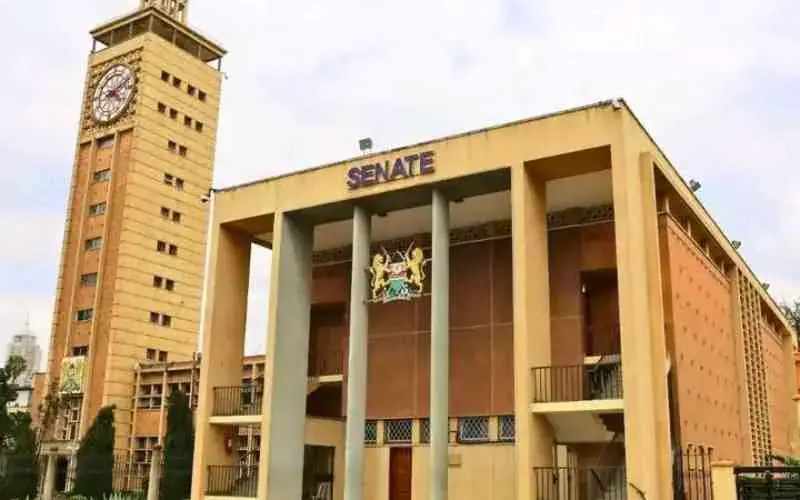
The Kenyan Senate's Standing Committee on Finance and Budget has expressed concerns over the National Treasury's proposed Sh449.5 billion equitable share allocation to counties for the 2027/2028 financial year. Senators argue that the proposed increase of Sh21.47 billion from the current Sh428 billion will barely translate into additional resources for devolved governments after mandatory expenditures are deducted. Committee members questioned the adequacy of the proposed allocation, citing rising operational costs, salary obligations, and expanding responsibilities.
The concerns were raised during a consultative session on the 2027 Budget Policy Statement (BPS) and Medium-Term Debt Management Strategy, where National Treasury Cabinet Secretary John Mbadi and Council of Governors (CoG) Chairperson Muthomi Njuki were pressed to explain the financial arrangements for the 47 counties. Senators argued that the additional allocation is significantly reduced by mandatory expenditures, including Sh8.6 billion for Universal Health Coverage (UHC) staff and Sh11.18 billion for enhanced County Assembly recurrent expenditure ceilings.
Committee members questioned why these costs were being accommodated within the equitable share instead of being provided for separately, effectively reducing the resources available to counties to finance service delivery. Sessional chairperson Senator Mohamed Faki said the proposed increase did not adequately account for the financial pressures facing devolved units, including salary increments provided for under the law. He challenged Treasury to explain how all 47 counties were expected to share such a marginal increase when national government entities were receiving substantially higher budgetary allocations.
Senator Mariam Sheikh also questioned the continued delays in disbursement of additional allocations, demanding a clear timetable for releasing the Sh66.13 billion outstanding to counties. She further raised concerns over the delayed operationalisation of the County Assemblies Autonomy law, questioning why the Sh11.18 billion intended to support county assemblies remained part of the equitable share instead of being transferred through a separate fund.
The Council of Governors had presented a counterproposal seeking Sh557.24 billion for counties, arguing that the higher allocation was necessary to finance devolved functions, unbundled mandates, Collective Bargaining Agreements (CBAs), and transition costs ahead of the 2027 General Election. Njuki warned that delayed and partial disbursements of conditional grants over the past three financial years had disrupted county operations and contributed to the accumulation of pending bills.
In his defence, Mbadi cited limited fiscal space, revenue shortfalls, and competing statutory obligations, arguing that increasing county allocations further would require the government to widen the fiscal deficit. He told senators that out of projected ordinary revenue of Sh3.2 trillion, mandatory expenditures under Article 203(1) of the Constitution, including Sh1.738 trillion for public debt servicing, would consume approximately Sh2.9 trillion.
The National Treasury's proposed allocation has sparked a heated debate between senators and the Treasury, with the Senate committee pushing for a more adequate allocation to counties. The committee also turned its attention to the national government's borrowing strategy and the potential implications for economic stability, with Senator Essy Okenyuri asking Mbadi to clarify the proportion of domestic borrowing sourced from pension funds and insurance companies.
Key points
- Senators argue that the proposed allocation is inadequate to address the financial pressures facing devolved units.
- The Council of Governors has presented a counterproposal seeking Sh557.24 billion for counties.
- The Senate committee is pushing for a more adequate allocation to counties and greater transparency in the national government's borrowing strategy.
Reporting sources
- Senators fault Treasury's Sh449.5bn county allocation · The Standard