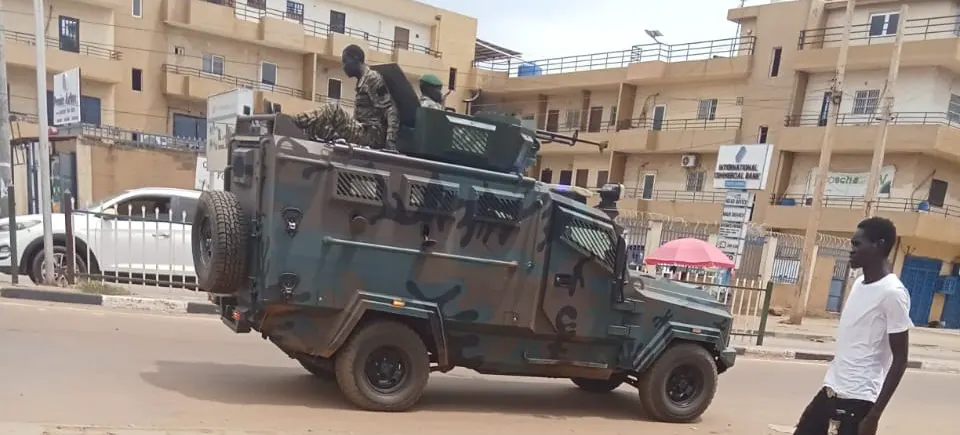
Security has been tightened in parts of South Sudan's capital, Juba, as uncertainty surrounds the status of the transitional unity government and general elections approach. Residents in the Thongpiny area reported a heavy deployment of security forces and military vehicles along major roads, including the route to Juba International Airport. This increased presence has caused concern among residents, who are hoping for a peaceful election period. The deployment includes several military tanks along the main road, sparking fears of potential violence.
A resident of Thongpiny, Yel Deng Tong, expressed concern over the sudden deployment of military tanks, stating that it made him fearful as he had never witnessed such a heavy military presence before. Tong hopes that the deployment will not lead to violence, particularly around the presidential compound, J1. Residents are eagerly awaiting the general elections scheduled for December, and Tong urged for a peaceful situation. The uncertainty surrounding the transitional government's status has contributed to the anxiety among residents.
Police spokesman Daniel Justin attributed the increased security presence to preparations for the general elections. He stated that joint units from different organised forces have been deployed to conduct day and night patrols, while personnel are also undergoing refresher training. Justin described the deployment as a routine internal security operation and urged residents not to panic. According to him, this is a standard activity carried out by the organised forces to ensure public safety and deter potential insecurity.
However, South Sudan People's Defence Forces Spokesman Major General Lul Ruai Koang linked the increased security presence to the expected dissolution of the transitional government. This comes after President Salva Kiir signed amendments to the National Elections Act, hours after they were passed by parliament. The amendments provide for the dissolution of the national legislature, state legislative assemblies, and national and state governments within three months of the election date.
The amended law also allows the incumbent president to remain in office and exercise executive powers during the election period, while vice-presidents and other members of the executive leave office under the new arrangements. South Sudan's National Elections Commission has set 22 December 2026 as the date for the general elections. This has led to concerns about the transition of power and the role of the incumbent president during the election period.
The Ministries Complex in Juba was closed on Tuesday morning, with employees reportedly prevented from accessing their offices. The complex remains under tight security. This development has added to the uncertainty and anxiety among residents and government officials. The government's dissolution and the upcoming elections have created a sense of unease, with many hoping for a peaceful transition.
The situation in Juba remains tense, with residents and government officials closely monitoring the developments. The increased security presence is aimed at ensuring public safety and deterring potential insecurity during the election period. As the country prepares for the general elections, the government's dissolution and the transition of power will be closely watched.
Key points
- The government of South Sudan is set to dissolve within three months of the general elections.
- The incumbent president will remain in office and exercise executive powers during the election period.
- The general elections in South Sudan are scheduled to take place on 22 December 2026.