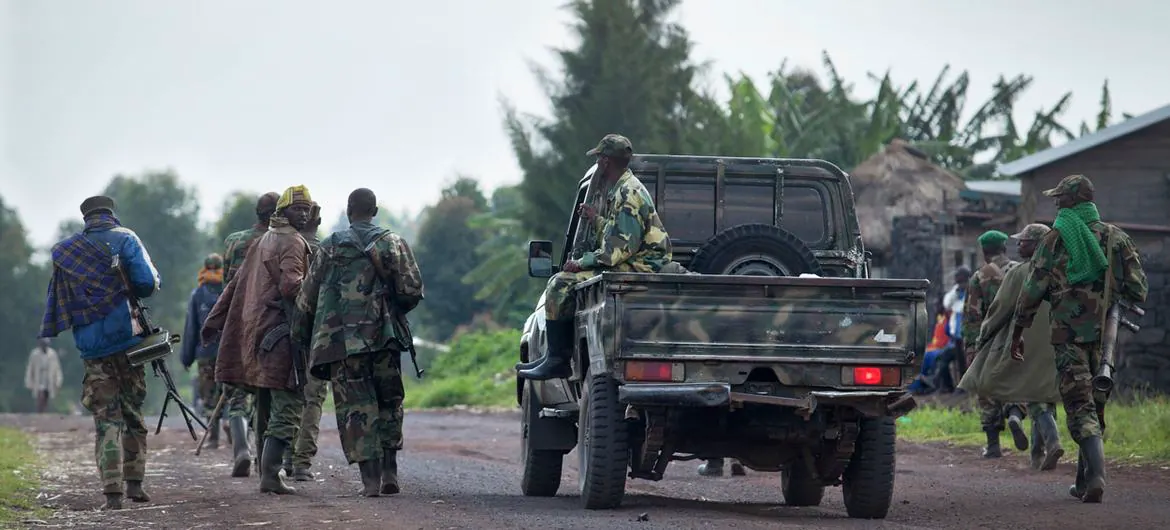
A recent report by the Kivu Security Tracker (KST), a project of the Congolese Research Institute on Politics, Governance, and Violence (Ebuteli), has highlighted an intensification of armed activism in eastern Democratic Republic of the Congo in August. The report, obtained by Radio Okapi on September 21, recorded 118 armed clashes in August, a 27% increase from 93 clashes in July. The AFC-M23 was responsible for 56 of these clashes and took control of 22 new villages, primarily in the territories of Masisi and Kalehe.
The KST report documented a total of 216 security incidents in August, a 13% decrease from 247 incidents in July. The data covers the provinces of Ituri, North Kivu, and South Kivu. According to the report, the AFC-M23 was involved in 85 security incidents in August and is held responsible for the deaths of 60 civilians. The group was implicated in several massacres targeting individuals accused of spying on AFC-M23 positions or belonging to rival armed groups.
In Ituri province, the ADF remains the most deadly group against civilians, according to the KST report. The organization documented 14 attacks that resulted in 72 deaths and 64 kidnappings, mainly in the territory of Mambasa. At the time of data collection, joint operations between the FARDC and Ugandan army, known as Shujaa, had not yet resumed. The report also noted a resurgence of clashes between the FARDC and the Convention pour la révolution populaire (CRP) in the territory of Djugu, after several months of inactivity.
The Codeco group, however, remained relatively inactive, with only a few isolated incidents reported. The KST report also attributed 15 civilian deaths to regular forces in August, an increase from eight in July. These deaths were primarily related to combat and, in some cases, individual homicides committed by military personnel. The report's findings highlight the ongoing security challenges in eastern DRC and the humanitarian impact of the conflict.
The intensification of armed activism in eastern DRC has significant implications for regional stability and humanitarian efforts. The AFC-M23's renewed offensive has led to a substantial increase in displacement and human suffering. According to the KST report, the group's activities have resulted in a significant deterioration of the security situation in North and South Kivu provinces.
The KST report also highlighted the activities of other armed groups in the region, including the ADF and Codeco. These groups continue to pose a significant threat to civilians and contribute to the overall insecurity in the region. The report's findings underscore the need for sustained efforts to address the root causes of the conflict and to bring perpetrators to justice.
The humanitarian situation in eastern DRC remains dire, with thousands of civilians affected by the conflict. The KST report's findings emphasize the importance of continued monitoring and reporting of security incidents to ensure that humanitarian efforts are targeted effectively. The report's release highlights the need for international attention and support to address the ongoing crisis in eastern DRC.
Key points
- The number of armed clashes in eastern DRC increased by 27% in August, primarily due to the AFC-M23's renewed offensive.
- The AFC-M23 was responsible for 60 civilian deaths in August and took control of 22 new villages.
- The ADF remains the most deadly group against civilians in Ituri province, with 72 deaths and 64 kidnappings reported in August.