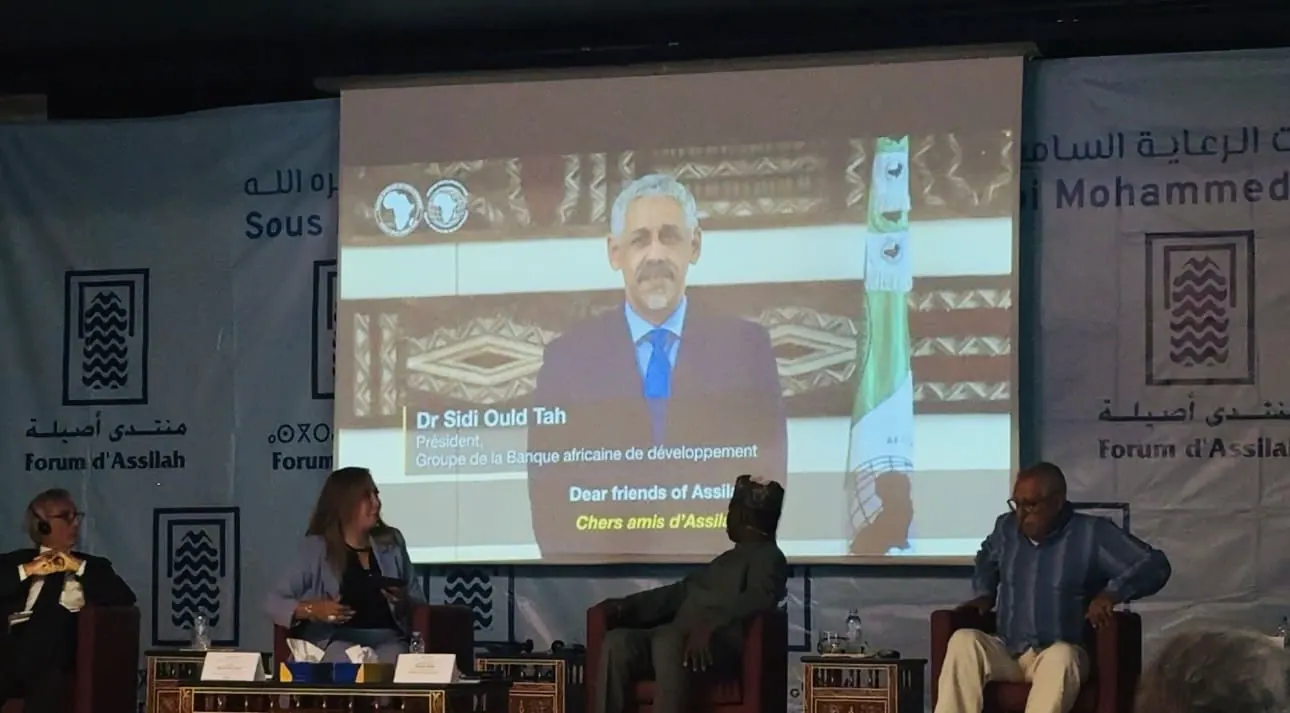
The 47th Asilah Cultural Season continued in Asilah, northern Morocco, with discussions on water, energy, and African integration challenges. The events are part of this year's theme, "Water and Energy as Challenges for New Geopolitics." Participants emphasized the connection between water, energy, infrastructure, economic integration, and demographic changes in Africa. They highlighted the need for infrastructure development, enhanced connectivity between countries, and transforming trade routes into development projects that create value and jobs.
African Development Bank President, Sidi Ould Tah, stated that intra-African trade remains limited, representing only 14.4% of the continent's total trade. He attributed this to weak integration of African economies and significant infrastructure needs in transportation, energy, and integrated infrastructure. Ould Tah called for increased investments to accelerate economic transformations required in Africa. He also noted that around 600 million people in sub-Saharan Africa lack access to electricity, stressing the importance of achieving energy integration and universal energy access.
Ould Tah mentioned that the African Development Bank aims to connect 300 million Africans to electricity by 2030, with over 50 million people already benefiting from this initiative. He emphasized the bank's efforts to address Africa's infrastructure and energy challenges. The bank is working to support countries in preparing sustainable investments and enhancing water sector governance to build real water security.
Moroccan Minister of Energy and Mines, Mohammed Boutalib, discussed the need to move beyond the concept of trade routes as mere pathways for goods. He suggested transforming them into economic spaces capable of producing added value. Boutalib questioned how to accelerate regional and continental initiatives launched by Morocco in African integration and turn energy, connectivity, and Atlantic initiatives into development drivers.
Boutalib highlighted the importance of the African Atlantic Economic Zone, electrical connectivity projects, and the Atlantic initiative as means to enhance communication between African economies and open new avenues for trade and investment. He noted that achieving African integration is not straightforward and requires capable institutions and competent individuals to create favorable conditions for success.
Sidi Ould Tah considered water a crucial element in Africa's future, emphasizing the African Development Bank's efforts through the African Water Facility. The bank supports countries in preparing sustainable investments, enhancing water sector governance, and building real water security. Ould Tah stressed the need for substantial financial resources and resilient infrastructure to address the challenges facing the continent.
Mauritanian diplomat, Mohamed Hassan Ould Lebatt, called for a more precise scientific approach in addressing water, energy, and environmental issues. He argued that these elements are interconnected and should not be treated separately. Lebatt emphasized the importance of youth in shaping Africa's future and advocated for a larger space for their aspirations, ambitions, and thoughts on Africa's future.
Key points
- The African Development Bank aims to connect 300 million Africans to electricity by 2030.
- Intra-African trade represents only 14.4% of the continent's total trade.
- Around 600 million people in sub-Saharan Africa lack access to electricity.