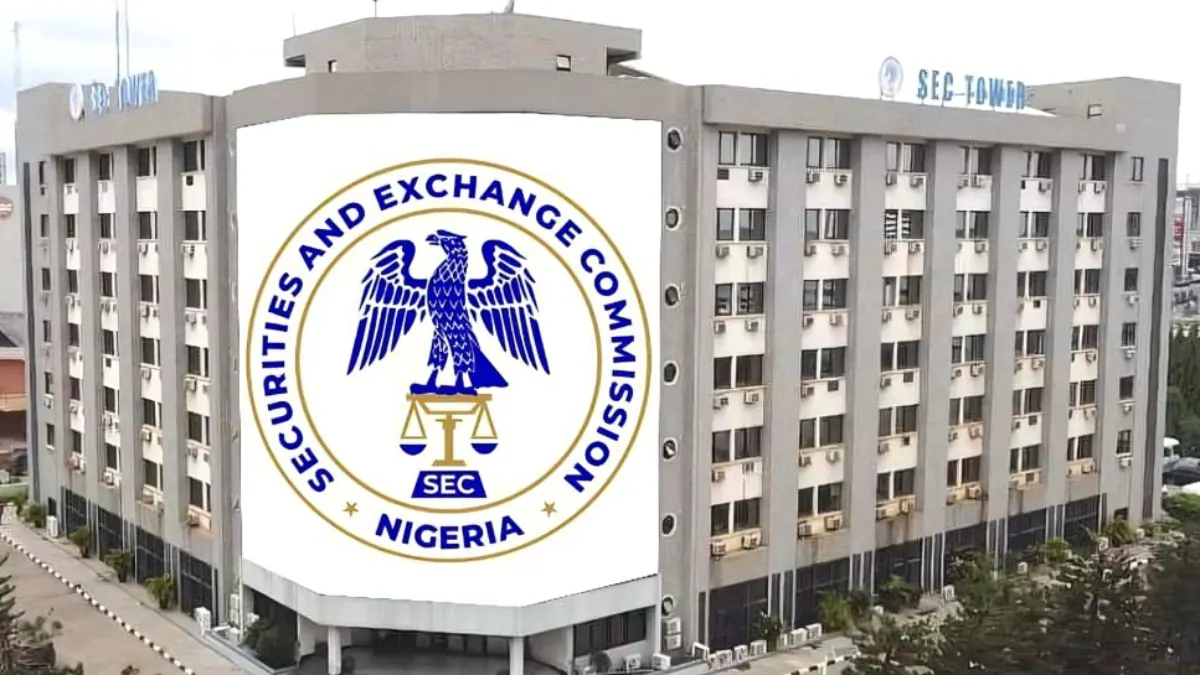
Nigeria's Securities and Exchange Commission has given public companies and significant public interest capital-market operators until October 15, 2026, to submit plans for adopting the IFRS Sustainability Disclosure Standards. This directive is part of the SEC's efforts to assess the preparedness of regulated entities ahead of mandatory sustainability reporting from January 1, 2028. The plans will help the SEC evaluate the readiness of these entities to implement the new reporting standards.
The directive, contained in a circular dated September 23, 2026, issued under the Investments and Securities Act 2025, requires covered entities to explain how they intend to implement IFRS S1 and IFRS S2, the sustainability and climate-related disclosure standards issued by the International Sustainability Standards Board. The implementation plans should cover board and management oversight, a gap assessment against the standards, implementation timelines, and the systems required for collecting and reporting sustainability data.
Companies must provide details of internal controls and assurance arrangements, capacity-building and staff training, as well as the major challenges they expect to face during implementation. The plans must state the expected year in which the entity will begin sustainability reporting under the Financial Reporting Council of Nigeria's roadmap. This requirement gives companies just over 15 months between the October 15 submission deadline and the January 1, 2028 start of mandatory reporting for public interest entities.
Nigeria adopted the IFRS Sustainability Disclosure Standards in June 2023, the same month the ISSB launched IFRS S1 and IFRS S2. The FRCN roadmap initially encouraged early adoption for eligible entities reporting for periods ending on or before December 31, 2023. Voluntary adoption then applied to entities not yet subject to mandatory reporting for periods beginning on January 1, 2024, through periods ending on or before December 31, 2027.
The SEC deadline extends beyond listed companies to significant public interest capital-market operators and market infrastructure providers. Covered entities include exchanges, central securities depositories, clearing houses and trade repositories, among other operators performing important trading, clearing, settlement and market-data functions. The requirement comes as companies face differing levels of preparedness for the new reporting regime.
Earlier industry reporting had pointed to stronger ESG preparation among banks, while some insurers were still developing basic sustainability-reporting capabilities. The SEC said it would continue engaging regulated entities and monitoring compliance with the implementation timetable. The regulator's latest directive shifts the focus from a broad industry transition to company-specific preparation, requiring each covered entity to demonstrate how it intends to meet the 2028 sustainability disclosure deadline.
The implementation of IFRS Sustainability Disclosure Standards is a significant step towards enhancing transparency and accountability in Nigeria's capital market. The SEC's directive is expected to ensure that public companies and significant public interest capital-market operators are adequately prepared for the new reporting regime, which will provide stakeholders with essential information on sustainability and climate-related issues.
Key points
- Public companies and significant public interest capital-market operators have until October 15, 2026, to submit plans for adopting the IFRS Sustainability Disclosure Standards.
- Mandatory sustainability reporting for public interest entities begins on January 1, 2028, under Nigeria's phased adoption roadmap.
- The SEC's directive requires covered entities to provide detailed implementation plans, including board and management oversight, gap assessment, implementation timelines, and systems for collecting and reporting sustainability data.