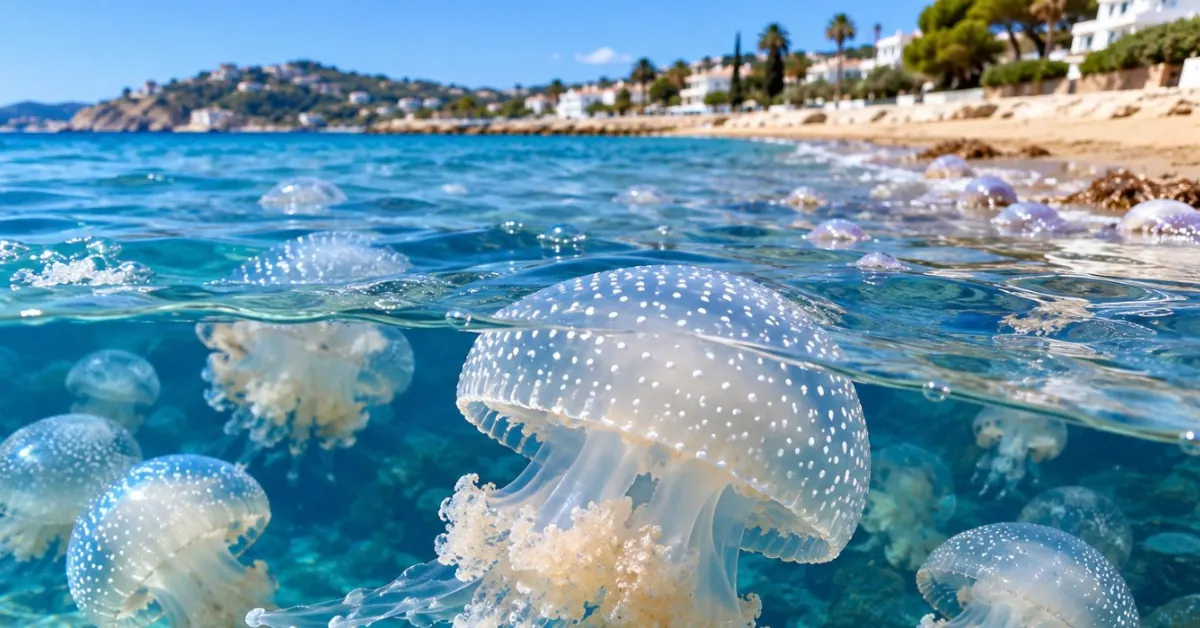
A surge in jellyfish sightings along Tunisian coastlines has raised alarm among local residents and authorities. The phenomenon, observed in various regions including the capital city's coastline, has been linked to an invasive species from the Indian Ocean. According to Yassine Ramzi Sghaier, head of the TUNSEA association and marine biology expert, this species was first documented in Tunisian waters in 2012 and has since spread rapidly.
The invasive jellyfish, characterized by its white and speckled appearance, has been identified as a non-toxic species that poses minimal risk to human health. However, its presence has significant environmental and economic implications. Sghaier emphasized that the jellyfish compete with local species for food, potentially impacting the fishing industry and threatening the livelihoods of fishermen and sailors.
Despite concerns over the jellyfish invasion, Sghaier believes that it can be transformed into an economic opportunity. He suggests that the jellyfish can be exploited for their collagen, a valuable resource used in the medical, cosmetic, and food industries. This could create new job opportunities and generate foreign exchange earnings for the country.
To capitalize on this resource, Sghaier advocates for increased research and development, as well as support for startups and young entrepreneurs interested in jellyfish-based projects. He cites the success of Tunisia's blue crab industry as an example of how an invasive species can be turned into a valuable economic asset.
Rising sea temperatures due to climate change have been identified as a contributing factor to the proliferation of invasive jellyfish in Tunisian waters. Sghaier stresses the need for a comprehensive approach that balances environmental protection with economic development, focusing on the valorization of jellyfish and other marine resources.
The TUNSEA association head also highlights the importance of international cooperation in addressing the issue of invasive species in the Mediterranean. He encourages collaboration between Tunisian and international researchers to develop effective strategies for managing jellyfish populations and mitigating their impacts.
As Tunisia explores ways to address the jellyfish invasion, the government and private sector are urged to invest in research and development, as well as support initiatives that promote the sustainable use of marine resources. By doing so, the country may be able to turn a potential environmental liability into a valuable economic opportunity.
Key points
- Invasive jellyfish have invaded Tunisian coastlines, posing environmental and economic challenges.
- Experts see potential economic opportunities in exploiting jellyfish for their collagen.
- Climate change and international cooperation are key factors in addressing the issue.