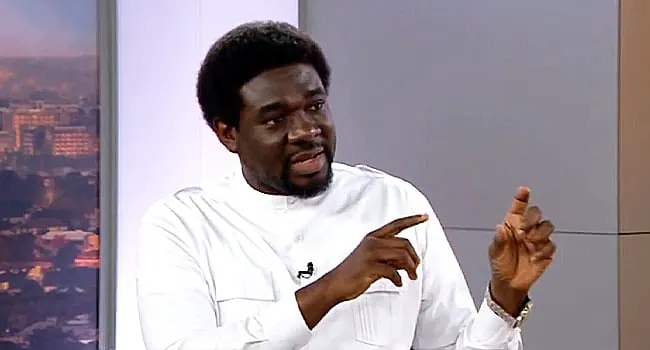
The President of Trade Union Congress of Nigeria (TUC), Festus Osifo, has stated that the Federal government's recent reduction of fuel price from N1400 to N1350 per litre will involve subsidy payment. According to Osifo, the balance of the N50 will be covered by the government. This move has sparked debate among stakeholders, with some arguing that it is a necessary step to cushion the effects of rising fuel prices.
Osifo explained that when the price of a product is reduced, the government is essentially subsidizing it. He noted that the real challenge in Nigeria is that people are comparing the price of fuel in the country to other nations around the world without considering the differences in minimum wage. For instance, he mentioned that the minimum wage in the United Kingdom is about 3,000 pounds, which is equivalent to N6 million.
The TUC President emphasized that due to Nigeria's low minimum wage, the price hike will affect Nigerians more. He highlighted that the country's economic size is small, and its revenue is limited compared to countries like the UK, which has an unemployment rate of a single digit, while Nigeria's is about 45 percent. This, he believes, makes it challenging for Nigeria to manage its fuel prices.
Earlier, the Presidential candidate of the Social Democratic Party (SDP), Prince Adewole Adebayo, had stated that if elected, there will be no fuel subsidy in his government. He argued that reducing the price of fuel from N1400 to N1350 will not create any significant impact or reduce the hardship faced by Nigerians due to rising fuel prices.
Adebayo called for a holistic approach to the energy sector that would enable increased domestic production to stabilize fuel prices. He believes that this is the only way to address the root causes of fuel price hikes and ensure a sustainable solution. His stance on subsidy has sparked debate among stakeholders, with some agreeing and others disagreeing with his position.
The fuel price reduction has been seen as a temporary measure to cushion the effects of rising fuel prices. However, stakeholders are calling for a more comprehensive approach to address the underlying issues driving fuel price hikes. The government's policy has also raised questions about the sustainability of subsidy payments and the impact on the country's economy.
The debate on fuel subsidy and price control is ongoing, with different stakeholders holding varying views. While some argue that subsidy payments are necessary to cushion the effects of fuel price hikes, others believe that it is unsustainable and that a more comprehensive approach is needed to address the root causes of the problem. The government's policy has also sparked discussions about the need for a holistic approach to the energy sector.
Key points
- The TUC President, Festus Osifo, says government's fuel price reduction policy will involve subsidy payment.
- SDP's Adebayo vows to scrap fuel subsidy if elected.
- Stakeholders are calling for a holistic approach to address the underlying issues driving fuel price hikes.