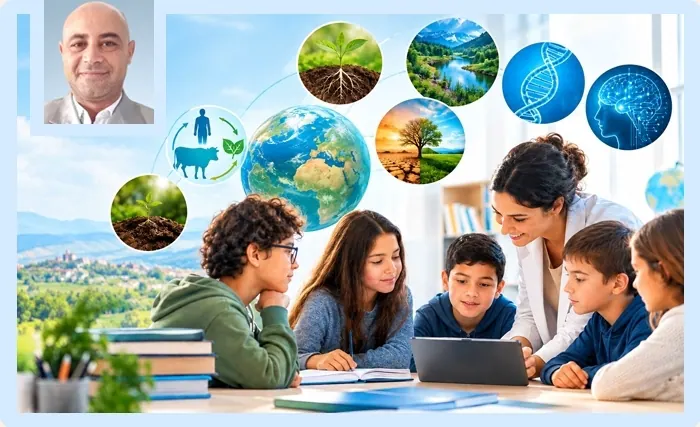
As thousands of Tunisian students begin their new academic year, Professor Dhia Bouktila, a Genetics professor at the University of Monastir, poses a crucial question: are the knowledge and concepts being transmitted to students still aligned with the rapidly evolving scientific world they will live in? The pace of scientific progress often outstrips the transmission of knowledge through traditional educational systems. New concepts emerge, and existing representations are significantly transformed. This raises concerns about the content of textbooks and educational programs.
The understanding of certain phenomena, such as desertification, has undergone significant changes over the years. Previously, desertification was perceived as the expansion of deserts, with sand gaining ground. However, contemporary science offers a broader understanding, encompassing soil degradation, loss of biodiversity, altered biological functions, drought, salinization, and vulnerability of agricultural systems. Similarly, microorganisms were once viewed primarily as disease-causing agents, whereas current scientific knowledge highlights their vital role in ecosystems, biological cycles, and human health.
This shift in scientific understanding underscores a critical issue: what happens when scientific knowledge advances, but educational content lags behind? This question has practical implications for everyday life, particularly in areas such as climate change, biodiversity, health, nutrition, water quality, soil conservation, energy, artificial intelligence, and digital data. Citizens are increasingly required to comprehend, interpret, and make informed decisions about these issues. The UNESCO recommends integrating climate change and sustainability education into curricula, emphasizing the transmission of scientifically rigorous knowledge that progresses with students' age and academic level.
The scientific vocabulary has also undergone significant changes, with terms like genome, microbiome, metagenomics, epigenetics, artificial intelligence, CRISPR, One Health, and resilience becoming integral to modern scientific discourse. These concepts structure the way citizens understand their environment and societal transformations. The introduction of new scientific concepts and vocabulary transforms the way citizens perceive and comprehend the world. For instance, the concept of the microbiome highlights the complex interactions between microorganisms, their environment, and host organisms.
The evolution of scientific understanding has significant implications for education. The modernization of a country's scientific landscape can no longer be limited to laboratories; it must also extend to primary schools, textbooks, media, and general culture. In the 21st century, scientific literacy has become a new form of basic education, essential for citizens to navigate an increasingly complex world. Educational materials, including textbooks, must be updated to reflect current scientific knowledge and understanding.
A textbook's role goes beyond simply transmitting information; it also shapes the next generation's perception of the world. Therefore, updating educational content should not be viewed as a routine editorial task. Outdated textbooks can perpetuate obsolete knowledge and hinder students' ability to understand the complexities of the modern world. Educational authorities must prioritize the development of scientifically accurate and relevant curricula that keep pace with rapid scientific advancements.
Ultimately, the transformation of scientific knowledge and understanding demands a corresponding evolution in education. By integrating contemporary scientific concepts and vocabulary into educational materials, Tunisia can ensure that its future generations are equipped to navigate and contribute to an increasingly complex and interconnected world. This requires a concerted effort from educators, policymakers, and stakeholders to prioritize scientifically informed education and foster a culture of lifelong learning.
Key points
- The rapid pace of scientific progress necessitates the modernization of educational content to ensure that students receive relevant and accurate knowledge.
- Outdated textbooks and educational materials can hinder students' understanding of complex scientific concepts and their application in everyday life.
- Integrating contemporary scientific concepts and vocabulary into educational materials is crucial for fostering a scientifically literate society.