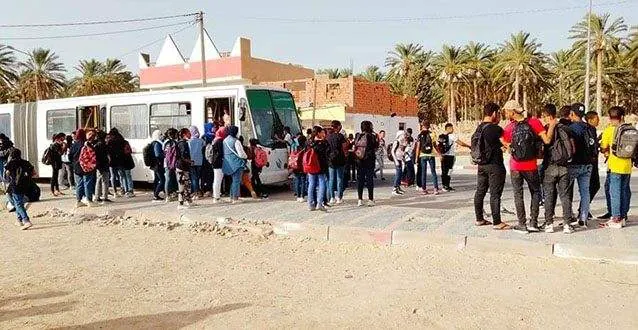
The school transportation system in Tunisia's Sbeiba region, specifically in the Sbeiba secondary school and Ain Khamaissa preparatory school, continues to face significant challenges. As the new academic year begins, students and parents express frustration due to recurring delays and absences of school buses. This situation forces many students to miss morning classes, disrupting their academic progress. The issues have become a yearly concern, sparking worries about the reliability of the transportation system.
The problems with school transportation in Sbeiba have been ongoing for several years, with students and parents calling for improvements. Despite efforts to address these concerns, the situation remains unchanged. The delays and absences of school buses not only affect students' academic performance but also cause logistical challenges for families who rely on these services. Local authorities and education officials have yet to provide a concrete plan to resolve these transportation issues.
In response to these challenges, some students and parents have been forced to find alternative transportation solutions, which can be costly and unreliable. This has added to the financial burden on families, who already struggle to make ends meet. The situation has also raised concerns about the impact on students' academic achievement and overall well-being. Education officials have emphasized the importance of addressing these transportation issues to ensure that students have equal access to education.
The school transportation issues in Sbeiba are not isolated, as similar challenges have been reported in other regions of Tunisia. In recent weeks, there have been reports of transportation issues in other governorates, including Tozeur and Kef. These problems have sparked concerns about the broader implications for the education sector and the need for a comprehensive solution to address these challenges.
According to local reports, the transportation issues in Sbeiba are attributed to a combination of factors, including inadequate infrastructure, insufficient funding, and logistical challenges. To address these problems, education officials and local authorities will need to work together to develop a comprehensive plan that includes investing in new transportation infrastructure, increasing funding, and improving logistics.
The situation in Sbeiba has also drawn attention to the need for greater investment in education infrastructure, particularly in rural areas. Education experts have emphasized the importance of ensuring that students have access to reliable transportation, safe learning environments, and adequate resources to succeed academically. By addressing these challenges, Tunisia can work towards providing a more equitable and effective education system.
As the academic year progresses, students, parents, and education officials in Sbeiba and beyond will be closely monitoring the situation, hoping for a resolution to these ongoing transportation challenges. The issues have highlighted the need for greater collaboration and investment in education infrastructure to ensure that all students have equal access to quality education.
Key points
- Ongoing school transportation issues in Tunisia's Sbeiba region cause concern for students and parents.
- The problems have been ongoing for several years, with students and parents calling for improvements.
- The situation has sparked concerns about the impact on students' academic achievement and overall well-being.