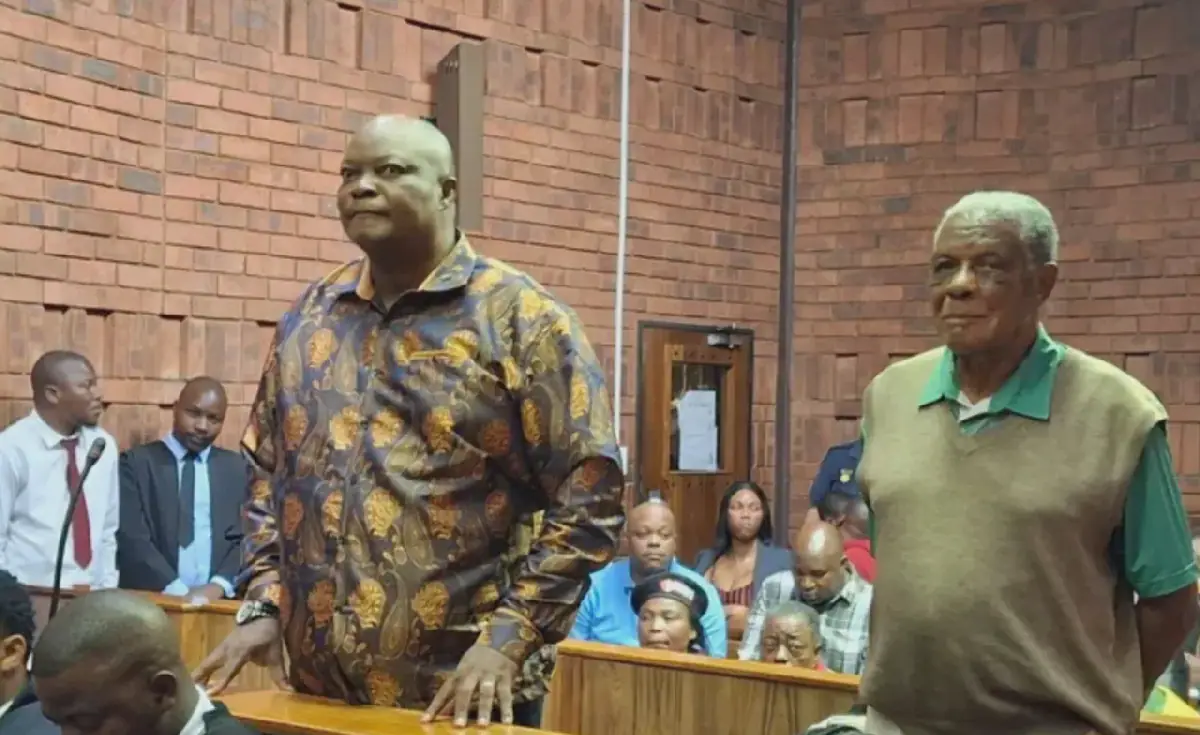
A South African police fingerprint report dated July 16, 2026, has found no identifiable prints linking Zimbabwean opposition leader Job Sikhala or his uncle, Alexander Thema, to the explosives at the centre of their Pretoria case. The report from the South African Police Service's Local Criminal Record Centre in Pretoria compared the men's fingerprints and palm prints with impressions lifted during the investigation, recording a negative result. This development has raised questions about the prosecution's evidence and next steps in the case.
Sikhala and Thema were arrested in Pretoria on November 6, 2025, after police stopped and searched the vehicle they were travelling in, finding 26 blasting cartridges and 15 fuse connectors. The pair were each granted bail of R10,000 and deny involvement in the alleged possession of explosives. Sikhala's lawyers have alleged that he was lured to a meeting in Pretoria and that someone may have placed the explosives in the car while he was briefly away.
The fingerprint report does not settle the case, as a lack of identifiable fingerprints is not, on its own, proof that a person did not handle an object. The prosecution's case and any further forensic findings would need to be assessed through the court process. Sikhala and Thema remain accused, not convicted. According to journalist Hopewell Chin'ono, who reported on the fingerprint findings, the examination did not produce identifiable prints linking either man to the evidence.
When the matter was postponed to August 3, 2026, authorities cited outstanding forensic evidence. Sikhala's lawyer, Bongani Dee of Mabuza Attorneys, had warned the state that the case should be withdrawn if investigations were not completed by that date. The case has significant implications for Sikhala, a former Zimbabwean Member of Parliament, who has alleged that Zimbabwean state security agents worked with rogue South African police officers to frame him.
The prosecution's case relies on various pieces of evidence, but the lack of identifiable fingerprints on the devices raises questions about whose prints, if any, can be identified. The court process will need to consider the fingerprint findings, along with any other forensic evidence, to determine the next steps in the case. Sikhala and Thema's lawyers will likely scrutinize the prosecution's evidence and challenge any claims made against their clients.
The Pretoria explosives case has garnered significant attention in both Zimbabwe and South Africa, given Sikhala's prominence as an opposition leader. The case has also raised concerns about the potential for state security agents to interfere with the investigation and the integrity of the evidence. As the case continues through the court process, it will be closely watched by observers in both countries.
In the meantime, Sikhala and Thema remain out on bail, awaiting the next developments in the case. Their lawyers will continue to challenge the prosecution's evidence and advocate for their clients' rights. The case serves as a significant test of the South African justice system and its ability to handle complex, high-profile cases involving allegations of state interference and misconduct.
Key points
- The South African police fingerprint report found no identifiable prints linking Job Sikhala or his uncle Alexander Thema to the explosives in the Pretoria case.
- The lack of identifiable fingerprints does not necessarily prove that Sikhala or Thema did not handle the explosives, and the prosecution's case will need to be assessed through the court process.
- The case has significant implications for Sikhala, a former Zimbabwean Member of Parliament, who has alleged that Zimbabwean state security agents worked with rogue South African police officers to frame him.