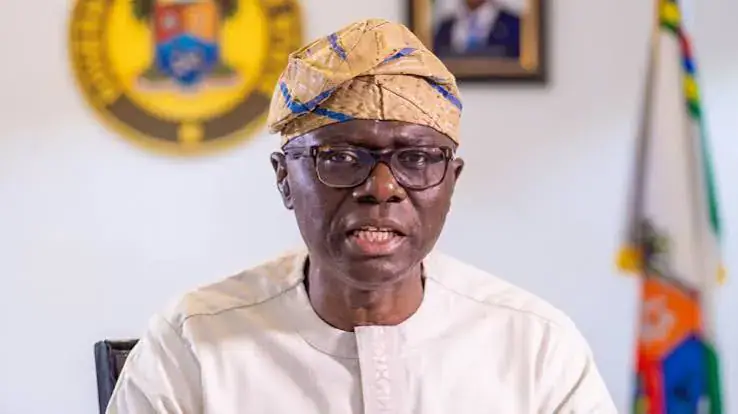
Lagos State Governor, Babajide Sanwo-Olu, has acknowledged the contributions of former governors Lateef Jakande, Bola Tinubu, Babatunde Fashola, and Akinwunmi Ambode to the state's emergence as Africa's megacity. He made the remarks at the presentation of "Lagos: The Making of Africa's Megacity," a 32-chapter publication documenting Lagos' development over the years. The book examines leadership decisions, policies, and projects that have shaped the state.
Sanwo-Olu stressed that the publication was not intended to glorify an individual or celebrate a particular administration, but to document the collective efforts of successive governments in transforming Lagos. He identified growing demand for transportation, housing, healthcare, education, security, and economic opportunities as major challenges confronting the rapidly expanding city. Addressing these demands requires careful planning, strong institutions, difficult policy decisions, and consistency in implementation.
The governor explained that his administration's THEMES and THEMES+ development agendas promote inclusive growth through investments in infrastructure, rail transportation, water connectivity, healthcare, education, housing, food security, and technology. He commended President Bola Tinubu's leadership at the national level, expressing confidence in his administration's ability to sustain its policies and programmes.
Sanwo-Olu reiterated his endorsement of his deputy, Dr. Obafemi Hamzat, the All Progressives Congress (APC) governorship candidate, describing him as capable of taking the state to the next level. He maintained that continuity in leadership was important to sustaining Lagos' development trajectory. Hamzat described Lagos as a city shaped by the contributions of successive leaders and the determination of residents from different backgrounds.
The founder of the Eminent Nigerians Series, Prince Bimbo Folayan, said the publication was the product of independent research and assessments conducted by Nigerian and international authors and editors. The research team visited several projects across Lagos, including the Tolu School Complex in Ajegunle and the Lagos Blue Line rail service. The project examines the human impact of governance, particularly the opportunities created for vulnerable communities and young people.
Folayan disclosed that the initiative will be complemented by a documentary intended for international distribution and a youth development programme known as the Sanwo-Olu Legacy Initiative for Development (SOLID). SOLID will provide young people with relevant skills, mentorship, enterprise support, and access to employment opportunities. The pilot programme, scheduled to commence in 2027, will target at least 10 participants from each of Lagos State's 20 local government areas and 37 Local Council Development Areas (LCDAs).
The book was reviewed by Professor Maryam Quadri, a political scientist at the University of Lagos. Sanwo-Olu's remarks highlight the importance of leadership continuity and strong institutions in shaping Lagos' development. The governor's administration continues to build on the foundations laid by previous administrations to address the state's challenges and promote inclusive growth.
Key points
- Sanwo-Olu credits predecessors for Lagos' megacity status
- Leadership continuity and strong institutions key to Lagos' development
- Governor endorses deputy as APC governorship candidate