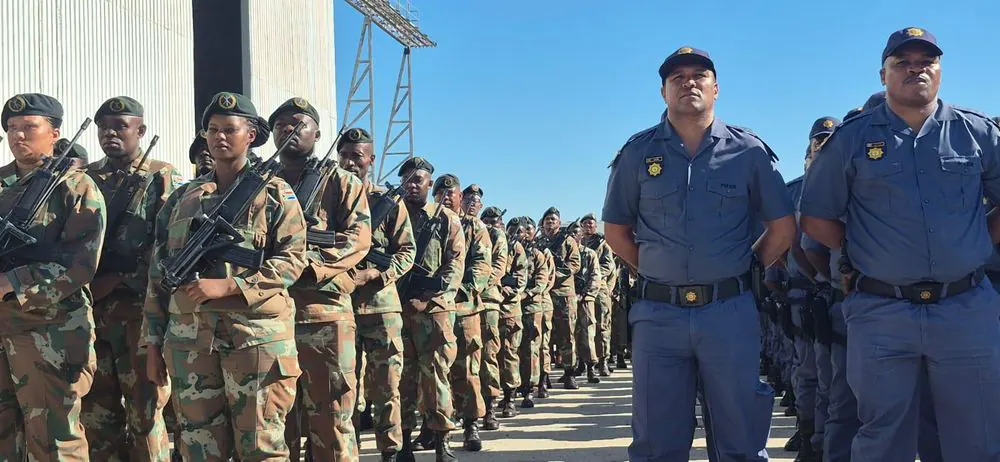
The South African National Defence Force's (SANDF) crime-fighting efforts under Operation Prosper are facing significant operational challenges due to an ageing, unreliable, and poorly maintained vehicle fleet. Defence Minister Angie Motshekga confirmed these vehicle shortages and maintenance issues in a parliamentary reply, highlighting the strain on operations across high-risk urban, rural, and mining areas. President Cyril Ramaphosa authorised Operation Prosper, deploying the army to assist the police in fighting crime in crime-ridden areas at a cost of over R823m.
Motshekga acknowledged that the fleet's condition places significant strain on operations, although she could not specify the number of "unserviceable" vehicles. She revealed that the department has instituted measures to mitigate the impact of vehicle unserviceability and maintain operational mobility. This was in response to an EFF MP Muzi Khoza's query regarding measures taken to repair or replace SANDF vehicles in poor condition, which posed safety risks to defence personnel and compromised operational effectiveness.
The SANDF has identified vehicle availability and serviceability as an operational sustainment concern in certain areas of Operation Prosper. Motshekga stated that the SANDF continuously monitors the serviceability status of vehicles allocated to deployed force elements. However, the exact number of unserviceable vehicles varied as vehicles are repaired, returned to service, or withdrawn for further maintenance.
To mitigate the impact of the problem, the SANDF is prioritising the repair and recovery of essential vehicles, conducting technical inspections, and allocating available maintenance capacity, spares, and logistical resources towards operationally critical vehicles. Motshekga's department is also reviewing vehicle allocation and sustainment requirements of deployed units to ensure personnel are not exposed to avoidable safety risks and operational effectiveness is maintained.
Security strategist Ambassador Andy Mashaile criticised the government's "lack of smart and strategic thinking" regarding defence resources, stating that budgetary constraints were not a sufficient argument. Mashaile warned that the continued deployment of the army in communities posed dangers, as soldiers were not trained for policing work. He advocated for more investment in soldiers' operations and changes in the police's crime intelligence and leadership.
Willem Els of the Institute of Security Studies suggested that the government should focus on strengthening the police's crime intelligence, hiring more detectives, and addressing corruption to build trust between the public and the police. Els questioned the poor state of defence vehicles when R823m was allocated for the operation, wondering if a portion of the funds was earmarked for vehicle maintenance.
The state of the SANDF's vehicle fleet has raised concerns among various stakeholders, including Cosatu's parliamentary coordinator Matthew Parks, who described it as "extremely worrying." Parks noted that the army was being neglected, with soldiers having to buy their own uniforms and boots and not receiving sufficient training to maintain vehicles.
Key points
- The SANDF's ageing vehicle fleet is undermining Operation Prosper.
- The fleet's condition poses safety risks to defence personnel and compromises operational effectiveness.
- Stakeholders are calling for increased investment in defence resources and police reforms.