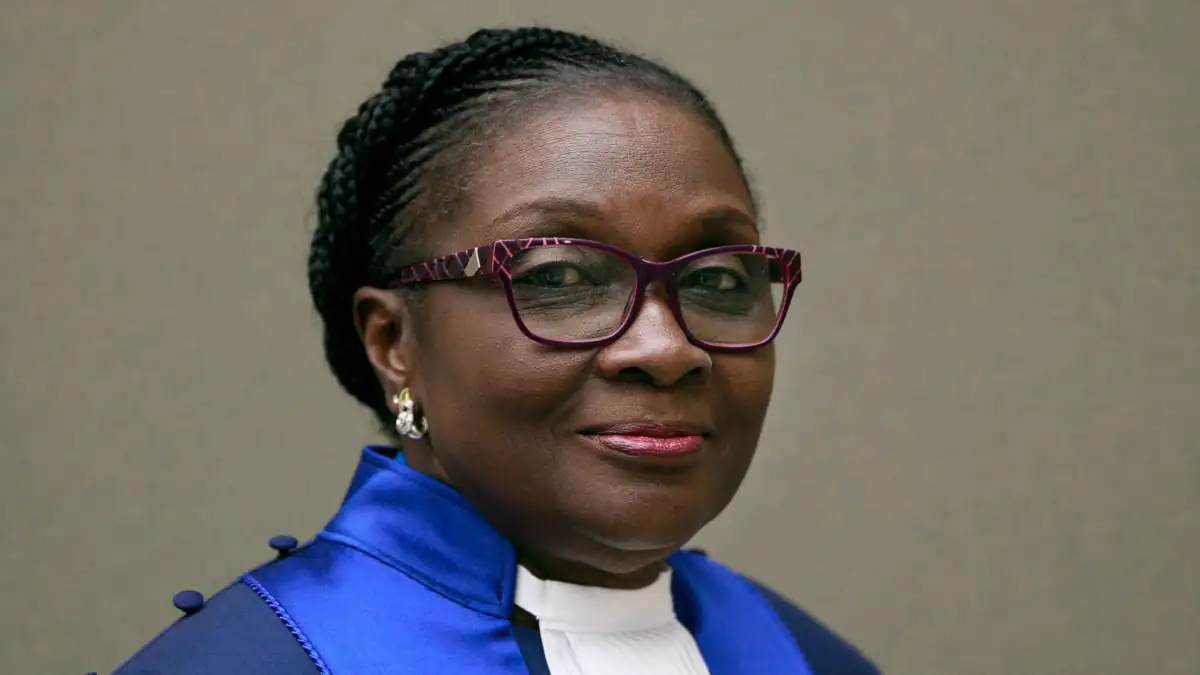
Judge Reine Alapini-Gansou of Benin, serving at the International Criminal Court (ICC), has spoken about the challenges she faces due to US sanctions imposed on her since 2025. On September 23, 2026, she addressed the French National Assembly in Paris, sharing her experiences and concerns. The sanctions, imposed in June 2025, have affected her daily life, including difficulties with credit card usage and travel restrictions.
The US sanctions against Judge Alapini-Gansou were part of a broader measure targeting four ICC judges, related to the court's investigations into Israeli officials, including Benjamin Netanyahu and Yoav Gallant. This move has been seen as an attempt to pressure the ICC. In response, Judge Alapini-Gansou expressed her disappointment and concern, stating that seeing her name on a list of outlaws is shocking, especially given her dedication to law.
The situation escalated with former US President Donald Trump's call for countries to withdraw from the ICC, labeling it an "out-of-control" institution. This statement was made during his address to the United Nations General Assembly on September 22, 2026. Currently, nine out of 18 ICC judges are facing US sanctions. Judge Alapini-Gansou's situation is further complicated by a Russian court's decision to condemn her and other ICC officials in absentia in December 2025.
The Russian court imposed sentences ranging from three and a half to fifteen years on the ICC officials, including Judge Alapini-Gansou, in connection with the ICC's warrant for Vladimir Putin's arrest in March 2023. The former ICC prosecutor, Karim Khan, received a 15-year prison sentence. These developments highlight the increasing pressure on Judge Alapini-Gansou and the ICC.
Despite these challenges, Judge Alapini-Gansou remains committed to her role at the ICC. Currently serving as the second vice-president of the ICC, she was elected as a judge on December 8, 2017, and has been in office since March 11, 2018. Her term is set to end on March 10, 2027. Before joining the ICC, she worked with the African Commission on Human and Peoples' Rights for 12 years.
Judge Alapini-Gansou has held several significant positions, including president of the African Commission from 2009 to 2012 and special rapporteur on the situation of human rights defenders in Africa from 2005 to 2009 and again from 2012 to 2017. In her address at the French National Assembly, she emphasized the importance of staying true to her oath and called on states to take concrete actions against threats to the ICC.
The case of Judge Alapini-Gansou highlights the complexities and challenges faced by international judicial officials. Her situation underscores the need for international cooperation and support for institutions like the ICC. The judge's commitment to her role despite facing sanctions and condemnations from major powers reflects her dedication to justice and human rights.
Key points
- US sanctions against Judge Reine Alapini-Gansou have affected her daily life, including travel and financial restrictions.
- The ICC faces increasing pressure, with nine of its 18 judges now under US sanctions.
- Judge Alapini-Gansou remains committed to her role at the ICC, calling for states to take action against threats to the court.