Retired General Caleb Akandwanaho, also known as Salim Saleh, has disclosed that he played a crucial role in securing medical attention for detained opposition leader Dr. Kizza Besigye. According to Saleh, he was prompted to act after receiving a message from Chief of Defence Forces (CDF) General Muhoozi Kainerugaba on August 25, tasking him with handling Besigye's matter. Saleh revealed that he had lost contact with Besigye due to their political differences but saw this as an opportunity to reconnect with an old colleague.
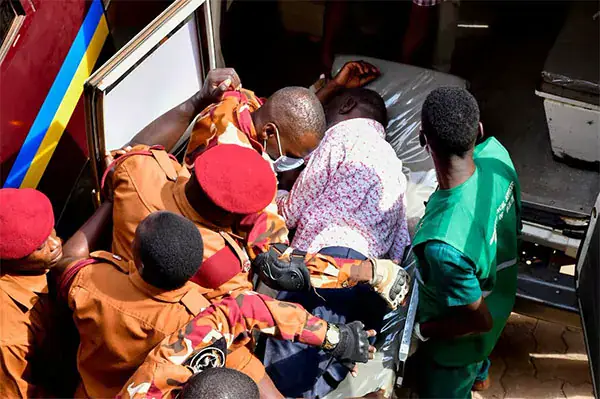
Saleh visited Besigye at Luzira Prison and was shocked by his condition, describing him as "almost dead." He immediately arranged for Besigye's transfer to the Joint Clinical Research Centre (JCRC) for better medical care. Saleh defended his choice of JCRC, citing his role as a founder member of the facility and his confidence in its medical capabilities. He emphasized that JCRC was a suitable choice, as it was a facility he would personally use if he required intensive medical attention.
Saleh's intervention has drawn attention due to reports that he has been leading efforts to engage Besigye and other political actors in discussions aimed at addressing longstanding political differences. However, Saleh avoided describing his engagement with Besigye as peace negotiations, instead characterizing it as an opportunity to restore contact with an old colleague. He disclosed that he had been in contact with Besigye and that their discussions focused on examining the origins of their political separation and finding common ground on Uganda's future.
According to Saleh, the renewed engagement with Besigye aims to help the two overcome their differences and agree on a common vision for the country. He expressed hope that they would reach a combined outlook within the next three to six months. Saleh urged legislators to study Uganda's political history and understand the compromises made by previous generations, rather than allowing old disagreements to define their own political relationships.
Saleh recommended that legislators listen to the arguments of former United Nations Under-Secretary-General Professor Olara Otunnu on consociational democracy, which advocates for political accommodation and power-sharing among competing groups. He cited Otunnu's experience in negotiating compromises with political actors and armed groups as offering valuable lessons for Uganda's current political divisions.
The background of Besigye's detention and charges are complex, involving his arrest in Nairobi, Kenya, in November 2024, and subsequent charges of treason alongside his aide Hajj Obeid Lutale and UPDF Captain Denis Oola. The prosecution alleges that they participated in a plan to overthrow the government by force of arms, which the accused have denied. The case has been ongoing, with Besigye's health becoming a growing concern, particularly after his collapse during a High Court session in July 2026.
Saleh and Besigye's relationship dates back to the early days of the National Resistance Movement (NRM), with their divergence beginning in the late 1990s over differing assessments of Uganda's major challenges. Besigye viewed politics as the principal challenge, while Saleh was more concerned about poverty. Their differences led to a separation, with Besigye becoming one of President Yoweri Museveni's leading political challengers. Saleh hopes that their renewed engagement will enable them to find common ground and work towards a shared vision for Uganda's future.
Key points
- Salim Saleh intervened to secure medical attention for Dr. Kizza Besigye, finding him in a critical condition at Luzira Prison.
- Saleh and Besigye are working to overcome their differences and agree on a common vision for Uganda's future.
- The engagement between Saleh and Besigye is part of a broader effort to address longstanding political differences in Uganda.