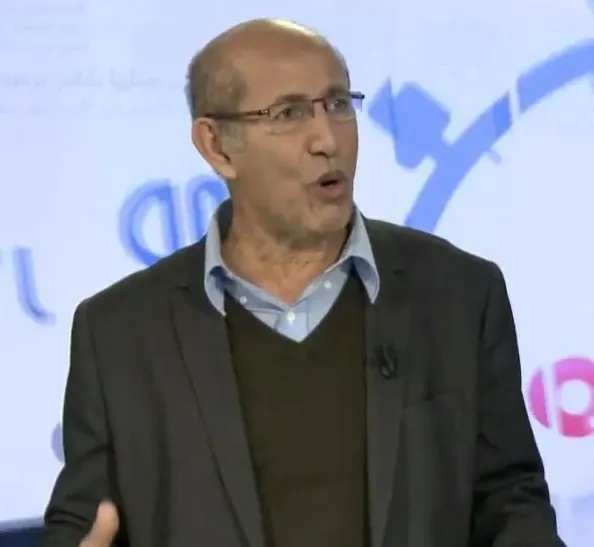
Former Algerian politician Said Khellil has spoken out about the country's ongoing crisis, saying that it is the result of a power grab and a lack of credible institutions. In an interview with Berbère télévision, Khellil, a longtime advocate for the Berber cause, stated that Algeria's "deep state" and decision-makers are invisible. He believes that the current situation was inevitable after years of silence and restricted freedom of expression.
Khellil, who was once the first secretary of the Front des Forces Socialistes (FFS), noted that Algeria's political activity was severely limited for many years, leading to a buildup of frustration among the population. He argued that the country's power structure, which has been in place since independence in 1962, has always relied on force to maintain control. This approach has led to a disconnection between the government and the people, with the latter demanding radical change.
According to Khellil, the Algerian government was caught off guard by the protests that began on February 22. He believes that the authorities thought they could continue to manage the situation as they had in the past, but the scale of the unrest has forced them to confront the reality of their disconnection from the people. Khellil also drew parallels with the events of 1992, when the electoral process was halted and President Chadli Bendjedid was forced to resign.
Khellil highlighted the current government's lack of credibility, citing the fact that President Abdelmadjid Tebboune, who appointed the current government, has since resigned. He also pointed to the contested nature of President Abdelkader Bensalah's authority, with many Algerians rejecting his legitimacy. This situation has contributed to a stalemate, with no clear direction for the country's future.
The former FFS secretary emphasized that Algeria's problems can only be resolved by establishing a state based on the rule of law, where individual and collective freedoms are respected. He advocated for a separation of powers and a more balanced distribution of authority, rather than concentrating it in the hands of the president. Khellil believes that this approach would help to rebuild trust and create a more stable political environment.
When asked about the feasibility of achieving such a goal, Khellil pointed to the experiences of other countries that have successfully transitioned to more democratic systems. He argued that Algeria can learn from these examples and adapt them to its own context, rather than trying to invent a new approach. By drawing on international best practices, Khellil believes that Algeria can create a more just and equitable society.
Khellil concluded that the cumulative effect of Algeria's problems has created a complex situation, but one that can be addressed through a fundamental transformation of the country's institutions and power structures. He emphasized the need for a credible and inclusive political process that reflects the will of the Algerian people. Ultimately, Khellil's vision for Algeria's future is one of democratic reform and greater accountability.
Key points
- Said Khellil says Algeria's crisis stems from a power grab and a lack of credible institutions.
- Khellil advocates for a state based on the rule of law, with a separation of powers and greater accountability.
- The former FFS secretary believes that Algeria can learn from international best practices in democratic reform.