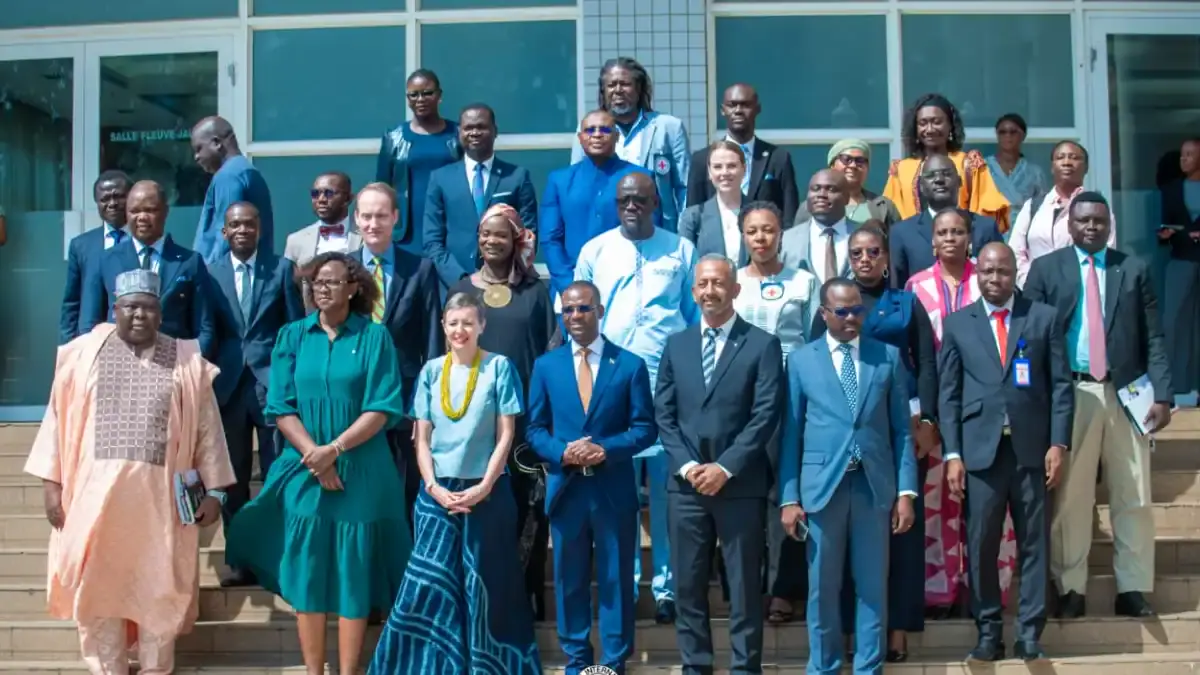
The Committee International de la Croix-Rouge (CICR) and Switzerland recently collaborated with Benin's Ministry of Foreign Affairs to host a meeting in Cotonou, focusing on protecting women in armed conflict situations. The event brought together members of the diplomatic corps and representatives from various Beninese administrations to discuss the requirements of international humanitarian law. The meeting examined the risks women and girls face in conflicts, including sexual violence, forced displacement, and limited access to essential services.
CICR's Benin mission head, Hubert Nzakimuena, emphasized the crucial role diplomats play in promoting humanitarian law. He explained that the event aimed to gather diplomatic representations and concerned administrations to encourage collective reflection on women's protection. Nzakimuena highlighted that through diplomacy, they can revitalize and strengthen humanitarian principles and rules, leading to improved operational practices and solutions to contemporary challenges.
Gabriella Spirli, head of Swiss Cooperation in Benin, noted that women and girls are among those most exposed to conflict consequences. She stressed the need to prevent violations, protect survivors, and ensure their access to justice. Spirli also advocated for better consideration of women's specific needs in humanitarian operations and the application of international humanitarian law. Switzerland supports women's participation in conflict prevention, mediation, and reconstruction processes.
The Swiss Cooperation is committed to supporting women's empowerment through the Programme d'appui à l'égalité de genre (PAEG), which accompanies the implementation of UN Security Council Resolution 1325 on women, peace, and security. The program includes supporting the development of a new National Action Plan 1325 and providing devices for prevention and care of violence.
Benin's Ministry of Foreign Affairs Secretary General, Ambassador Franck Armel Afoukou, welcomed the CICR and Swiss Cooperation's initiative. He recalled that armed conflicts expose women to particular risks but also acknowledged their essential role in community resilience, peace consolidation, and reconstruction. Afoukou emphasized that their protection must be guaranteed before, during, and after conflicts.
The Cotonou discussions took place as the CICR and several states pursue a global initiative to strengthen respect for international humanitarian law. Over 120 states participate in this initiative, which aims to adopt a political declaration reaffirming the need to protect civilians in armed conflicts by December 2026.
The meeting's outcome enabled participants to better understand the role of diplomacy in defending humanitarian principles and reflect on ways to strengthen their application. The CICR and Swiss Cooperation's efforts aim to promote a culture of respect for international humanitarian law and protect vulnerable populations, particularly women and girls, in conflict situations.
Key points
- The CICR and Switzerland are working together to protect women in armed conflict situations in Benin.
- The initiative aims to strengthen respect for international humanitarian law and promote a culture of protection for vulnerable populations.
- The meeting in Cotonou brought together diplomats and administrators to discuss the specific needs of women and girls in conflict situations.
Reporting sources
- Bénin : le CICR et la Suisse mobilisent les diplomates pour protéger les femmes · lanouvelletribune.info