The South African Human Rights Commission has warned that Gauteng's worsening water crisis is primarily due to failing infrastructure, high water losses, and weak municipal distribution systems, rather than a lack of water. The commission's 171-page report, released on November 2, 2026, highlights the need for urgent attention to address the widespread weaknesses in water and sanitation services across the province. The report was compiled after an inquiry held in May 2026, which examined water and sanitation services across Gauteng's nine water services authorities.
The inquiry found that ageing infrastructure, high water losses, insufficient reservoir and pumping capacity, electricity interruptions, bulk-supply failures, and weaknesses in municipal distribution all contribute to unreliable services. The commission noted that the availability of water at source does not ensure that communities receive water that is safe, sufficient, and reliably available at the point of use. The report emphasizes that aggregate municipal access figures can conceal severe shortages in particular neighborhoods, citing Johannesburg as an example where community submissions described prolonged interruptions and long-term reliance on alternative supplies.
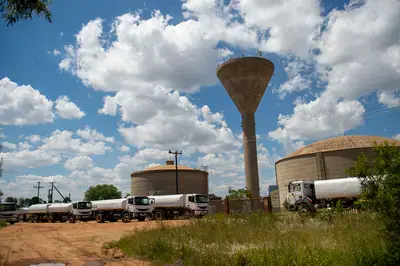
The growing use of water tankers has become a concern, with the commission describing it as a "road-based water distribution network" that has become a regular part of water provision. Tshwane reported servicing informal settlements through 282 tankers, about 1,150 static 5,000-liter tanks, and a further 106 static 10,000-liter tanks. The commission emphasized the need for standards covering water quality, accessibility, procurement, cost-effectiveness, monitoring, and accountability for tanker supplies. The report criticizes the cost of tankering and the way it is procured, citing figures for Tshwane where expenditure rose from R47 million in 2021/22 to R777 million in 2024/25.
The commission's chair, Henk Boshoff, expressed concern about the cost of tankering, describing it as a "brazen form of corruption and financial mismanagement." He noted that the hundreds of millions of rands spent on water tankering could have been used to upgrade infrastructure to provide continuous water provision to people. The report also examines how responsibility is divided across the water-services system, with municipalities remaining responsible for ensuring residents receive water and sanitation, but interruptions can originate in bulk water infrastructure, electricity supply, or functions performed by other institutions.
The commission described municipalities as "cost shock absorbers," managing the immediate consequences of failures that might originate beyond their control. However, this does not remove their responsibility for problems in their own systems. The report finds significant shortages of engineers, scientists, process controllers, artisans, and other technical staff needed to operate and maintain water and wastewater infrastructure. Financial-management weaknesses, including unresolved unauthorized, irregular, fruitless, and wasteful expenditure, also affect some municipalities' ability to maintain services.
Wastewater treatment across the province is a major concern, with Mogale City's Green Drop score at 29.9%, placing it in the critical risk category. The commission recommends prioritizing failing and at-risk treatment works according to the risks they pose to human health, water resources, and downstream users. The inquiry also examined the February 2026 bulk-water disruptions, when failures at Rand Water's Palmiet and Zuikerbosch pump stations and a major pipe burst affected supply.
The commission's report concludes that urgent attention is needed to address the widespread weaknesses in water and sanitation services across Gauteng. The report's findings and recommendations aim to ensure that communities receive water that is safe, sufficient, and reliably available at the point of use. The commission's inquiry highlights the need for a comprehensive and coordinated approach to address the province's water crisis, including upgrading infrastructure, improving technical capacity, and ensuring accountability for water services.
Key points
- The South African Human Rights Commission's inquiry found that Gauteng's water crisis is primarily due to failing infrastructure, high water losses, and weak municipal distribution systems.
- The growing use of water tankers has become a concern, with the commission describing it as a "road-based water distribution network" that has become a regular part of water provision.
- The commission recommends prioritizing failing and at-risk treatment works according to the risks they pose to human health, water resources, and downstream users.