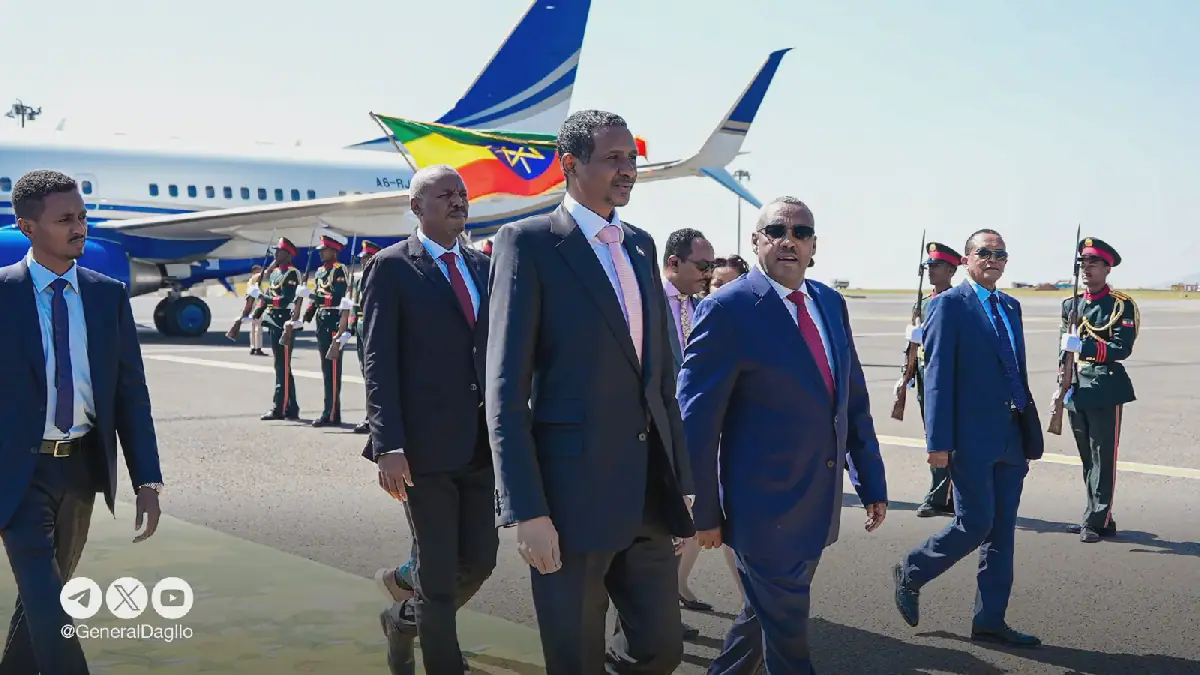
The Sudanese government has accused Ethiopia of permitting the Rapid Support Forces (RSF) to use its territory to launch drone attacks on civilian infrastructure. On Sunday, the Sudanese Foreign Ministry submitted formal complaints to the United Nations Security Council and the African Union’s Peace and Security Council. The ministry claims to have documents showing that the RSF used Ethiopian territory to launch missile-equipped drones against civilian sites and vital facilities across Sudan.
The alleged drone attacks caused civilian casualties and disrupted essential services, according to the Sudanese Foreign Ministry. The ministry described the use of Ethiopian territory as a hostile act and a violation of international law, citing Article 2(4) of the UN Charter. The government called on Ethiopia to halt the attacks and urged the international community to hold the RSF accountable for their actions.
Sudan’s Sovereignty Council reported that 187 drones were launched from inside Ethiopian territory in 70 attacks between February and October. The council identified several sites, including Asosa Airport and the Bahr Dar base, as alleged launch locations. They demanded that Ethiopia close facilities used by the RSF to attack Sudan and called for accountability and compensation.
The complaints follow a wave of drone strikes that damaged 14 electricity distribution stations across several states in Sudan. The attacks caused power cuts in multiple cities and states over the course of a week. The Sudanese government’s complaints have sparked mixed reactions from political analysts, with some questioning the strength of their legal case.
Analyst Qureshi Awad questioned whether Sudan could establish a credible legal case, arguing that they had not provided sufficient evidence to prove where the drones were launched. He suggested that the complaint was primarily political, intended to prepare the public for the consequences of damage to essential services while deflecting attention from security and defence failures.
In contrast, analyst Suhaib Hamid described the complaints as a significant diplomatic step. He said detailed reports identifying alleged launch sites inside Ethiopia, alongside evidence of Addis Ababa’s knowledge of the operations, could strengthen Sudan’s position and prompt an international investigation or a response from the Security Council.
Ethiopia had not immediately commented on the allegations. The international community’s response to Sudan’s complaints remains to be seen. The situation highlights the complex relationships between Sudan, Ethiopia, and the RSF, and the potential for further escalation in the region.
Key points
- Sudan accuses Ethiopia of allowing RSF to launch drone attacks from its territory.
- Sudanese government files formal complaints with UN and AU.
- Analysts disagree over the strength and purpose of Khartoum’s complaints.