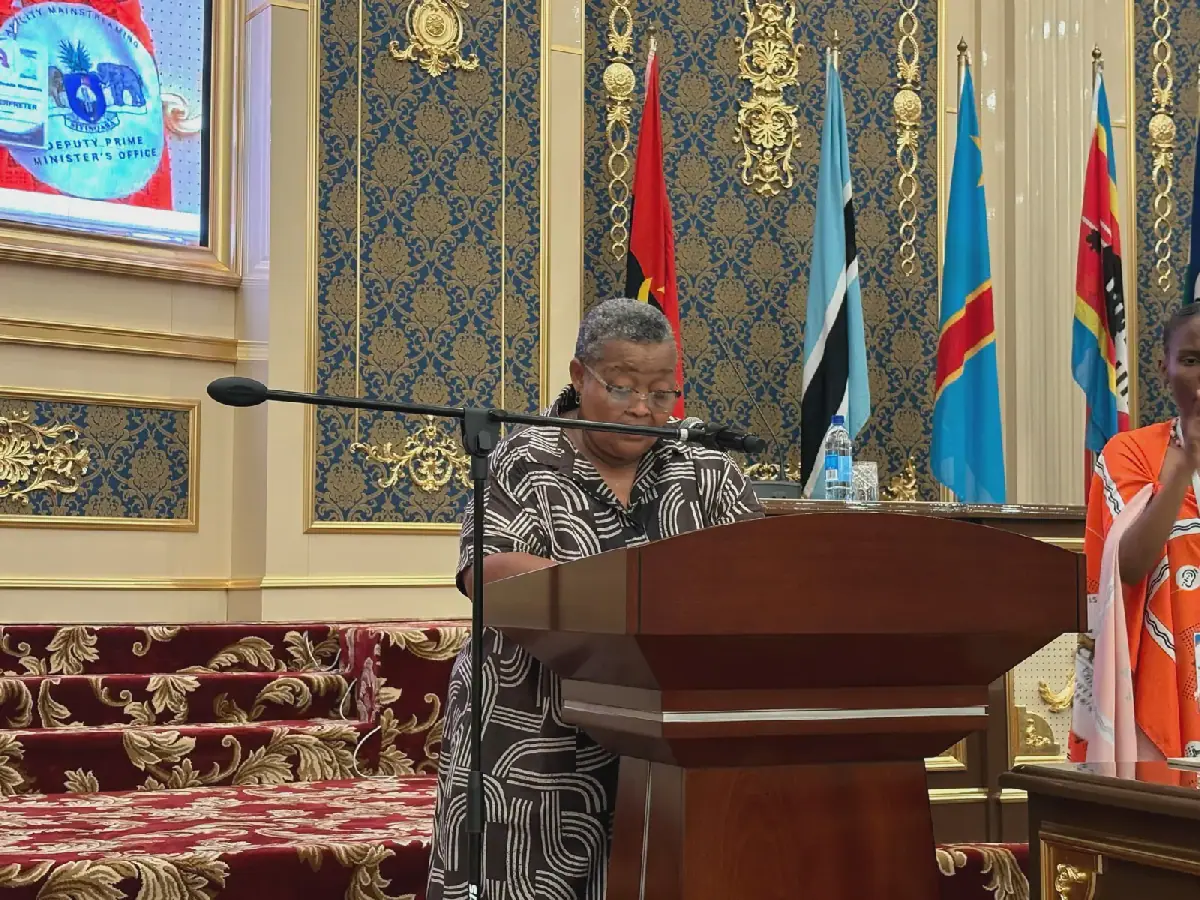
The SADC Parliamentary Forum has introduced a set of administrative and policy reforms as it prepares to transform into a full SADC Parliament. These reforms, outlined in the Report of the Executive Committee on Policy and Administrative Matters, focus on staffing, funding, cooperation with the SADC Secretariat, dress code, gender balance, and cost-sharing. The report was presented to the 59th Plenary Assembly by outgoing Vice President Sylvia Lucas-Izaks from South Africa.
The proposed reforms include inviting member parliaments to second staff to the Forum, with one full-time and one part-time placement, or a remote secondment, to meet approved needs. Special support may also be sought where necessary. Deployments would depend on written agreements and confirmed funding, with the Secretariat overseeing implementation within approved resources. The report also updated members on cooperation between the Forum and the SADC Secretariat, following a meeting between SADC Executive Secretary Elias Magosimet and the Secretary General of the SADC Parliamentary Forum on 29 January 2026.
The meeting between Magosimet and the Secretary General focused on strengthening cooperation between the two institutions and promoting greater citizen engagement in regional integration. Magosi reaffirmed SADC's commitment to the transformation of the Forum into a parliament. The engagement also underlined the importance of collaboration on citizen participation, domestication, and implementation of SADC instruments and resource mobilisation.
The Executive Committee has approved that the Executive Secretary be allowed to write directly to member parliaments requesting an opportunity to address them on regional integration, cooperation between the SADC Secretariat and the Forum, and the role of national parliaments in implementing SADC decisions and instruments. The engagements would address the regional integration agenda, the role of national parliaments in ratification, domestication, and implementation of protocols and other legal instruments.
The Executive Committee was also asked to present a predictable contribution review mechanism and a financing assessment separating once-off from recurring costs, with any contribution adjustment returning to the Plenary Assembly for approval. This review aims to ensure sustainable funding for the Forum's activities. The proposed organogram, attached to the report, is subject to job design, job evaluation, and costing.
The reforms aim to keep the transformation process collective, accountable, and on course. The report stressed that the implementation of these reforms is crucial for the Forum's transformation into a SADC Parliament. The 60th Plenary Assembly will receive an update on the implementation of these reforms.
The SADC Parliamentary Forum's transformation into a full SADC Parliament is expected to enhance regional integration and citizen engagement in the region. The reforms implemented will ensure that the Parliament is well-equipped to handle its new responsibilities. Key points include the implementation of a predictable contribution review mechanism, enhanced cooperation with the SADC Secretariat, and a focus on citizen participation and regional integration.
Key points
- SADC Parliamentary Forum implements reforms to enhance regional integration and citizen engagement
- Reforms focus on staffing, funding, and cooperation with SADC Secretariat
- Transformation into a full SADC Parliament expected to enhance regional integration and citizen engagement
Reporting sources
- SADC PF moves to put its house in order ahead of becoming a Parliament · swazidailynews.com