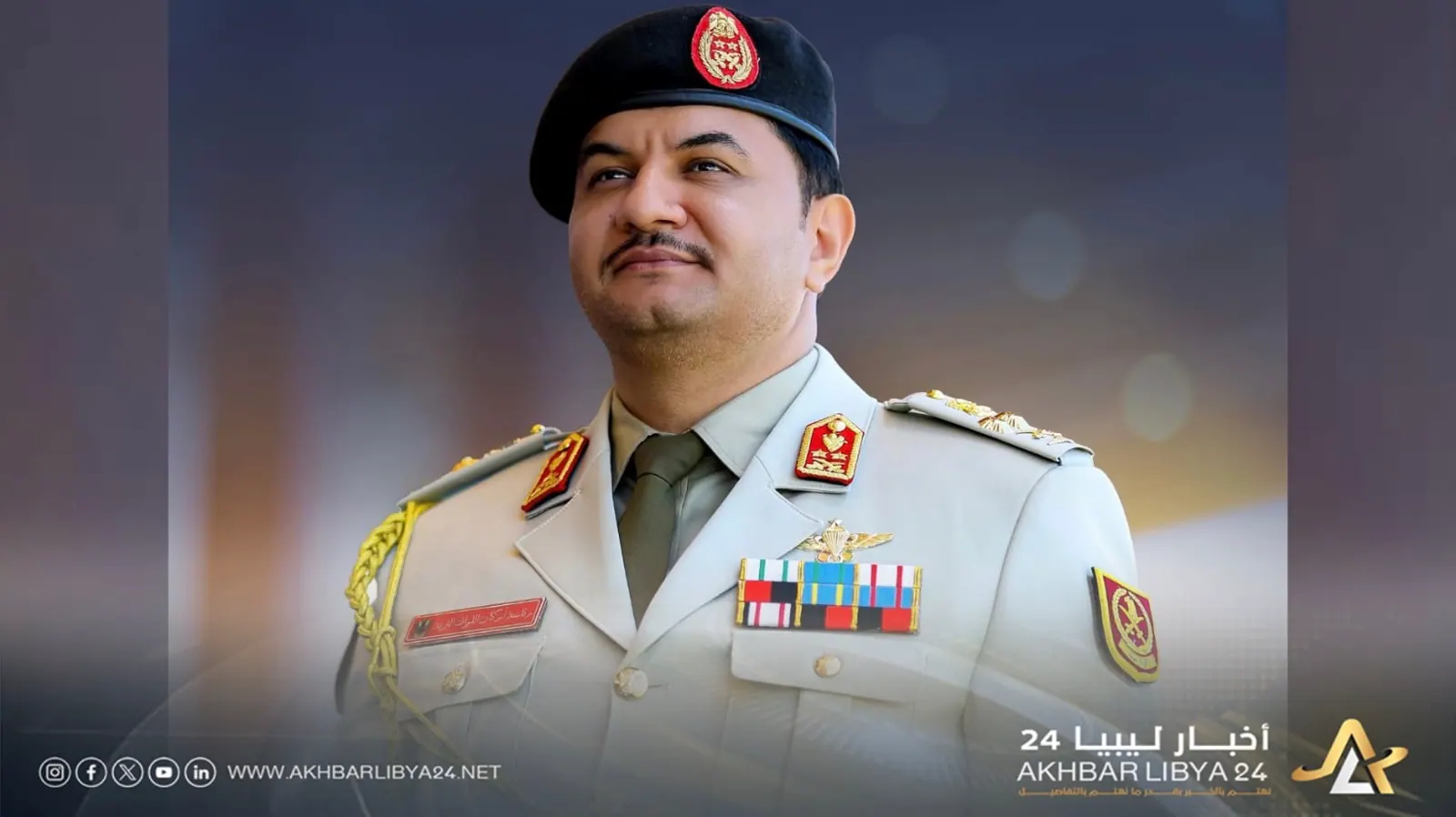
Libyan military leader Sadam Hifter has stated that the country's transition to a stable and unified state begins with building effective national institutions capable of renewing themselves and bearing responsibilities. He emphasized that the strength and regularity of these institutions are essential to protecting the country's unity, sovereignty, and establishing a strong and sustainable state. Hifter's remarks come as Libya continues to navigate its complex transition.
Hifter expressed his positive view of the House of Representatives' decision to develop its working mechanisms and adopt a parliamentary session system. This system involves electing a new leadership council at the start of each session, promoting institutionalized rotation of power. He believes this move will enhance the legislative body's effectiveness, renew its capacity to fulfill national responsibilities, and support stability and progress.
The Libyan military leader renewed his support for the House of Representatives and its new leadership council, comprising Speaker Saleh Abdul Nabi and his deputies, Misha'an al-Duma and Tariq al-Ashtar. Hifter wished them success in their duties, building on the trust of the majority of council members. He emphasized that this would strengthen the national role of the House of Representatives, serve the unification of state institutions, and preserve Libya's unity, sovereignty, and citizens' interests.
Hifter extended his appreciation to former House of Representatives Speaker, Counselor Saleh, and his deputy, Fawzi al-Nuwairi, for their contributions to serving the country. He praised their support for the Libyan Armed Forces during the war against terrorism and their role in enhancing the military's capabilities. These efforts have bolstered the institution's ability to protect the nation and maintain security and stability.
The next phase requires prioritizing the logic of the state and its institutions, transcending divisions, and consolidating institutionalized rotation of responsibility. This will pave the way for completing the unification of Libya's political, executive, and security institutions. Hifter stressed that unified institutions will enhance their ability to perform national responsibilities and support stability and state-building.
Hifter called on Libyans to uphold their unity and rally behind any genuine national effort that advances the country. He emphasized that the goal is to move towards a strong state with effective and integrated national institutions, including a unified national military institution. This institution will shoulder its responsibility to protect Libya's sovereignty, security, and stability, prioritizing national interests and preserving citizens' dignity.
Ultimately, Hifter's vision for Libya's future underscores the importance of institutional strength, national unity, and a commitment to state-building. His remarks reflect a broader consensus on the need for Libyan institutions to be robust, accountable, and capable of serving the nation's interests. As Libya continues its transition, such sentiments are likely to shape the country's path towards stability and progress.
Key points
- Sadam Hifter praises Libya's parliament for adopting an institutionalized process.
- Hifter sees this move as crucial for unifying Libya's institutions and advancing stability.
- The Libyan military leader calls for national unity and a commitment to state-building.