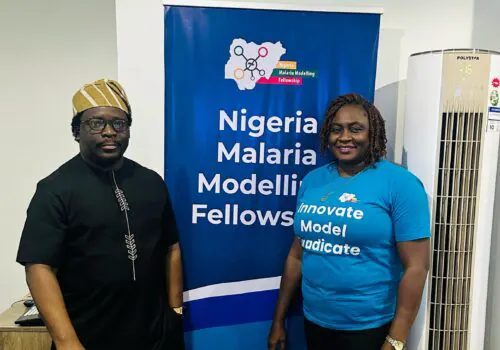
Nigeria is intensifying its fight against malaria by integrating data analysis and mathematical modelling into its control strategies. This approach enables researchers to study disease transmission, examine various scenarios, and produce evidence to inform public health interventions more effectively. The Nigeria Malaria Modelling Fellowship is a key initiative, building technical skills to apply mathematical and computational methods to malaria research. By doing so, the country aims to enhance its understanding of malaria transmission and develop targeted interventions.
The Nigeria Malaria Modelling Fellowship programme is designed to equip researchers with the skills needed to apply mathematical and computational methods to malaria research. This initiative acknowledges the significance of malaria as a major public health problem in Nigeria. By employing data analysis and mathematical modelling, scientists can investigate issues such as vaccination coverage, mosquito behaviour, disease prevalence, and the effectiveness of current interventions. This approach has the potential to inform public health policy and improve malaria control in the country.
Abimbola Modupe Adedeji, a Nigerian biostatistician and data scientist, is a notable figure in this field. Her work combines epidemiology, statistical modelling, machine learning, and mathematical modelling to understand disease patterns. During her participation in the Nigeria Malaria Modelling Fellowship, Adedeji conducted a mathematical modelling study to examine how mosquito biting behaviour affects malaria transmission in a low-transmission area in Lagos State. Her research demonstrates the applicability of mathematical modelling to infectious disease research.
Adedeji's research has broader implications for infectious disease control in Nigeria. She has carried out modelling work on the transmission of yellow fever in different vaccination coverage scenarios, highlighting the versatility of mathematical modelling in research. Additionally, she has applied modern data tools, such as R programming, predictive modelling, and geostatistical analysis, to complex public health questions. Her experience and technical expertise have positioned her as a leading figure in disease modelling.
The use of data science and mathematical modelling in malaria research has the potential to revolutionize disease control in Nigeria. By analyzing data and developing predictive models, researchers can identify high-risk areas, track disease transmission, and evaluate the effectiveness of interventions. This approach enables policymakers to make informed decisions and allocate resources more efficiently. As a result, Nigeria can expect to see improved malaria control and reduced morbidity and mortality.
The Nigeria Malaria Modelling Fellowship programme has contributed significantly to the country's malaria control efforts. By building the technical skills of researchers, the programme has enhanced the country's capacity to analyze data and develop mathematical models. This capacity will enable Nigeria to respond more effectively to malaria outbreaks and develop targeted interventions to control the disease. The programme's impact is expected to be long-lasting, with benefits extending beyond malaria control to other infectious diseases.
The work of Abimbola Modupe Adedeji and other researchers in the field of malaria modelling has far-reaching implications for public health policy in Nigeria. Their research has the potential to inform policy decisions, improve disease control, and reduce the burden of malaria on the country's healthcare system. As Nigeria continues to intensify its fight against malaria, the use of data analysis and mathematical modelling will play an increasingly important role in shaping public health policy and practice.
Key points
- The Nigeria Malaria Modelling Fellowship programme is building technical skills to apply mathematical and computational methods to malaria research.
- Abimbola Modupe Adedeji's research demonstrates the applicability of mathematical modelling to infectious disease research.
- The use of data science and mathematical modelling has the potential to revolutionize disease control in Nigeria.