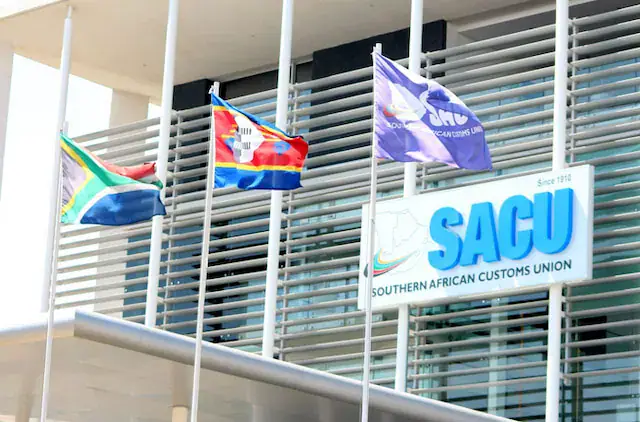
The Southern African Customs Union (SACU) is set for a major overhaul as its five member states, including Eswatini, Botswana, Lesotho, Namibia, and South Africa, seek to reposition the 116-year-old regional bloc. This move is supported by the African Development Bank (AfDB), which is funding a comprehensive study to identify reforms needed to transform SACU from a revenue-sharing arrangement into a driver of industrialisation, investment, and economic integration.
The proposed reforms aim to address structural weaknesses that have limited SACU's ability to promote industrial growth, develop regional value chains, and attract investment across its member states. According to the AfDB's May 2026 Project Appraisal Report, the study will examine the management of SACU's Common Revenue Pool (CRP), which is crucial to the fiscal positions of the smaller member states. The CRP is managed by the South African Reserve Bank and distributes customs duties collected from imports outside SACU among its members.
The AfDB report notes that SACU has struggled to move beyond its traditional revenue-sharing function towards deeper economic integration, despite adopting its 2022–2027 Strategic Plan. The plan, adopted on June 2, 2022, seeks to reposition SACU as a platform for industrialisation, regional value chains, and investment facilitation, with the longer-term ambition of developing it into a full economic union. However, the report identifies several challenges, including low industrial growth, limited participation by member states in regional value chains, infrastructure deficits, policy weaknesses, skills shortages, and inadequate technology adoption.
The study will explore more efficient and inclusive management of the CRP, including recommendations on how revenue-sharing can better support regional development priorities. It will also examine transparent and equitable tariff-setting arrangements, including the possible establishment of national tariff bodies and improved governance linking national and regional institutions. This aims to strengthen transparency in tariff decisions, ensuring that SACU's trade policy arrangements contribute more directly to the economic interests of all five members.
The AfDB appraisal report places the total cost of the technical assistance project at UA588 235, with the Bank providing UA500 000 through its Middle-Income Country Technical Assistance Fund (MIC-TAF). The Government of South Africa will contribute the remaining UA88 235, equivalent to US$121 302.83, as an in-kind contribution towards project management, coordination, and facilities for validation workshops.
The project, designed to run for 18 months from June 2026 to December 2027, will be implemented by South Africa's National Treasury, which will serve as the executing agency, coordinating implementation on behalf of the five SACU member states. The largest portion of the funding, UA460 000, will be allocated towards recruiting an independent consultancy firm to undertake the comprehensive study.
The study's findings are expected to produce an evidence-based report containing recommendations for reforms to reposition SACU as a more effective economic community. The proposed reforms could have important implications for Eswatini, Botswana, Lesotho, and Namibia, whose governments receive significant revenue allocations through SACU's Common Revenue Pool. The reforms aim to promote industrial growth, develop regional value chains, and attract investment across the region.
Key points
- The African Development Bank is funding a comprehensive study to identify reforms needed to transform SACU into a driver of industrialisation, investment, and economic integration.
Reporting sources
- SACU eyes major overhaul to boost regional industrialisation · Times of Swaziland