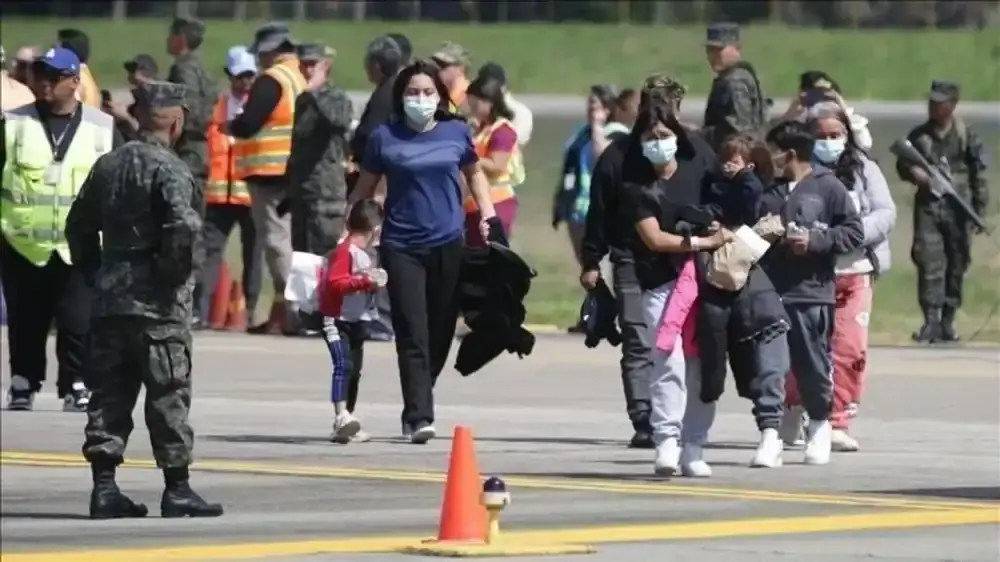
The government of South Sudan has denied allegations that migrants deported by the US are facing hunger, thirst, and other deprivations while in detention. According to a spokesperson for the Foreign Ministry, detainees receive adequate food, water, and medical care, and are allowed regular contact with relatives and lawyers while their individual cases are being resolved. The spokesperson also stated that the government pays for all associated costs.
The denial by South Sudan comes after investigations by the AP News agency alleged that detention guards in the country solicited and received thousands of dollars from detainees' families for food, which they then pocketed. The allegations also claimed that deported migrants faced poor conditions while being detained. However, the South Sudanese government disputes these claims, saying that it has "fully relinquished responsibility and no longer has any legal jurisdiction over, or ties to, these individuals."
The US has deported thousands of people to over 30 countries that are not their own as part of a broad crackdown on immigration, according to advocates. Many of those deported were asylum seekers with US court orders protecting them from being returned to their home countries because they could face persecution or torture. The countries taking deportees have struck deals to receive millions of dollars in payments from the US or have sought goodwill in negotiations over trade, migration, or aid.
The Trump administration defends its policy of deporting migrants with final removal orders, saying it is a means of quickly deporting those whose home countries refuse to accept them. However, critics argue that the policy has led to deportees facing poor conditions and inadequate care in countries that are not equipped to handle them. In the case of South Sudan, the government says it is working to resolve the individual cases of the deported migrants.
The issue of US deportations has sparked controversy, with many advocating for more humane treatment of migrants and asylum seekers. The US has come under criticism for its handling of deportations, with some arguing that it is putting people's lives at risk by sending them to countries where they may face persecution or harm. South Sudan's denial of the allegations highlights the complexities of the issue.
The US deportation policy has also raised questions about the conditions in countries that are receiving deportees. In some cases, countries have struck deals with the US to receive millions of dollars in payments in exchange for accepting deportees. However, critics argue that this approach can create a perverse incentive for countries to accept deportees without ensuring that they receive adequate care.
The situation of US-deported migrants in South Sudan highlights the challenges of addressing migration and asylum issues. The South Sudanese government's denial of the allegations underscores the need for greater transparency and accountability in the handling of deportees. The issue is likely to continue to be a source of controversy and debate.
Key points
- South Sudan denies allegations of poor conditions for US-deported migrants, saying they receive adequate food, water, and medical care.