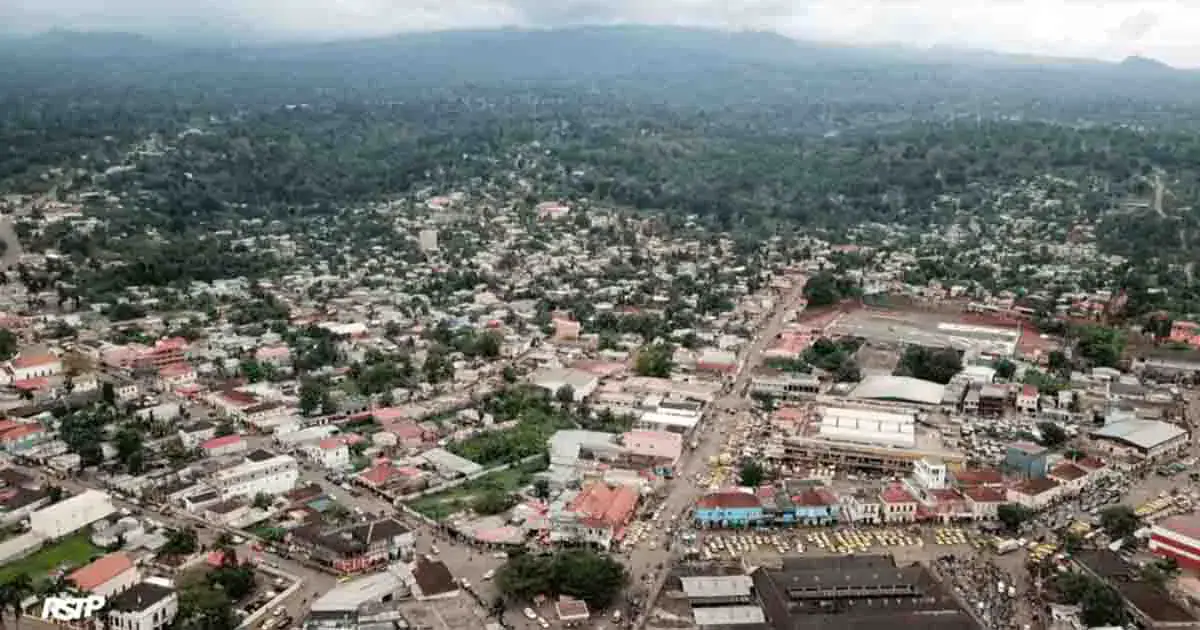
São Tomé e Príncipe, officially the Democratic Republic of São Tomé and Principe, is an island country located in the Gulf of Guinea, off the western coast of Africa. The country has a total area of 1.001 square kilometers and a population of 209,607 inhabitants, according to the 2024 General Census. The capital city is São Tomé, and the archipelago consists of two main islands and several smaller islands.
The country has been independent from Portugal since July 12, 1975, and its economy is primarily based on services, commerce, agriculture, fishing, and tourism. The main export product is cocoa, and the country's cultural diversity, tropical forests, volcanic landscapes, and historical heritage associated with old agricultural plantations are important elements of its national identity.
Despite its natural and economic potential, São Tomé e Príncipe faces significant development challenges. The country struggles with poverty, dependence on imports, and a reliable electricity supply. Additionally, creating jobs and vulnerability to climate change are major concerns. The country's population is expected to grow, with the International Monetary Fund estimating around 245,000 inhabitants by 2026.
São Tomé e Príncipe is a republic with a semi-presidential system, led by President Carlos Manuel Vila Nova and Prime Minister Américo d'Oliveira dos Ramos. The official language is Portuguese, and the national currency is the dobra (STN). The country has a human development index of 0.637, as of 2023, and a life expectancy of 70 years.
The country's economy is relatively small, with a nominal GDP of $981.29 million USD, and a per capita GDP of $4,084.40 USD, as of 2025. The country is not rich in natural resources, but its two main islands are part of the UNESCO World Network of Biosphere Reserves. The Tchiloli, a traditional dance, was recognized as an Intangible Cultural Heritage of Humanity in 2025.
The government faces challenges in providing basic services to its population, including access to electricity, healthcare, and education. The country's dependence on imports, particularly for food and fuel, makes it vulnerable to fluctuations in global prices. Climate change also poses a significant threat, with rising sea levels and increased frequency of natural disasters.
To address these challenges, the government is working to diversify the economy, promote sustainable development, and improve the business climate. The country has potential for growth, particularly in the tourism and agriculture sectors, but will require investment and support from the international community to achieve its development goals.
Key points
- São Tomé e Príncipe faces significant development challenges, including poverty, dependence on imports, and vulnerability to climate change.
- The country's economy is primarily based on services, commerce, agriculture, fishing, and tourism, with cocoa as a main export product.
- The government is working to diversify the economy, promote sustainable development, and improve the business climate to address development challenges.