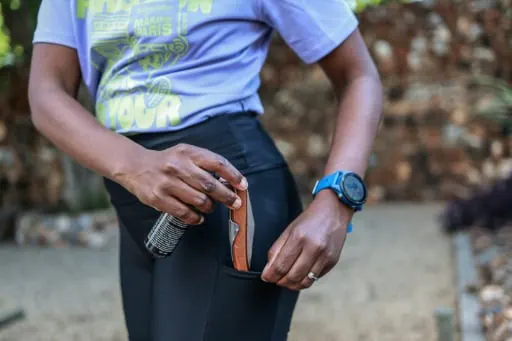
In the wake of a string of brutal killings, South African women, particularly runners, are taking extra precautions to ensure their safety while exercising. Nancy Masha, a 39-year-old mother of two, now carries a knife and pepper spray on her daily jogs, a ritual born of fear after the murder of a fellow runner sent shock waves across the country. Masha's decision to arm herself is a result of the traumatic impact of Elizabeth Moselakgomo's murder, who was found brutally killed after leaving home for a run on September 9.
Moselakgomo, 38, was an avid runner who left home on September 9 for a run and never returned, leaving behind her eight-year-old daughter. Her body was found three days later in the same area around Kempton Park where eight others were discovered since mid-July. The discovery of the bodies has prompted police to investigate whether a serial killer or killers are responsible, fuelling anxiety and anger across the country. The victims, including Moselakgomo, were found partially naked and battered, raising concerns about the level of violence and brutality involved.
The killings have triggered vigils, protests, and solidarity runs across South Africa, drawing hundreds of people from Kempton Park to Cape Town to honour the victims and demand action to protect women. The government has declared gender-based violence a national disaster, but despite years of pledges to tackle the problem, it remains endemic in South Africa. The killings have heightened concerns among women already accustomed to taking precautions in their daily lives, with some choosing to run only inside gated communities to avoid the risks of the open streets.
The government has reported a significant increase in distress calls, with its 24-hour Gender-Based Violence Command Centre receiving 6,782 calls between September 1 and 16, averaging 424 a day, a 21-percent increase from the same period in August. Women have taken to carrying pepper spray and knives as a precaution, while others have opted to alter their routines, cutting back on daily walks or avoiding secluded routes. Chulumanco Mahamba, 31, has reduced her daily walks to twice a week and now shares her live location with loved ones before leaving home.
However, not all women feel comfortable carrying a weapon, citing concerns about their ability to use them effectively. Hlompho Matji, 47, a data analyst and runner, expressed concerns about carrying pepper spray or a knife, saying that it could escalate the situation and put her at greater risk. Babalwa Melitafa, 46, has opted to run only within a gated community's sports oval, saying that she is scared to run outside the oval alone.
The killings have also had an impact on women's lives beyond Johannesburg, with women in Cape Town, some 1,400 kilometres away, reporting that they have altered their routines. Filmmaker Andiswa Siwela, 43, a runner and mountain hiker, now carries pepper spray, which she previously left in her car, saying that the killings have left her more suspicious of strangers. Siwela expressed a desire for women to be free to live their lives without fear, saying "We want to be free. We want to do things without fear; we want to live."
South African police have arrested three people in connection with the Kempton Park killings, but the arrests have done little to ease concerns. President Cyril Ramaphosa has described the killings as a "national shame," saying that the women of South Africa have the right to walk the streets of their country at any hour without fear. The issue has sparked a national conversation about women's safety and the need for greater action to prevent gender-based violence.
Key points
- Women in South Africa are taking extra precautions to ensure their safety while exercising after a string of brutal killings.
- The killings have triggered vigils, protests, and solidarity runs across South Africa, with hundreds of people demanding action to protect women.
- The government has reported a significant increase in distress calls, with 6,782 calls received between September 1 and 16, averaging 424 a day.