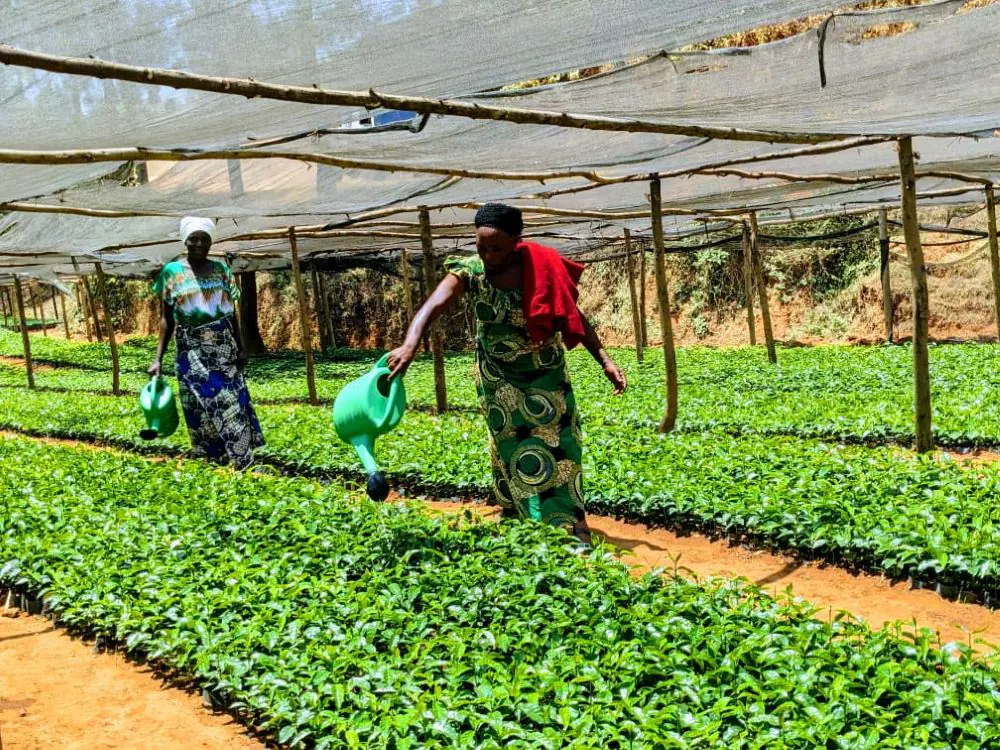
In the Huye and Maraba sectors of Rwanda, a group of women and youth have come together to form a cooperative that specializes in cultivating coffee seedlings. The cooperative, known as Duhuzimbaraga-Maraba, aims to improve the livelihoods of its members by providing them with a sustainable source of income. The project, which is supported by the National Agricultural Export Board (NAEB), has enabled the members to benefit from the cultivation of high-quality coffee seedlings.
According to Manishimwe Clementine, a 25-year-old member of the cooperative, the project has had a significant impact on her life. Before joining the cooperative, Clementine struggled to make ends meet, but with the income she earns from cultivating coffee seedlings, she has been able to improve her living standards. She has been able to purchase livestock, including pigs, goats, and chickens, and has also started to save money for the future.
Mukamusonera Donathile, another member of the cooperative, has also benefited from the project. She says that the income she earns from cultivating coffee seedlings has enabled her to build a new house and provide for her family's needs. Donathile adds that the project has not only improved her livelihood but has also helped to reduce conflicts within her family.
The cooperative, which has over 4,000 members, is part of a larger project aimed at promoting the cultivation of coffee, tea, and fruit seedlings in Rwanda. The project, which is implemented by NAEB, aims to improve the livelihoods of rural communities by providing them with access to high-quality seedlings and technical support.
According to Munyaneza Jean Marie Vianey, the Director of the Export Promotion Department at NAEB, the project has been successful in empowering women and youth in rural areas. Vianey says that the project has provided women and youth with an opportunity to earn a sustainable income and improve their livelihoods.
The project has also had a positive impact on the environment, as it aims to promote the cultivation of high-quality coffee seedlings that are resistant to disease and pests. This approach is expected to reduce the reliance on imported seedlings and promote sustainable agriculture practices in Rwanda.
The success of the project has been attributed to the collaborative approach adopted by NAEB and the local communities. The project has brought together women and youth from different sectors, providing them with a platform to share knowledge and expertise. As a result, the project is expected to continue to have a positive impact on the livelihoods of rural communities in Rwanda.
Key points
- Over 4,000 women and youth in Rwanda are benefiting from a project to cultivate coffee seedlings.
- The project aims to improve the livelihoods of rural communities by providing them with access to high-quality seedlings and technical support.
- The project has had a positive impact on the environment, promoting sustainable agriculture practices in Rwanda.