According to a report by the Rwanda Demographic and Health Survey (RDHS-7), conducted by the National Institute of Statistics (NISR), child malnutrition in Rwanda has decreased from 33.1% in 2019/2020 to 26.75% in 2025. This represents a significant drop of 6.35% over five years. However, the issue remains a challenge, particularly in Western Province, where the rate is above 30% in some districts.
The district of Nyabihu in Western Province has recorded the highest decline in child malnutrition, from 46.7% in 2019/2020 to 32.68% in 2025, representing a decline of 14.02%. Despite this progress, nearly one-third of children under five years old in Nyabihu still suffer from malnutrition, highlighting the need for sustained efforts to address the issue.
Malnutrition in children is often caused by poor diet over a prolonged period, leading to stunted growth and development. It can start during pregnancy and worsen in the first two years of life, a critical period for physical and brain development. Inadequate nutrition during this period can have long-lasting effects on a child's health, learning ability, and overall development.
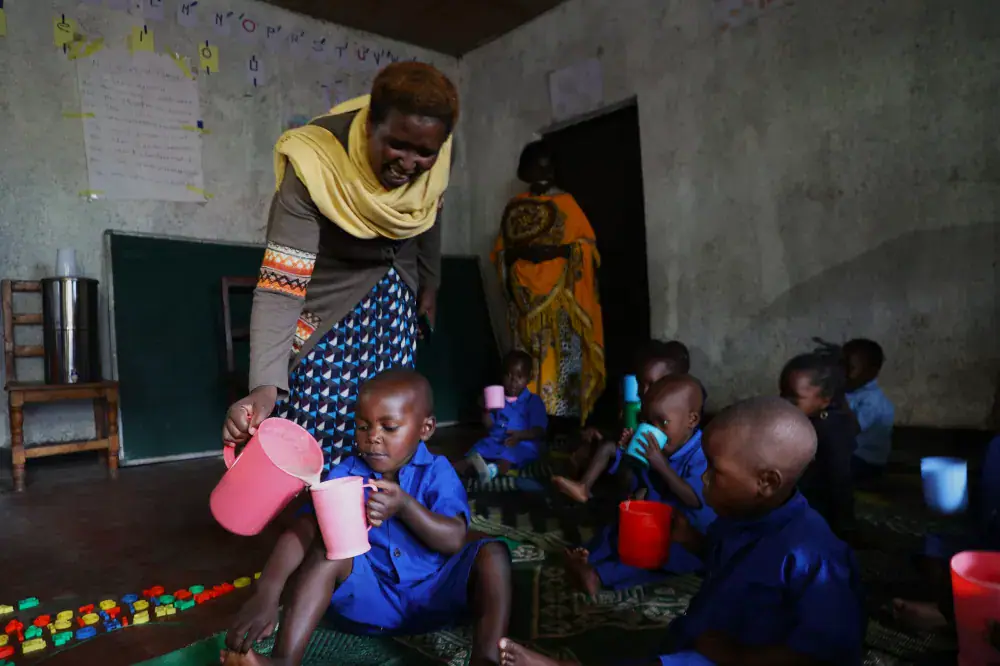
In Nyabihu, one of the strategies used to combat malnutrition is the establishment of community-based childcare centers. These centers provide care and nutrition to children while their parents are at work. Local residents have expressed the importance of these centers in supporting families and improving child nutrition.
However, some parents in Nyabihu have been found to sell food and nutritional supplements meant for their children, undermining efforts to address malnutrition. Authorities are urging parents to prioritize their children's nutrition and make use of available resources.
The Western Province still records high rates of child malnutrition, with some districts above 30%. While some districts have shown significant declines, others have seen an increase in malnutrition rates. The governor of Western Province, Jean Bosco Ntibitura, emphasized the need for sustained efforts to address the issue, including educating parents on proper nutrition and childcare.
Rwanda has set a goal to reduce child malnutrition to 15% by 2029, as outlined in the National Strategy for Transformation (NST2). To achieve this goal, the government and partners must intensify efforts to address malnutrition, including increasing access to nutritious food and improving childcare practices.
Key points
- Child malnutrition in Rwanda has decreased by 6.35% over five years, but challenges persist, particularly in Western Province.
- The district of Nyabihu has recorded a significant decline in child malnutrition, from 46.7% to 32.68%.
- Rwanda aims to reduce child malnutrition to 15% by 2029, requiring sustained efforts and a multi-sectoral approach.
Reporting sources
- Igwingira ry’abana mu Rwanda: Nyabihu yagabanyije 14,02%, ariko ikibazo kiracyari hejuru · https://umuseke.rw/