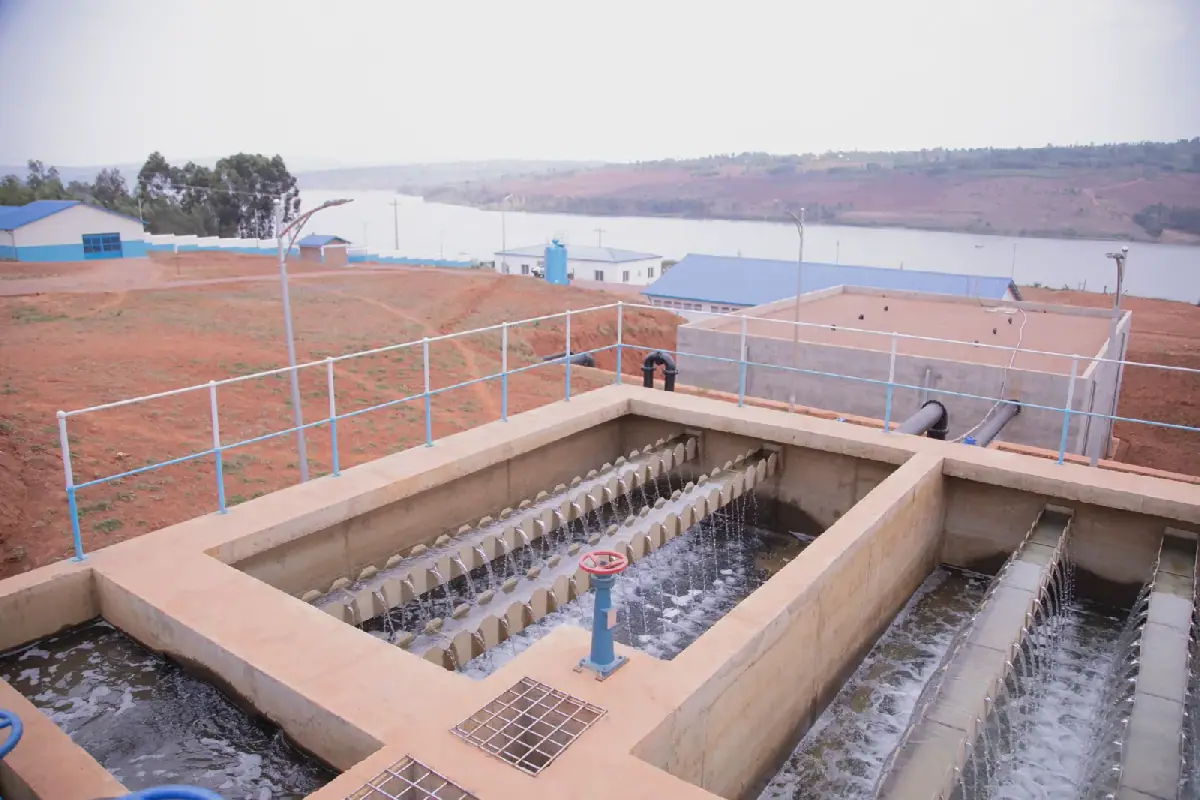
The Ministry of Infrastructure (MININFRA) has announced that Rwanda's water treatment capacity has increased significantly, reaching 367,000 cubic meters per day in the 2025-2026 financial year, up from 346,000 cubic meters per day in the previous year. This represents an increase of 20,000 cubic meters per day. The announcement was made by Permanent Secretary in the Ministry of Infrastructure, Canoth Manishimwe, during a meeting with members of the Parliamentary Committee on Governance, Gender, and Youth.
According to Manishimwe, the increase in water treatment capacity is a result of investments in water infrastructure, including the construction of new water treatment plants. The new plants, located in Sake, Muhazi, Kivu Belt, Volcano Belt, and Ngororero, aim to increase the availability of clean water and reduce the challenges faced by citizens in accessing it. The government has set a target of providing clean water to all citizens by 2029, and the increase in water treatment capacity is a key step towards achieving this goal.
As of now, 89.7% of the population has access to clean water, with the government aiming to increase this to 100% by 2029. The government's efforts to increase access to clean water are part of its Second National Strategy for Transformation (NST2). The strategy aims to accelerate economic growth and improve the quality of life for citizens. The increase in water treatment capacity is also expected to reduce the burden of water-borne diseases and improve overall public health.
In addition to increasing water treatment capacity, the government has also invested in expanding the network of water pipes. As of the 2025-2026 financial year, the network had reached 36,674 kilometers, up from 35,538 kilometers in the previous year. The expansion of the network aims to make clean water more accessible to citizens, particularly in rural areas.
The government has also established new water supply and sanitation (WASAC) groups to improve the management and maintenance of water infrastructure. The number of WASAC groups has increased from 20 to 32, with the aim of improving the efficiency and effectiveness of water services. The government has also emphasized the need for continued investment in water infrastructure to ensure that all citizens have access to clean water.
Despite the progress made, the government acknowledges that there is still much work to be done. MININFRA officials emphasize that continued investment in water infrastructure is necessary to ensure that all citizens have access to clean water. The government is committed to achieving its goal of providing clean water to all citizens by 2029 and is working to address the challenges faced by citizens in accessing this essential service.
The increase in water treatment capacity and expansion of the water network are part of the government's efforts to improve the quality of life for citizens. The government's investments in water infrastructure aim to reduce poverty, improve public health, and promote economic growth. With continued investment and effort, the government aims to achieve its goal of providing clean water to all citizens by 2029.
Key points
- Rwanda's water treatment capacity has increased by 20,000 cubic meters per day, reaching 367,000 cubic meters per day as of the 2025-2026 financial year.