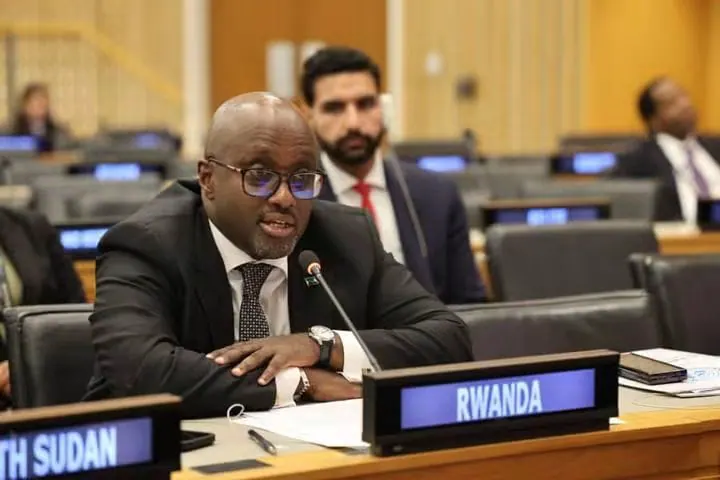
Rwanda's Minister of Foreign Affairs and International Cooperation, Olivier Nduhungirehe, recently attended the Ministerial Meeting of Landlocked Developing Countries (LLDCs) held on the sidelines of the 81st United Nations General Assembly (UNGA81). The meeting's theme was "Building resilient and connected LLDCs: Accelerating the implementation of the Awaza Programme of Action through partnerships." Nduhungirehe emphasized the need for stronger cooperation, regional integration, and improved connectivity to address the structural challenges facing landlocked developing countries.
Nduhungirehe stressed that landlocked countries require stronger partnerships with neighboring states and international partners to overcome geographical and economic barriers associated with the lack of direct access to the sea. He highlighted that cooperation is crucial in facilitating trade, the movement of people and goods, and supporting infrastructure development that connects landlocked countries to regional and international markets. This, he believes, will help landlocked countries participate more effectively in regional and global value chains.
The Ministerial Meeting provided a platform for LLDCs and their partners to discuss ways of accelerating the implementation of the Awaza Programme of Action. This program seeks to address the economic and development challenges faced by countries without direct access to the sea. Nduhungirehe's remarks underscored the importance of ensuring that development efforts are inclusive and sustainable, with partnerships designed to reduce the disadvantages created by geographical constraints.
For Rwanda, a landlocked country whose economy depends heavily on regional transport corridors, improved connectivity and efficient cross-border trade remain important to expanding access to markets and strengthening regional economic integration. The country's reliance on neighboring countries for trade and commerce makes it essential to address the challenges faced by landlocked countries. Nduhungirehe's call for stronger regional cooperation resonates with Rwanda's economic interests.
The Ministerial Meeting of LLDCs brought together representatives from various countries to discuss the challenges faced by landlocked developing countries. The meeting provided an opportunity for countries to share experiences and best practices in addressing these challenges. Nduhungirehe's participation in the meeting demonstrates Rwanda's commitment to regional cooperation and its desire to address the challenges faced by landlocked countries.
Landlocked developing countries face unique challenges, including higher transportation costs, limited access to markets, and reduced economic opportunities. These challenges can be addressed through stronger regional cooperation, improved connectivity, and increased investment in infrastructure. Nduhungirehe's call for action highlights the need for a coordinated approach to address these challenges and promote sustainable economic growth in landlocked countries.
The Awaza Programme of Action aims to address the economic and development challenges faced by landlocked developing countries. The program's implementation requires strong partnerships between LLDCs, their partners, and international organizations. Nduhungirehe's emphasis on the importance of partnerships and cooperation underscores the need for a collaborative approach to address the challenges faced by landlocked countries and promote sustainable economic growth.
Key points
- Landlocked countries require stronger partnerships with neighboring states and international partners to overcome geographical and economic barriers.
- Improved connectivity and efficient cross-border trade are essential for landlocked countries to expand access to markets and strengthen regional economic integration.
- Stronger regional cooperation and partnerships can help landlocked countries participate more effectively in regional and global value chains.