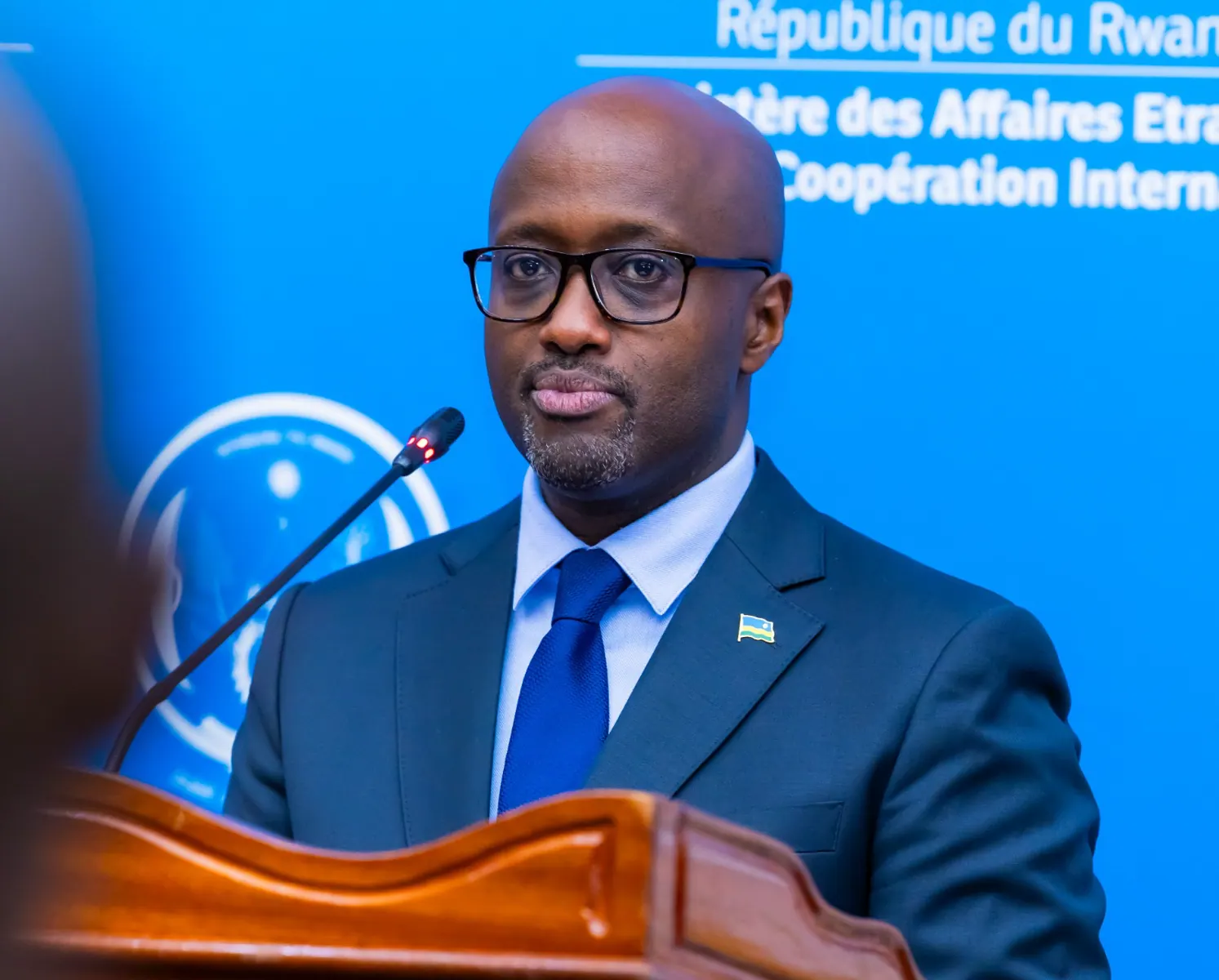
On September 27, 2026, Rwanda's Minister of Foreign Affairs and Cooperation, Ambassador Olivier Nduhungirehe, expressed his disapproval of the reinstatement of General Major Sylvain Ekenge as spokesperson for the Armed Forces of the Democratic Republic of Congo (FARDC). Nduhungirehe described the move as shocking and deplored the decision, citing multiple concerns. He made these remarks on his social media platform.
Nduhungirehe pointed out that Ekenge's previous statements, which targeted Congolese Tutsis, were in line with the political agenda of the Congolese government. He argued that this was an indication that hate speech and genocide ideology within the Congolese army and government were not isolated incidents, but rather a state-endorsed policy. The minister recalled Ekenge's comparison of himself to the 10 Hutu commandments written by Hassan Ngeze, who was later accused of genocide against Tutsis.
Ambassador Nduhungirehe also raised concerns about the lack of accountability for Ekenge's actions. Despite international condemnation, Ekenge was only temporarily suspended from his position in late 2025, but was not prosecuted by the Congolese authorities. Nine months after his suspension, Ekenge was quietly reinstated as FARDC spokesperson. Nduhungirehe questioned the decision, given Ekenge's history of inflammatory statements.
Ekenge's reinstatement was confirmed when he signed a statement by the Congolese army regarding a recent plane crash in Kenge, Kwango Province, on September 25, 2026. The move has sparked concerns about the Congolese government's stance on hate speech and genocide ideology. Nduhungirehe's public criticism of Ekenge's reinstatement highlights the ongoing tensions between Rwanda and Congo.
The controversy surrounding Ekenge's statements and reinstatement has significant implications for the Democratic Republic of Congo. The country has struggled with ethnic tensions and violence in the past, and Ekenge's comments have been seen as divisive and inflammatory. The international community has called for greater accountability and action against hate speech and genocide ideology in Congo.
Ambassador Nduhungirehe's comments reflect Rwanda's concerns about the situation in Congo and the potential for further instability. Rwanda has a complex history with Congo, and the two countries have had strained relations in the past. The current tensions highlight the ongoing challenges in the region and the need for greater cooperation and understanding.
The situation remains volatile, with many observers watching closely for developments in Congo. The international community has emphasized the importance of accountability and action against hate speech and genocide ideology. As the situation continues to unfold, it remains to be seen how Congo's government will address these concerns and work towards greater stability and reconciliation.
Key points
- - Rwanda's Foreign Minister Olivier Nduhungirehe condemns the reinstatement of Gen Maj Sylvain Ekenge as spokesperson for Congo's FARDC. - Ekenge was suspended in 2025 for hate speech and genocide ideology, but was reinstated nine months later. - Nduhungirehe cites concerns about accountability and the potential for further instability in the region.