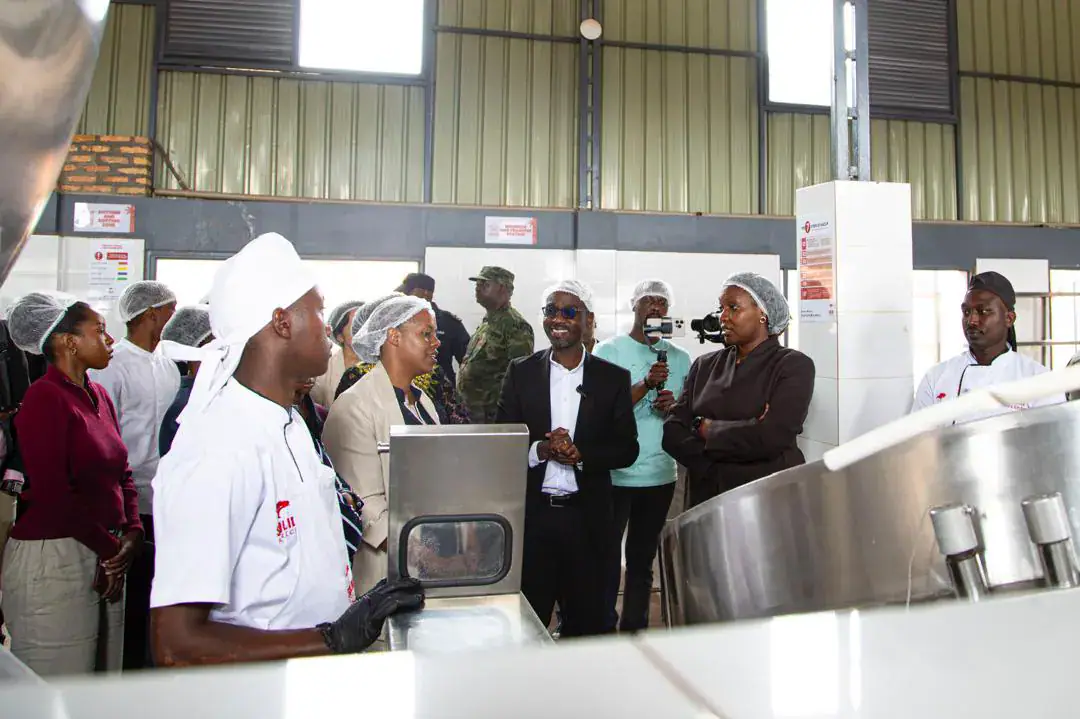
The Ministry of Education, in partnership with various education stakeholders, has launched a modern school feeding kitchen in Bujyujyu village, Muyumvu sector, Rwamagana district. The kitchen, valued at RWF 700 million, utilizes solar energy technology and will provide meals to students in five schools in the district. The initiative aims to improve the quality of meals, hygiene, and reduce fuel consumption.
The kitchen was officially launched by the Permanent Secretary in the Ministry of Education, Claudette Irere, who emphasized that the project is a pilot aimed at enhancing the school feeding program. The program seeks to improve meal quality, maintain hygiene, and reduce fuel consumption. Irere expressed the ministry's desire to replicate this model in other schools across the country.
Nasiri Katuramu, CEO of the Rockefeller Foundation, a key partner in the project, highlighted the success of similar initiatives in other countries, including Brazil. He noted that Rwanda has already seen benefits from adopting such technology, particularly in reducing deforestation. Since 2010, Rwanda has saved 14,000 trees annually, contributing to environmental conservation.
The Ministry of Education stated that this project is part of its strategy to improve meal provision in schools, reduce dependence on traditional fuels, and promote environmental conservation. The kitchen has the capacity to serve over 15,000 students in Rwamagana district. The facility features advanced equipment, including large storage units and technology to maintain food at a consistent temperature of 98°C for up to nine hours.
Once meals are prepared, they are transported to schools in electric vehicles, ensuring that students receive hot and hygienic food. Solid Africa, a non-profit organization, played a crucial role in implementing the project, including constructing the kitchen and installing necessary equipment. The organization has been active in Rwanda since 2010, initially focusing on providing meals to hospitalized patients.
Solid Africa's efforts have expanded to include school feeding programs, aiming to make a positive impact on the lives of students and the environment. The organization's work with the Ministry of Education and other partners demonstrates a collaborative approach to addressing educational and environmental challenges in Rwanda.
The launch of this modern school feeding kitchen marks a significant milestone in Rwanda's efforts to improve education and promote sustainability. The project's success will be closely monitored, and its impact on students, schools, and the environment will be assessed to inform future initiatives.
Key points
- The kitchen uses solar energy technology to reduce environmental impact.
- The project aims to improve meal quality and hygiene for students.
- The initiative is expected to benefit over 15,000 students in Rwamagana district.