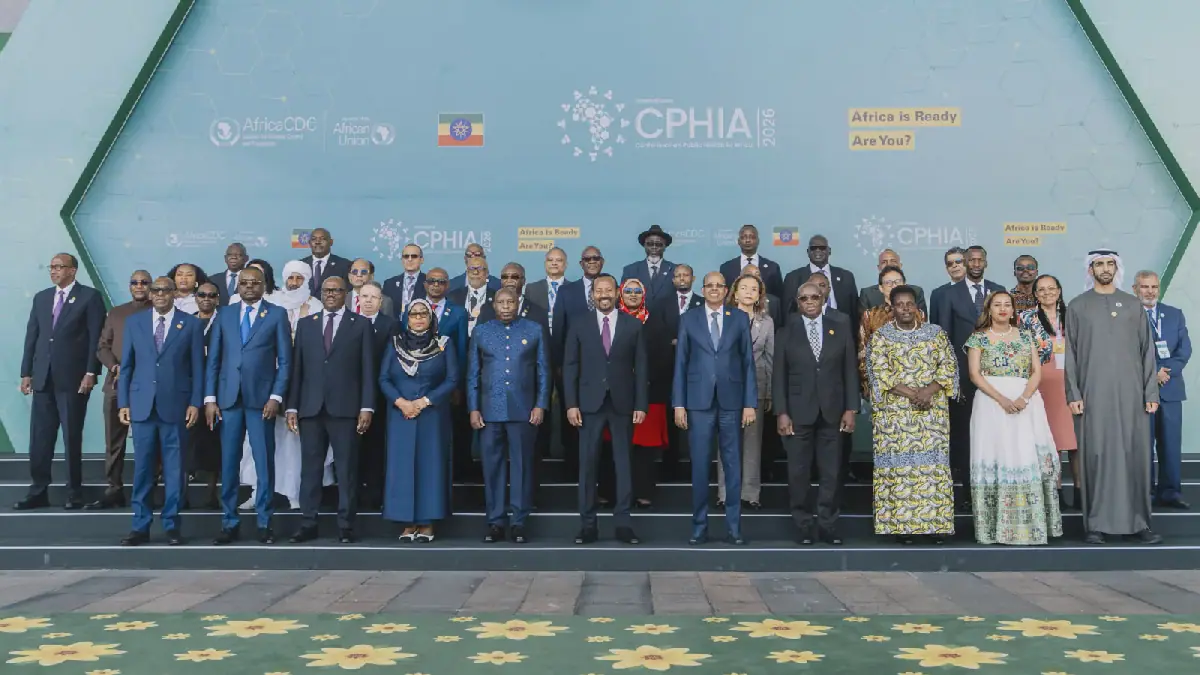
Rwanda has showcased its community-based health insurance scheme, Mutuelle de Santé, as a model for African countries to reduce dependence on foreign health assistance. Prime Minister Dr Justin Nsengiyumva presented the scheme at the Fifth International Conference on Public Health in Africa in Addis Ababa, highlighting its success in increasing access to healthcare. The scheme has covered around 89 per cent of Rwandans, improving access to essential medicines and specialized treatment.
Nsengiyumva emphasized that domestic financing, community-level healthcare, and investment in preparedness are crucial for African countries to protect their populations. He cited Rwanda's experience in responding to the 2024 Marburg outbreak, which was brought under control within three months with a low case fatality rate of 22 per cent. The country's community health workers screened over 9.5 million people, and the response was supported by existing health systems, surveillance networks, laboratories, and hospitals.
The Mutuelle de Santé scheme has undergone reforms, including an income-based contribution framework introduced in 2026. The framework requires people with greater financial means to contribute more, while the poorest receive full government subsidies. Members now account for 37 per cent of the scheme's financing, with the government and private sector sharing the remaining 63 per cent. The reforms also provide more flexible payment arrangements and extend coverage to cancer care, kidney transplantation, and cardiac surgery.
Nsengiyumva stressed that health financing should involve governments, households, and businesses, rather than depending on a single source. He argued that a financing base built on partnership is broader and more resilient than any one of them alone. Sierra Leone President Julius Maada Bio supported this view, reporting progress in reducing maternal and child deaths through a national campaign launched in March.
Bio's campaign aims to reach zero preventable maternal deaths, zero preventable child deaths, and zero children missing routine vaccination. The campaign features a weekly accountability system, which reviews maternal and child deaths with hospital and district teams every Friday. Sierra Leone has also trained health workers to manage obstetric emergencies and rebuilt and equipped blood banks in every regional hospital.
Africa CDC Director-General Dr Jean Kaseya echoed the call for greater African ownership, urging countries to strengthen their capacity to finance healthcare, manufacture medical products, lead outbreak responses, and accelerate digital transformation. The conference attracted 46,217 registrations from 135 countries, making it the largest public health conference in the world.
African Union Commission Chairperson Mahmoud Ali Youssouf warned that African health systems remain too dependent on external resources, with recent reductions in international funding exposing their vulnerability. He emphasized that the health of African populations cannot continue to depend on the budgetary priorities of others.
Key points
- Rwanda's community-based health insurance scheme, Mutuelle de Santé, has covered around 89 per cent of Rwandans.
- The scheme has undergone reforms, including an income-based contribution framework introduced in 2026.
- Nsengiyumva emphasized that domestic financing, community-level healthcare, and investment in preparedness are crucial for African countries to protect their populations.