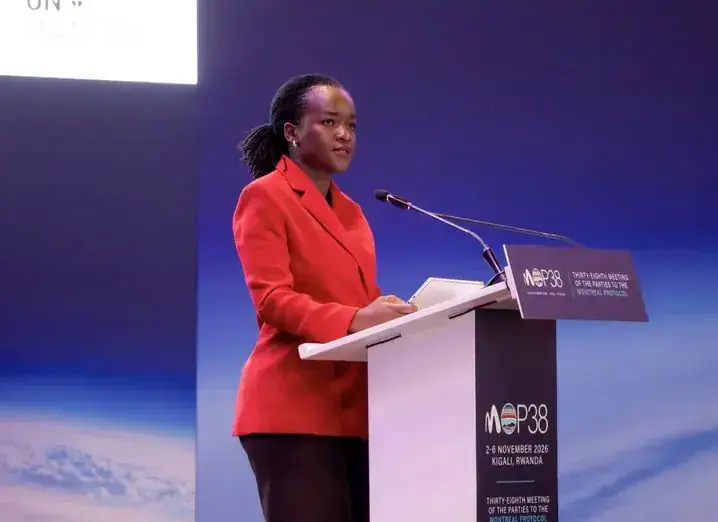
Rwanda is hosting a technical workshop to mark the 10th anniversary of the Kigali Amendment, a landmark agreement aimed at reducing greenhouse gas emissions and protecting the ozone layer. The workshop, held in Kigali, brings together experts and stakeholders to assess progress made since the agreement was adopted in October 2016. Environment Minister Dr Bernadette Arakwiye is participating in the meeting, which provides a platform for countries to exchange experiences and discuss emerging technologies.
The Kigali Amendment requires countries to gradually reduce the production and consumption of hydrofluorocarbons (HFCs), powerful greenhouse gases commonly used in refrigeration and air-conditioning systems. Although HFCs do not directly damage the ozone layer, they contribute significantly to global warming. Full implementation of the agreement is expected to prevent up to 0.5 degrees Celsius of global warming by the end of the century. The agreement has been hailed as a crucial step towards mitigating climate change.
The workshop is expected to contribute to stronger implementation strategies, increased investment in climate-friendly cooling technologies, skills development, and improved management of refrigerants. Rwanda is positioning itself as a leader in sustainable cooling solutions, particularly through the African Centre of Excellence for Sustainable Cooling and Cold-chain (ACES). The centre supports training, innovation, and the development of environmentally friendly refrigeration systems.
The shift towards cleaner and more energy-efficient cooling technologies could deliver practical benefits beyond environmental protection. These benefits include improved food preservation, stronger healthcare systems, reduced energy consumption, and new economic opportunities. The adoption of sustainable cooling solutions is seen as a critical component of Rwanda's efforts to address climate change and promote sustainable development.
The workshop forms part of a wider programme surrounding the 38th Meeting of the Parties to the Montreal Protocol (MOP38), taking place in Kigali from November 2 to 6, 2026. The meeting brings together the international community to renew commitments to ozone protection and climate action. Environment Minister Dr Bernadette Arakwiye emphasised the importance of translating commitments made under the Kigali Amendment into practical climate action.
Dr Arakwiye said that Rwanda is proud to welcome the world back to Kigali, ten years after countries came together to adopt the Kigali Amendment. The minister noted that the meeting provides an opportunity to recognise progress made and identify areas where more needs to be done to fully implement the commitments made. The Kigali Amendment has been hailed as a crucial step towards mitigating climate change.
As the Kigali Amendment enters its second decade, the discussions are expected to help move global commitments towards practical implementation. The goal is to ensure that countries have the technology, financing, and technical capacity needed to deliver lasting environmental benefits. The implementation of the Kigali Amendment is seen as a critical component of global efforts to address climate change and promote sustainable development.
Key points
- The Kigali Amendment aims to reduce greenhouse gas emissions and protect the ozone layer by gradually reducing the production and consumption of hydrofluorocarbons (HFCs).
- The agreement is expected to prevent up to 0.5 degrees Celsius of global warming by the end of the century.
- Rwanda is positioning itself as a leader in sustainable cooling solutions through the African Centre of Excellence for Sustainable Cooling and Cold-chain (ACES).