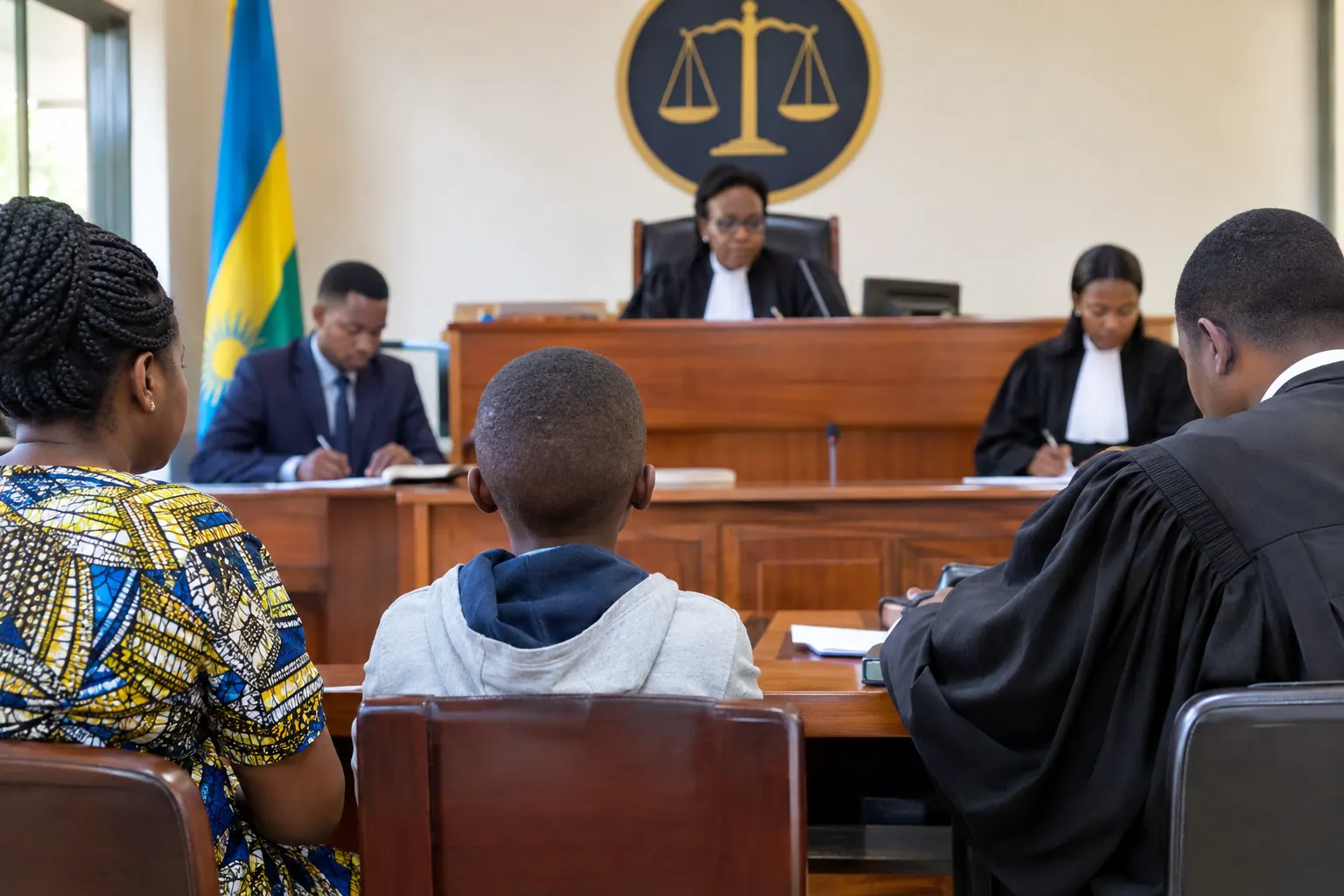
The Rwandan judiciary has introduced new guidelines aimed at ensuring that children involved in court cases are treated with dignity and respect. The guidelines, signed by the President of the Supreme Court, outline the procedures for handling cases involving children, with the goal of providing a safe and child-friendly environment for them. The guidelines emphasize the importance of protecting children's rights and dignity during court proceedings. They also aim to provide a fair and speedy trial for children involved in court cases.
The guidelines specify that security personnel should wear casual attire and not be present in the courtroom unless necessary for security reasons. The guidelines also state that judges, prosecutors, and defense lawyers should not wear formal attire and should use simple language that children can understand. The goal is to create a comfortable and non-intimidating atmosphere for children. Additionally, the guidelines emphasize the importance of taking into account the child's age, maturity, and individual needs during court proceedings.
The guidelines also provide for the separation of children from adults in court proceedings. Children accused of crimes should be kept separate from adults and placed in a safe and secure environment. The guidelines also state that children should be accompanied by a trusted adult and a legal representative during court proceedings. Furthermore, the guidelines emphasize the importance of protecting children's rights and dignity during court proceedings, including the right to a fair trial and the right to be heard.
The new guidelines also provide for the creation of specialized courtrooms for children. These courtrooms should be designed to be child-friendly and provide a comfortable and non-intimidating atmosphere for children. The guidelines also state that children with disabilities should be provided with special assistance and support during court proceedings. This includes providing sign language interpreters or other forms of assistance as needed.
The guidelines also emphasize the importance of confidentiality in juvenile cases. The identity of children involved in court cases should not be disclosed to the public or the media, and court proceedings should be closed to the public unless the child's parents or guardians agree to the presence of others. The guidelines also state that children should not be required to testify in court unless it is necessary and in their best interests.
The introduction of these guidelines is a significant step towards ensuring that children's rights are protected in Rwanda. The guidelines demonstrate the government's commitment to providing a safe and child-friendly environment for children involved in court cases. The guidelines are expected to improve the way juvenile cases are handled in Rwanda and ensure that children receive a fair and speedy trial.
The guidelines will come into effect on November 1, 2026, and will apply to all juvenile cases in Rwanda. The judiciary has emphasized its commitment to implementing the guidelines and ensuring that children's rights are protected. The guidelines are a positive development for children's rights in Rwanda and demonstrate the government's commitment to upholding the rights of children.
Key points
- The new guidelines aim to provide a safe and child-friendly environment for children involved in court cases in Rwanda.