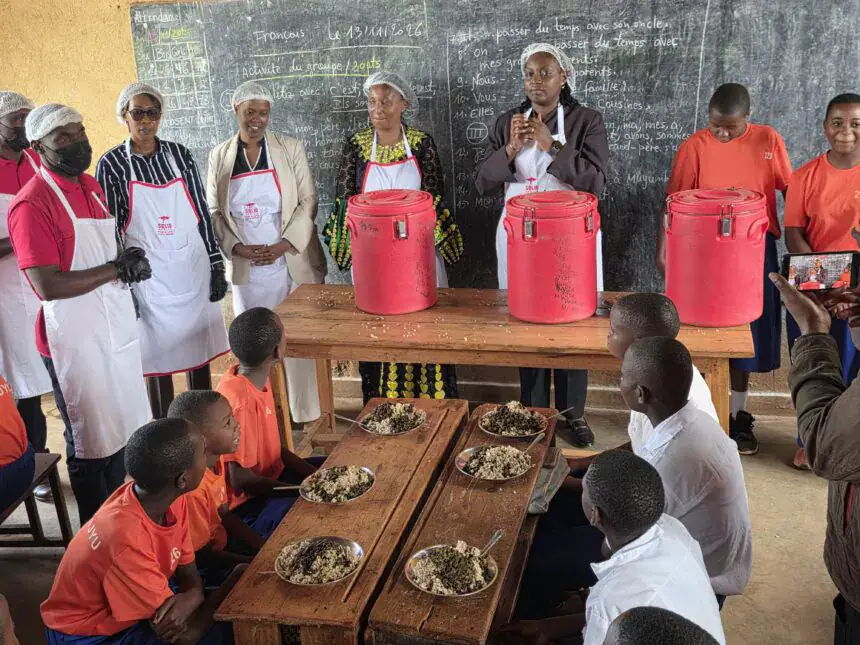
The Rwandan government has launched a school meal program aimed at improving student nutrition and reducing costs. The program, initiated by the Ministry of Education, involves centralized kitchens that will provide meals to students in 11 schools in the Gasabo and Rwamagana districts. The initiative aims to enhance the quality of meals and reduce the financial burden on schools.
Two model kitchens have been opened, one in the Rusororo sector of Gasabo district and the other in the Muyumbu sector of Rwamagana district. The Rusororo kitchen will serve six schools with over 15,000 students, while the Muyumbu kitchen will serve five schools with a similar number of students. This initiative is part of the government's effort to improve the school meal program and ensure that students receive nutritious meals.
The program seeks to address concerns about the quality and safety of meals provided to students. According to the Minister of Education, the centralized kitchen initiative will enable schools to provide students with nutritious meals while reducing costs. The program also aims to reduce the use of firewood and water for cooking, which has been a challenge for many schools.
The Ministry of Education's Permanent Secretary, Claudette Irere, stated that the idea for centralized kitchens was inspired by successful programs in other countries, such as Brazil. Irere emphasized that the goal is to expand the program to all schools in the country, with a focus on schools in rural areas. The program has already shown positive results, with a significant reduction in the number of students dropping out of school.
The government has set a target to increase the number of students receiving school meals to 4.5 million by 2029. The program has contributed to a decline in dropout rates, from 9.4% in the 2019/2020 academic year to 4.7% in the 2023/2024 academic year. The Ministry of Education is confident that the program will continue to improve student outcomes and reduce poverty.
The centralized kitchen initiative is part of the government's five-year strategy to improve the school meal program. The program has been designed to ensure that students receive nutritious meals that meet their dietary needs. By providing meals in a centralized kitchen, schools can reduce costs and improve the quality of meals.
The program has received positive feedback from students and parents, who appreciate the improved quality of meals. The Ministry of Education is committed to expanding the program to all schools in the country, with a focus on ensuring that all students have access to nutritious meals. The program is expected to have a positive impact on student outcomes and contribute to the country's efforts to reduce poverty and improve education.
Key points
- The program aims to provide nutritious meals to over 4.5 million students by 2029.
Reporting sources
- Ibigo by’amashuri bisigaye bigemurirwa ibiryo bihiye · https://umuseke.rw/