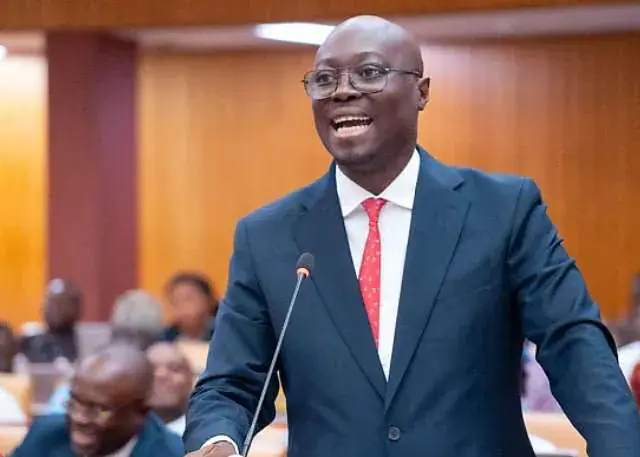
Ghana's Finance Minister, Dr Cassiel Ato Forson, has defended the government's decision to maintain its no-new-taxes policy in 2027. He stated that the administration is managing public finances within available resources while increasing allocations to social intervention programmes. The Minister's comments come amid scrutiny of the government's ability to meet outstanding financial obligations without introducing additional taxes. Dr Forson's assertion is that the government is prioritizing spending on improving living conditions, supporting vulnerable groups, and investing in productive sectors to expand the economy.
Dr Forson appeared on the Citi Breakfast Show on Friday, November 13, where he addressed concerns about the government's financial management. When asked if the government's ability to meet its financial obligations without new taxes indicated that the country was now financially stable, Dr Forson replied, “We are living within our means.” This statement reflects the government's strategy to manage its finances prudently. The Minister acknowledged that the improvement in the country's finances had not yet translated into tangible benefits for many households.
Despite the challenges, Dr Forson pointed to several initiatives aimed at supporting vulnerable groups and promoting economic growth. For instance, the 2027 Budget allocated GH¢2.1 billion to the Livelihood Empowerment Against Poverty (LEAP) programme, nearly double the GH¢1.1 billion allocation inherited by the current administration. This increase demonstrates the government's commitment to providing direct assistance to those in need. Additionally, the government has continued to support nursing and teacher trainees through their respective allowances.
The government has also taken steps to address youth unemployment, a significant challenge in Ghana. Dr Forson disclosed that funding for the Youth Employment Agency (YEA) was expected to increase significantly, from approximately GH¢600 million in 2026 to GH¢2 billion in 2027. This increase will enable the agency to create more employment opportunities and introduce expanded interventions to tackle youth unemployment. The government's efforts to address unemployment reflect its broader objective of building a sustainable economy.
Dr Forson emphasized that the government is balancing social spending with investments in infrastructure and productive sectors. These investments are necessary to reshape the structure of the economy and promote sustainable growth. The Minister explained that the government's goal is to build an economy capable of generating sustainable jobs and incomes, rather than depending mainly on short-term financial assistance to households. This approach requires careful management of public finances and strategic allocation of resources.
The government's no-new-taxes policy for 2027 has been a subject of debate, with some arguing that it reflects a responsible approach to financial management. Dr Forson's defense of the policy highlights the government's efforts to prioritize spending on social intervention programmes and productive sectors. While challenges remain, the Minister's comments suggest that the government is committed to promoting economic growth and supporting vulnerable groups.
The Finance Minister's comments come at a time when Ghana is seeking to stabilize its economy and promote sustainable growth. The government's efforts to address youth unemployment, support vulnerable groups, and invest in productive sectors reflect its commitment to building a stronger economy. As the government continues to manage its finances prudently, it is likely to face ongoing scrutiny of its policies and spending priorities.
Key points
- The government has increased funding for the Youth Employment Agency (YEA) to GH¢2 billion in 2027, up from GH¢600 million in 2026.