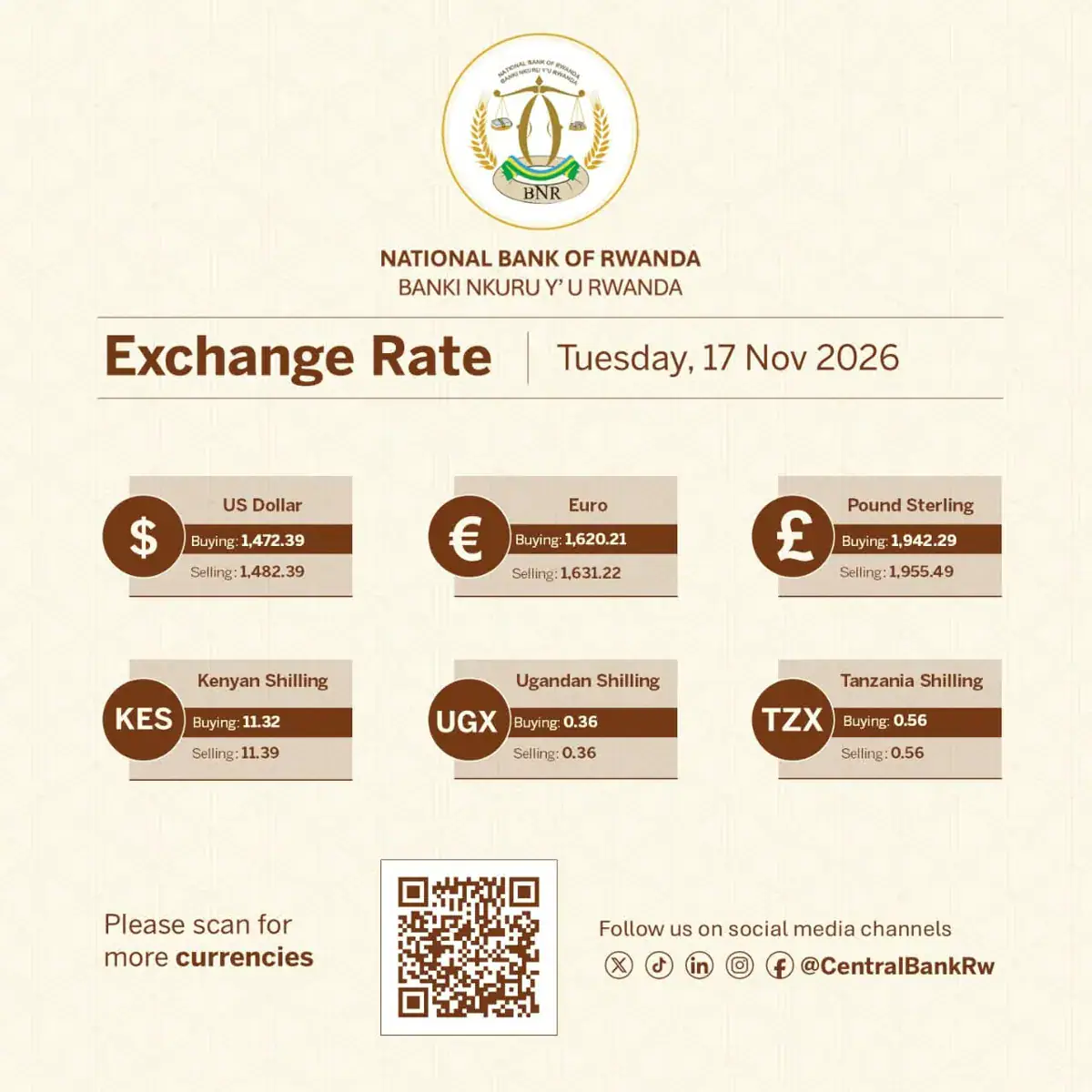
The Rwandan franc has exhibited mixed movement against major global and regional currencies, according to the National Bank of Rwanda's latest exchange rate figures. As of November 17, 2026, the US dollar was quoted at Rwf1,472.39 for buying and Rwf1,482.39 for selling. In comparison, the euro traded at Rwf1,620.21 and Rwf1,631.22, respectively. These rates provide a crucial reference for businesses, importers, and exporters involved in cross-border transactions.
The British pound sterling recorded higher values, with a buying rate of Rwf1,942.29 and a selling rate of Rwf1,955.49, making it the most expensive of the three major international currencies listed. In contrast, regional currencies also featured in the central bank's exchange rate bulletin. The Kenyan shilling was quoted at Rwf11.32 for buying and Rwf11.39 for selling. The exchange rates offer valuable insights into the fluctuations of the Rwandan franc against other currencies.
The exchange rates have significant implications for businesses and individuals involved in international transactions. For businesses importing goods and services, exchange rate movements can influence the cost of settling international payments. Conversely, exporters and companies receiving foreign currency may be affected by the amount they receive when converting earnings into local currency. As a result, it is essential for individuals and businesses to stay informed about the latest exchange rates.
The National Bank of Rwanda regularly publishes exchange rate information to promote transparency in the country's foreign exchange market. The central bank's published figures serve as a guide for financial institutions and the broader economy. However, customers should verify the rates offered by individual commercial banks and foreign exchange bureaus before completing transactions, as actual rates may differ.
The exchange margin applied to currency transactions is reflected in the difference between buying and selling rates. This margin can impact the overall cost of transactions, making it crucial for individuals and businesses to factor it into their financial decisions. By staying informed about exchange rates and margins, market participants can make more informed decisions.
The latest exchange rate figures are effective as of November 17, 2026, and provide a snapshot of the Rwandan franc's performance against major currencies. The central bank's commitment to transparency and regular updates enables market participants to make informed decisions about their foreign exchange transactions. This transparency is essential for maintaining stability in the foreign exchange market.
The mixed movement of the Rwandan franc against major currencies highlights the complexities of the foreign exchange market. As a result, businesses, investors, and individuals must remain vigilant and adapt to changes in exchange rates. By doing so, they can mitigate potential risks and capitalize on opportunities presented by fluctuations in the foreign exchange market.
Key points
- The Rwandan franc has shown mixed movement against major global and regional currencies.
- The National Bank of Rwanda publishes regular exchange rate information to promote transparency.
- Exchange rate movements can significantly impact businesses and individuals involved in international transactions.