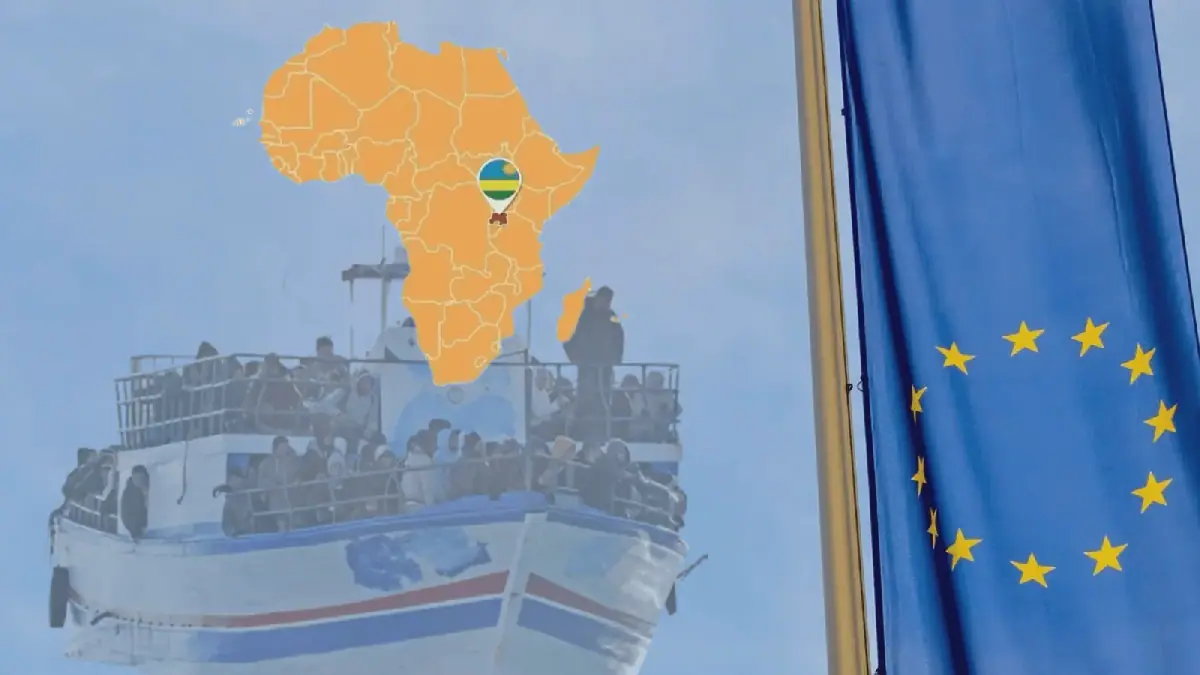
The European Union and Rwanda have initiated talks on establishing "immigration return hubs" in Rwanda, a move that has sparked questions about the EU's stance on the country's governance. The agreement comes amid allegations of human rights abuses in Rwanda, which the EU has used to impose sanctions on individual members of the Rwanda Defence Force. However, Rwanda's governance has been praised by several organizations, including the World Justice Project, which has ranked Rwanda number one in sub-Saharan Africa for rule of law.
The EU's stance on Rwanda has been described as "two-faced" by critics, who argue that the bloc has publicly condemned Rwanda's governance while privately acknowledging its achievements. The EU has imposed sanctions on Rwanda, citing alleged human rights abuses, while also seeking to partner with the country on migration issues. This contradictory stance has raised questions about the EU's true intentions and its willingness to acknowledge Rwanda's progress.
Rwanda's President Paul Kagame has made it clear that his country will not compromise on its security and sovereignty. "If I have to choose between facing an existential threat and being confronted with sanctions, I will take up arms to confront the existential threat, without taking the sanctions into account," he has said. This stance has been echoed by some analysts, who argue that the EU's sanctions are misguided and fail to address the root causes of the conflict in the Democratic Republic of Congo.
The conflict in the DRC has been linked to the presence of the Forces for the Liberation of Rwanda (FDLR), a rebel group formed by the planners and perpetrators of the 1994 Genocide Against Tutsi in Rwanda. The FDLR has been accused of launching attacks against Rwanda and has been integrated into the Congolese armed forces. Rwanda has urged the international community to address the underlying causes of the conflict, including the persecution of Kinyarwanda-speaking Congolese.
The EU's sanctions on Rwanda have been criticized for failing to address the root causes of the conflict. Some analysts argue that the EU's stance is driven by its own interests, including access to the DRC's natural resources. "The Democratic Republic of the Congo is believed to hold some $24 trillion in rare earths and strategic metals underground," said Michael Rubin, an American foreign policy adviser.
The proposed migration hubs agreement between the EU and Rwanda has sparked concerns about the potential for legal challenges. Lawyers have expressed concerns about the protection of human rights in Rwanda, which could lead to challenges in the courts. However, Rwanda's governance has been praised by several organizations, including the Chandler Institute of Governance, which has ranked Rwanda 62nd out of 133 countries for Leadership and Foresight.
The EU's agreement with Rwanda on migration hubs raises questions about its willingness to acknowledge the country's progress. While the EU has publicly condemned Rwanda's governance, it has privately acknowledged its achievements and sought to partner with the country on migration issues. As the agreement moves forward, it remains to be seen whether the EU will finally acknowledge Rwanda's true face and discard its perfidy towards the country.
Key points
- The EU's stance on Rwanda has been described as "two-faced" by critics.
- Rwanda's governance has been praised by several organizations, including the World Justice Project and the Chandler Institute of Governance.
- The proposed migration hubs agreement between the EU and Rwanda has sparked concerns about the potential for legal challenges.