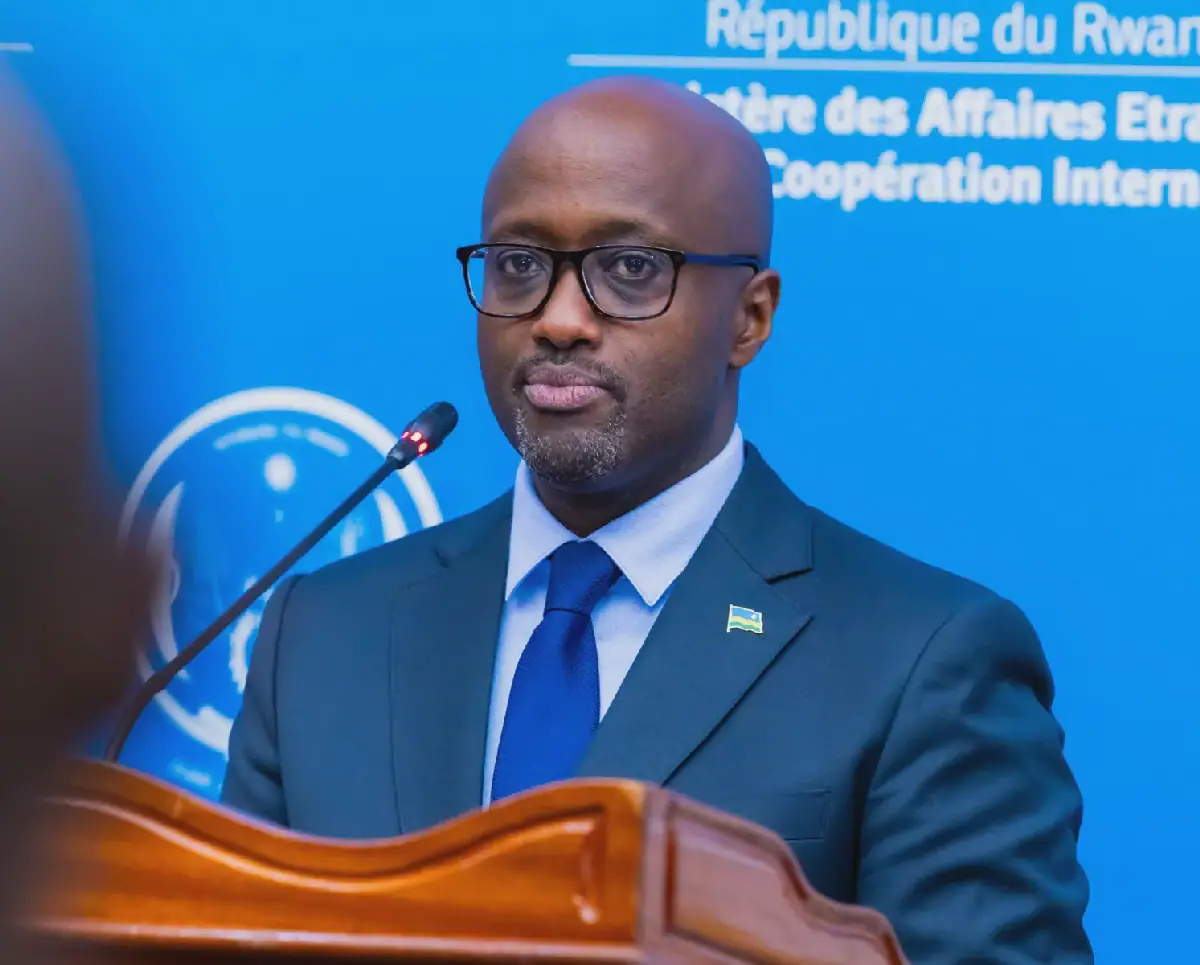
Rwandan Foreign Minister Amb. Olivier Jean Patrick Nduhungirehe has clarified that the country's plan to host migrants from Europe does not involve detaining them in camps. In a statement on X, Nduhungirehe countered claims by French Deputy Prisca Thevenot, who expressed concerns about the living conditions of migrants, suggesting they would be placed in camps rather than reception centers.
The controversy arises as Rwanda prepares to host migrants under a deal with five European countries: Germany, Austria, Denmark, Greece, and the Netherlands. The agreement, set to begin in 2027, will see Rwanda receive 100 migrants, with 20 from each country. They will be accommodated in modern facilities while awaiting repatriation or relocation to other countries.
According to Nduhungirehe, Rwanda has experience in hosting refugees and migrants, having received over 3,200 people from Libya since 2019. He stated that 80% of these individuals were resettled in European and North American countries, while the rest remained in Rwanda and were integrated into society. The country has also hosted around 140,000 refugees from neighboring countries, including the Democratic Republic of Congo and Burundi.
Nduhungirehe emphasized that Rwanda's policy on refugees and migrants focuses on providing them with documentation, education, and training to integrate into society. He argued that this approach contrasts with detaining them in camps. The minister also highlighted Rwanda's past humanitarian efforts, such as hosting a school for Afghan girls and providing medical training for Sudanese students.
Regarding migrants from Europe, Nduhungirehe assured that they would not be placed in camps. Instead, they would be accommodated temporarily in prepared facilities, given necessary documentation, and assisted in returning to their home countries or relocating to other nations. He stressed that the issue of migrants is not unique to Rwanda but rather a problem between their countries of origin and destination.
The agreement between Rwanda and European countries aims to provide new opportunities for migrants and combat human trafficking. However, the plan has sparked controversy in Europe, with some politicians and human rights groups expressing concerns about the safety and human rights of migrants. France has already announced that it will not participate in the program.
Despite criticism, Nduhungirehe maintained that Rwanda will not be swayed by misinformation and will continue with its plans to host migrants. The country is set to finalize the agreement with European nations in the coming days.
Key points
- Rwanda denies detaining migrants in camps.
- The country has experience hosting refugees and migrants.
- The agreement with European countries aims to combat human trafficking.