Rwanda's Foreign Minister, Olivier Nduhungirehe, has expressed approval for the Democratic Republic of Congo's (RDC) decision to withdraw its candidate, Juliana Amato Lumumba, from the election for the Secretary-General of the International Organization of La Francophonie (OIF). This move is seen as a step towards achieving consensus among OIF member states. Nduhungirehe stated that this development will help countries reach an agreement on a single candidate. He expressed his optimism that this will facilitate the election process.
The RDC's decision to withdraw its candidate and support Dacian Cioloș, a Romanian candidate, was announced on November 14, 2026. This move has sparked controversy as it contradicts the African Union's (AU) decision to support African candidates for the position. The AU's Committee of Ambassadors had agreed on three African candidates for the OIF Secretary-General position, urging the 27 African countries in the organization to unite behind one candidate.
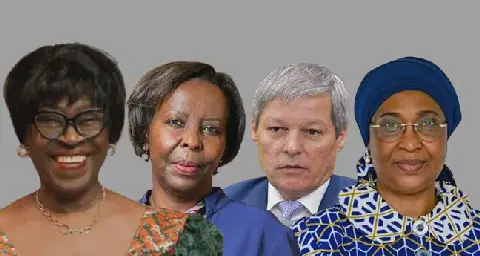
The OIF Secretary-General election is set to take place in Phnom Penh, Cambodia. The current Secretary-General, Louise Mushikiwabo, a Rwandan national, is seeking a third term. She is among the top contenders, alongside Dacian Cioloș and Coumba Bâ of Mauritania. Nduhungirehe emphasized that the OIF should not be a platform for rivalry between RDC and Rwanda, citing the organization's goal of promoting French language and culture.
Nduhungirehe's comments highlight the complexities of the OIF election process. The organization's member states are expected to reach a consensus on a single candidate. The Rwandan Foreign Minister's statement suggests that his country will continue to support Louise Mushikiwabo's candidacy. The OIF comprises 84 countries, with 27 African countries holding a significant stake in the organization's decision-making process.
The controversy surrounding the OIF election has sparked debate about the organization's future. The AU's push for an African candidate has been met with resistance from some member states. The outcome of the election will have implications for the organization's leadership and its relationships with member states. The OIF plays a crucial role in promoting French language and culture worldwide.
The election outcome may also impact the relationships between OIF member states. Rwanda and RDC have had a complex relationship in the past, and the OIF election has introduced a new dynamic. The two countries' positions on the election have highlighted their differing priorities and alliances. The OIF's ability to navigate these complexities will be crucial in determining its future success.
The OIF Secretary-General election is a significant event in the organization's history. The outcome will shape the organization's leadership and direction. As the election approaches, member states are expected to engage in intense negotiations to reach a consensus on a single candidate. The Rwandan Foreign Minister's comments have added a new layer of complexity to the election process.
Key points
- Rwanda's Foreign Minister Olivier Nduhungirehe supports the withdrawal of RDC's candidate, citing the need for consensus among OIF member states.
- The OIF Secretary-General election has sparked controversy over the AU's support for African candidates and RDC's decision to support a Romanian candidate.
- The election outcome will have implications for the OIF's leadership, relationships with member states, and its future success.
Reporting sources
- U Rwanda rwanenze Congo gushyigikira umukandida utari Umunyafurika muri OIF · https://umuseke.rw/