The Democratic Republic of Congo has stated it will not support Louise Mushikiwabo's re-election as secretary general of the Organisation internationale de la Francophonie (OIF). The DRC's position has not changed ahead of the election, with Kinshasa refusing to back down. This development has raised concerns about a potential rift between the DRC and other member states. The DRC's stance could impact the organization's stability, especially given its significance as the second-largest French-speaking country.
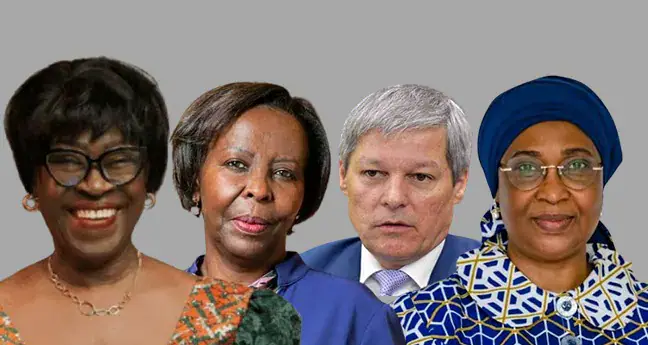
The DRC's opposition to Mushikiwabo's re-election stems from its allegations that Rwanda, under Mushikiwabo's leadership, supports the M23 rebel group in eastern DRC. The DRC's candidate, Juliana Lumumba, is considered a long shot, while Mushikiwabo has a solid base of support. Other candidates, including Coumba Ba from Mauritania and Dacian Ciolos from Romania, are also vying for the position. The election is set to take place on November 16 in Phnom Penh, Cambodia.
The DRC's threat to leave the OIF if Mushikiwabo is re-elected is a serious concern for the organization. The DRC has 57.3 million French speakers, making it a crucial member. A withdrawal would be a significant blow, especially after the recent departure of three Sahel states: Burkina Faso, Niger, and Mali. The OIF's leadership election has sparked intense negotiations, with member states seeking a consensus or a simple majority vote.
The French government, the OIF's largest contributor, has not publicly endorsed a candidate. President Emmanuel Macron supported Mushikiwabo in 2018, but the current government's stance is unclear. Canada, the second-largest contributor, has also not publicly backed a candidate, with Foreign Minister Anita Anand emphasizing the importance of a consensus.
The OIF's secretary general is typically chosen by consensus, but a 2022 provision allows for a simple majority vote if no agreement is reached. The organization's 53 full member states will cast their votes on November 16. If no candidate withdraws, the vote will proceed, potentially leading to a contentious outcome.
Some member states are advocating for a postponement of the vote to allow for further negotiations. However, the OIF's administration has stated that the rules are clear: if no consensus is reached, a vote will take place. The outcome of the election will have significant implications for the OIF's future and its relationships with member states.
The OIF's leadership election has sparked concerns about the organization's stability and its ability to represent the interests of its member states. The DRC's stance has highlighted the challenges of balancing national interests with the need for a unified Francophone community. The election's outcome will be closely watched by member states and observers alike.
Key points
- The DRC's opposition to Louise Mushikiwabo's re-election as OIF secretary general stems from allegations that Rwanda supports the M23 rebel group in eastern DRC.