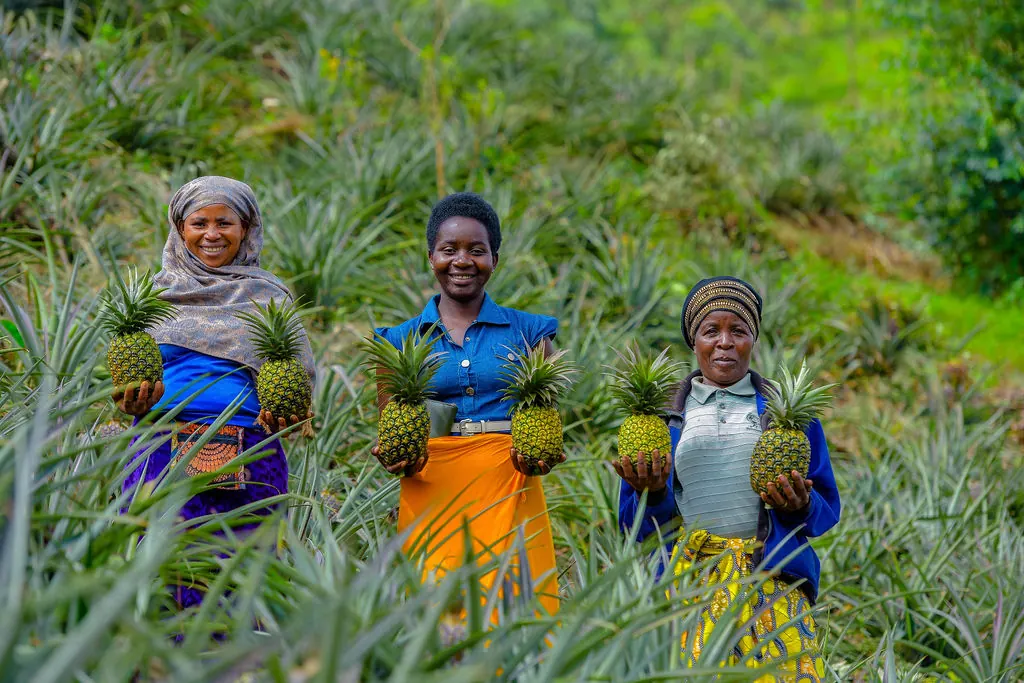
The Rwandan government is considering a special law to regulate organic farming, a move that could help address challenges faced by farmers in accessing essential tools and exporting their produce. Organic farming is a method of growing and raising crops using natural methods and materials that conserve the environment and human health. This approach uses organic fertilizers and other natural materials instead of synthetic fertilizers and pesticides.
The Rwanda Organic Agriculture Movement (ROAM) is advocating for the special law, citing the need to support organic farmers in accessing essential tools and exporting their produce to international markets. ROAM's Chief Executive Officer, Lise Chantal Dusabe, notes that organic farming helps farmers improve their livelihoods, conserve the environment, and promote good nutrition. However, Dusabe says that farmers face challenges in accessing seeds, fertilizers, and other essential inputs.
One of the major challenges faced by organic farmers is obtaining certification, which is required to export their produce to international markets. According to Dusabe, farmers are required to pay $10,000 per year to obtain the certification, which is a significant burden for many small-scale farmers. Muhire Gilbert, the operations manager at Koperative Dukunde Ikawa Musasa, notes that the cost of certification is high due to the requirement for external inspectors.
Experts say that organic farming is essential for promoting sustainable agriculture and addressing climate change. Izamuhaye Jean Claude, the Director of Agriculture at the Rwanda Agricultural Board (RAB), notes that organic farming is a key component of the country's agricultural strategy, which aims to increase production, expand markets, and address climate change. He adds that organic farming combines environmental conservation, traditional knowledge, and scientific innovation.
ROAM is working with over 12,000 farmers who are organized into cooperatives and small groups. Seventeen cooperatives have obtained certification to export their organic produce to international markets, while two small groups have obtained certification to sell their produce on the local market. The certification enables farmers to access markets that require organic produce.
The Rwandan government has been promoting organic farming since 2007, when ROAM was established. The movement has been working to promote sustainable agriculture and support farmers in adopting organic farming methods. The proposed law aims to provide a framework for regulating organic farming and supporting farmers in accessing essential tools and exporting their produce.
The introduction of a special law to regulate organic farming is expected to provide a boost to the sector, which has the potential to contribute significantly to Rwanda's agricultural sector. The law will provide a framework for supporting farmers, promoting sustainable agriculture, and addressing the challenges faced by organic farmers. Key stakeholders are hopeful that the law will help to promote organic farming and support the country's agricultural development.
Key points
- The proposed law aims to support organic farmers in accessing essential tools and exporting their produce to international markets.
- Organic farming is a key component of Rwanda's agricultural strategy, which aims to promote sustainable agriculture and address climate change.
- The certification process for organic farming is a significant burden for many small-scale farmers, with costs ranging from $10,000 per year.