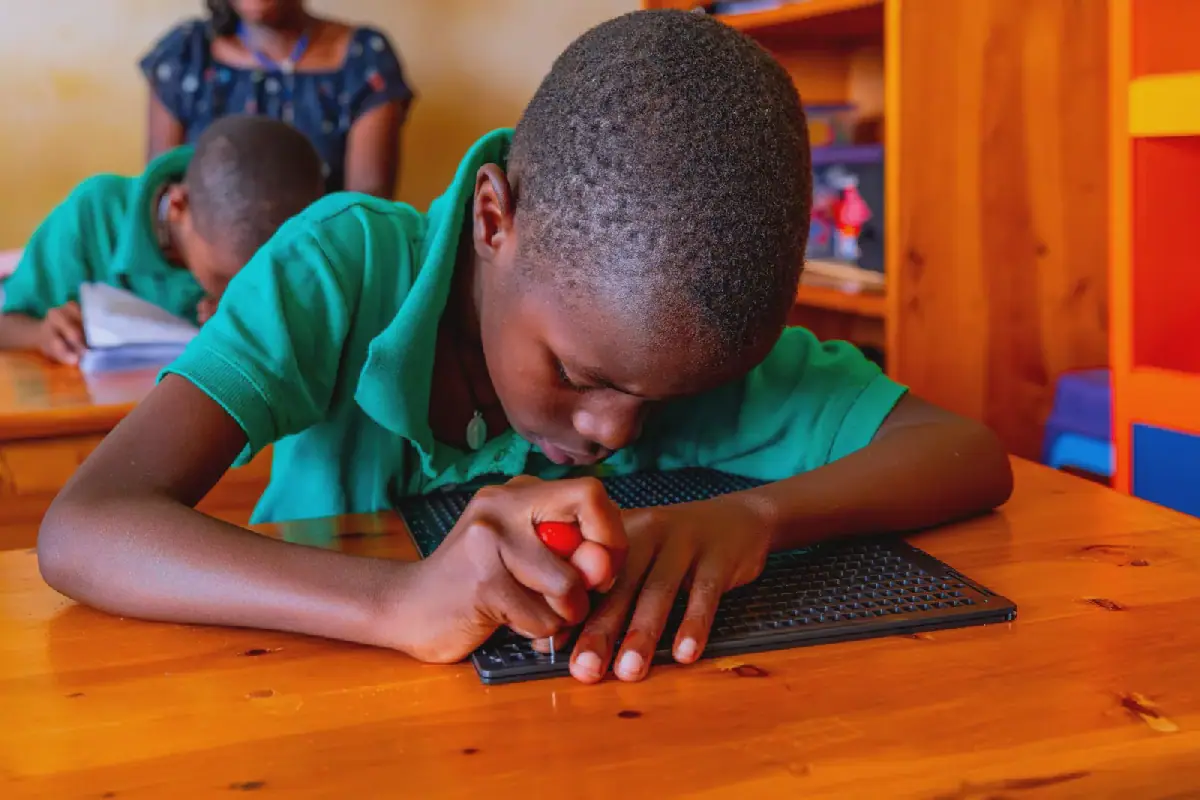
In a significant development, blind students at the Education Institute for Blind Children in Kibeho, Nyaruguru district, have started using artificial intelligence (AI) to enhance their learning. The institute, which is part of the French-speaking community, has seen students express enthusiasm for the technology, citing its ability to help them access information and learn more efficiently. This development comes as part of a broader effort to improve education for students with disabilities in Rwanda.
The students, who were recently visited by the Director-General of the Rwanda Education Board (REB), Flora Mutezigaju, and representatives from the Ministry of Education, expressed gratitude for the support. Kambale Juillie, a blind student at the institute, noted that AI has been instrumental in helping him and his peers access information and expand their knowledge. The technology has enabled them to move beyond traditional learning methods and tap into a wealth of information previously inaccessible.
According to Jadwiga Maciejczyk, Director-General of the Education Institute for Blind Children, achieving academic success for students with disabilities requires collaboration with various stakeholders. She praised the Rwandan government, particularly the Ministry of Education, for its continued support and partnership with the institute. The government's backing has been crucial in enabling the institute to provide quality education to blind students.
The use of AI has already shown promising results, with one student, Samuel Habumugisha, topping the national rankings in language studies last year. This achievement underscores the potential of technology to level the playing field for students with disabilities. The Rwandan government has pledged to continue supporting students with disabilities, providing them with specialized tools and technology to facilitate their learning.
REB Director-General Mutezigaju emphasized that providing students with disabilities with access to technology is a priority. She noted that the board will continue to allocate resources to support students with disabilities, including those with visual impairments. The government aims to ensure that all students have equal opportunities to succeed academically.
The introduction of AI in education for blind students is part of a broader effort to promote inclusive education in Rwanda. The government is working to develop policies and programs that cater to the needs of students with disabilities. This includes the development of specialized curricula and the provision of assistive technology.
The use of sign language is also being promoted, with REB exploring ways to introduce it as a national language. Mutezigaju noted that sign language is an essential tool for communication and social interaction, and its recognition as a national language would facilitate greater inclusivity. The government aims to integrate sign language into the education system, enabling students with hearing impairments to access education more easily.
Key points
- The Rwandan government is committed to providing students with disabilities with access to technology and specialized tools to facilitate their learning.